The winter arrived quietly, without the drama people expected from hardship. There was no single storm that warned the Caldwell family of what lay ahead, no thunder or sudden frost to announce disaster. Instead, the cold crept in day by day, settling into the soil, hardening the ground, and turning the remaining stalks in the field brittle and pale. By the time the first heavy snow fell, Thomas Caldwell already knew the truth. The harvest had not been enough.
The Caldwells lived on the edge of a clearing surrounded by woods, a place chosen for its soil and water rather than its comfort. Their cabin was small but sturdy, built with help from neighbors years earlier. Inside, shelves held jars of dried beans, cornmeal, apples preserved in vinegar, and salted meat wrapped in cloth. Each item had been carefully measured during autumn, and each now carried more weight than food alone. They were days of life.
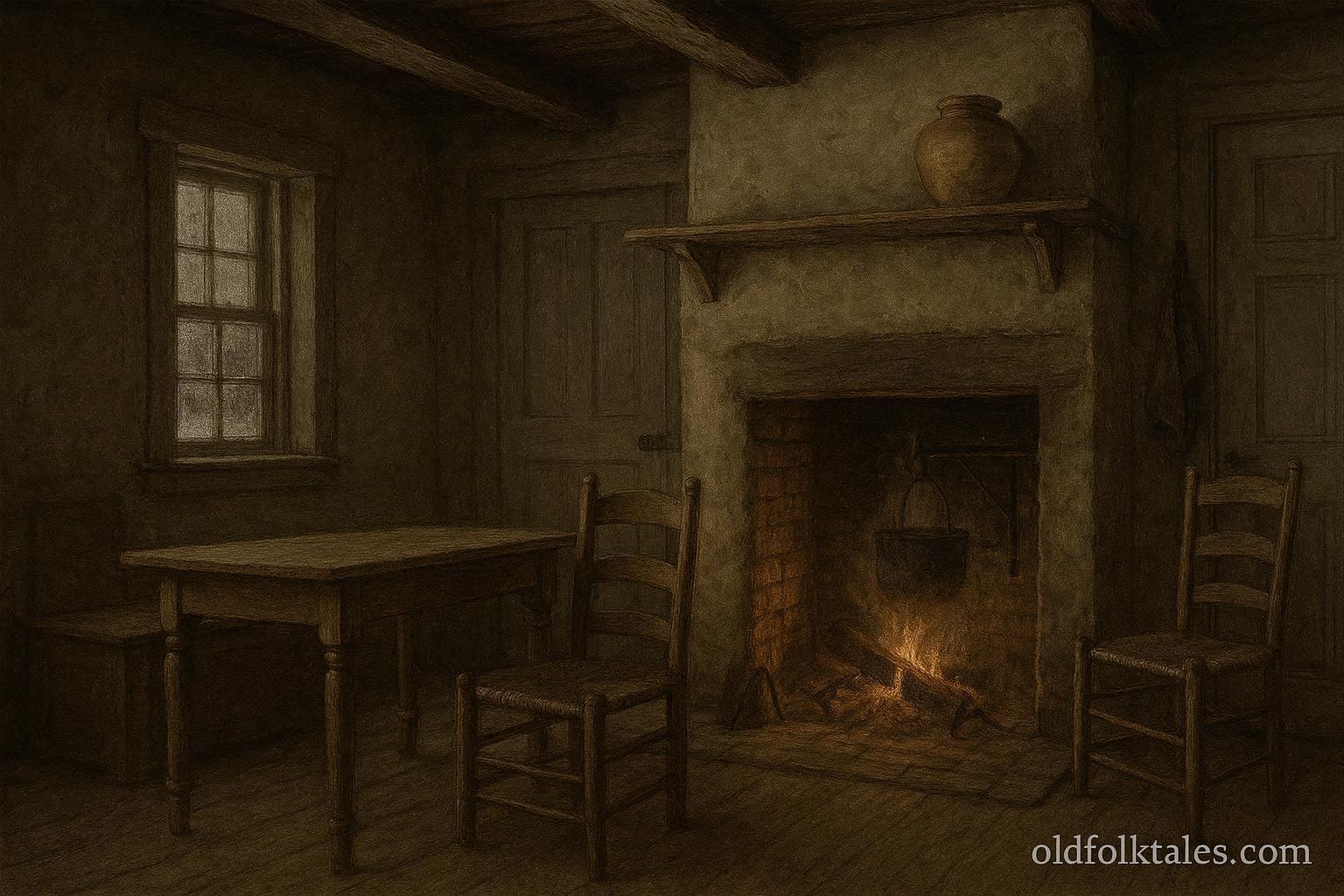
Above the hearth, out of reach of curious hands, rested a clay jar sealed with wax. Inside were the best seeds from the previous harvest. Thomas had chosen them himself, turning each kernel between his fingers, testing its hardness, rejecting anything cracked or weak. Miriam had dried and sorted the beans, laying them out on cloth near the fire and guarding them from damp air. Even the children knew the jar was not to be touched. It was not spoken of often, but everyone understood its meaning. The jar was spring.
Discover chilling ghost tales and haunted places that echo through America’s towns and countryside.
As winter deepened, meals grew smaller. The family learned to stretch porridge thin and to boil bones longer than seemed sensible. Hunger became a constant companion, not sharp at first, but dull and steady. It whispered during prayers and lingered after sleep. The children asked fewer questions as weeks passed. They learned quickly which questions had no answers.
One evening, after a day spent cutting firewood in bitter wind, Thomas sat at the table and stared at the seed jar. His hands ached, and his stomach growled loudly enough to embarrass him. Miriam noticed. She said nothing at first, but her eyes followed his gaze.
“We could grind a little,” Thomas said at last. His voice was careful. “Just enough to ease the children.”
Miriam stood still for a long moment. Then she shook her head. “If we eat tomorrow’s planting, there will be no tomorrow to plant,” she replied. Her words were gentle but firm.
That night, Thomas lay awake listening to the wind press against the cabin walls. He thought of neighbors who had already broken into their seed stores. He had heard whispers at the trading post before winter closed the roads. Some families said they would find seed later. Others believed the land would provide somehow. Thomas knew better. Without seed, the earth could offer nothing.
Weeks passed. Snow buried the fields so deeply that even fence posts disappeared. One of the children fell ill, weak from hunger and cold. Miriam fed him broth made from the last of the marrow bones, her hands shaking as she stirred the pot. Still, the seed jar remained sealed.
Late one afternoon, a knock came at the door. It was Jacob Turner, a neighbor whose farm lay closer to the river. His face was hollow, his coat worn thin. He spoke plainly. “I ate my seed,” he admitted. “I thought I could trade come spring. Now I fear there will be nothing left to trade for.”
Thomas invited him inside, shared what little stew remained, and listened as Jacob spoke of regret. Before Jacob left, Miriam brought down the seed jar and held it between them. “This is our future,” she said quietly. “Not our comfort.” Jacob nodded, understanding too late.
By the time winter loosened its grip, the Caldwells were thinner, slower, and worn. But when the snow melted, Thomas broke the wax seal on the jar. The seeds inside were dry and whole, just as they had been months before. He pressed them into the earth with care, each one placed as if it were a promise.
Spring was not generous, but it was fair. Shoots emerged. The field greened slowly. When summer came, the harvest was modest, yet enough. The Caldwell children learned that survival was not always about eating what was near, but about protecting what was needed later.
Years afterward, neighbors would point to the Caldwell field as an example. When asked how they endured that winter, Thomas would simply say, “We trusted the seed more than our hunger.”
Click to read all American Folktales — timeless oral stories passed through generations across the United States.
Moral Lesson
True survival often depends on restraint rather than consumption. Preserving resources for the future can require enduring hardship in the present, but it is this discipline that allows communities to continue rather than collapse.
Knowledge Check
1 What did the seed jar symbolize for the Caldwell family?
Answer: It represented spring, future planting, and long term survival
2 Why did the family refuse to eat the seeds despite hunger?
Answer: Because eating the seeds would eliminate their ability to grow food later
3 What mistake did their neighbor Jacob admit to making?
Answer: He ate his seed stock during winter and had nothing left to plant
4 How did the children learn from the experience?
Answer: They learned the value of restraint, planning, and thinking beyond immediate hunger
5 What lesson did the community take from the Caldwell family?
Answer: That protecting future resources is essential for survival and continuity
6 What central value does the story teach?
Answer: Discipline and foresight ensure long term survival
Source
Adapted from American agricultural survival folklore documented by the Smithsonian Institution
Cultural Origin
Early American homesteader communities