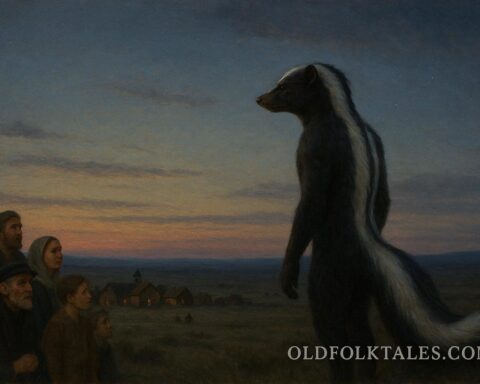
Across the forests and coastal lands of the northeastern regions of North America, the Wabanaki peoples preserved many stories about spirits and supernatural beings that moved between the visible and invisible worlds. Among the most unsettling figures in these traditions is the Skadegamutc, often described as a ghost witch capable of changing shape and moving silently among human communities. The legend served as both a warning and an explanation for mysterious illnesses or strange events that seemed to occur without a visible cause.
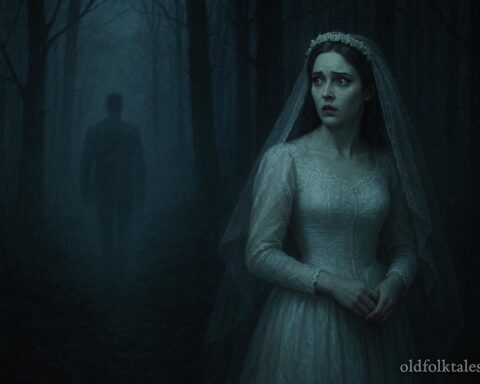
The Skadegamutc was not always believed to appear in a single form. Instead, storytellers described it as a being that could shift between human shape, shadow, animal, or even invisible presence. This ability made the creature especially frightening because villagers believed it could observe them without being detected. In some versions of the story, the Skadegamutc appeared as an ordinary person during the day and revealed its supernatural nature only at night.
Wabanaki oral traditions often emphasized the importance of harmony within the community and respect for spiritual forces. The legend of the Skadegamutc reflected the fear that certain individuals might misuse spiritual knowledge for harmful purposes. According to these stories, the ghost witch possessed powers that allowed it to cause sickness, weakness, or misfortune among those it targeted.
Discover celestial myths of the sun, moon, and stars — and the heroes who bridged earth and sky.
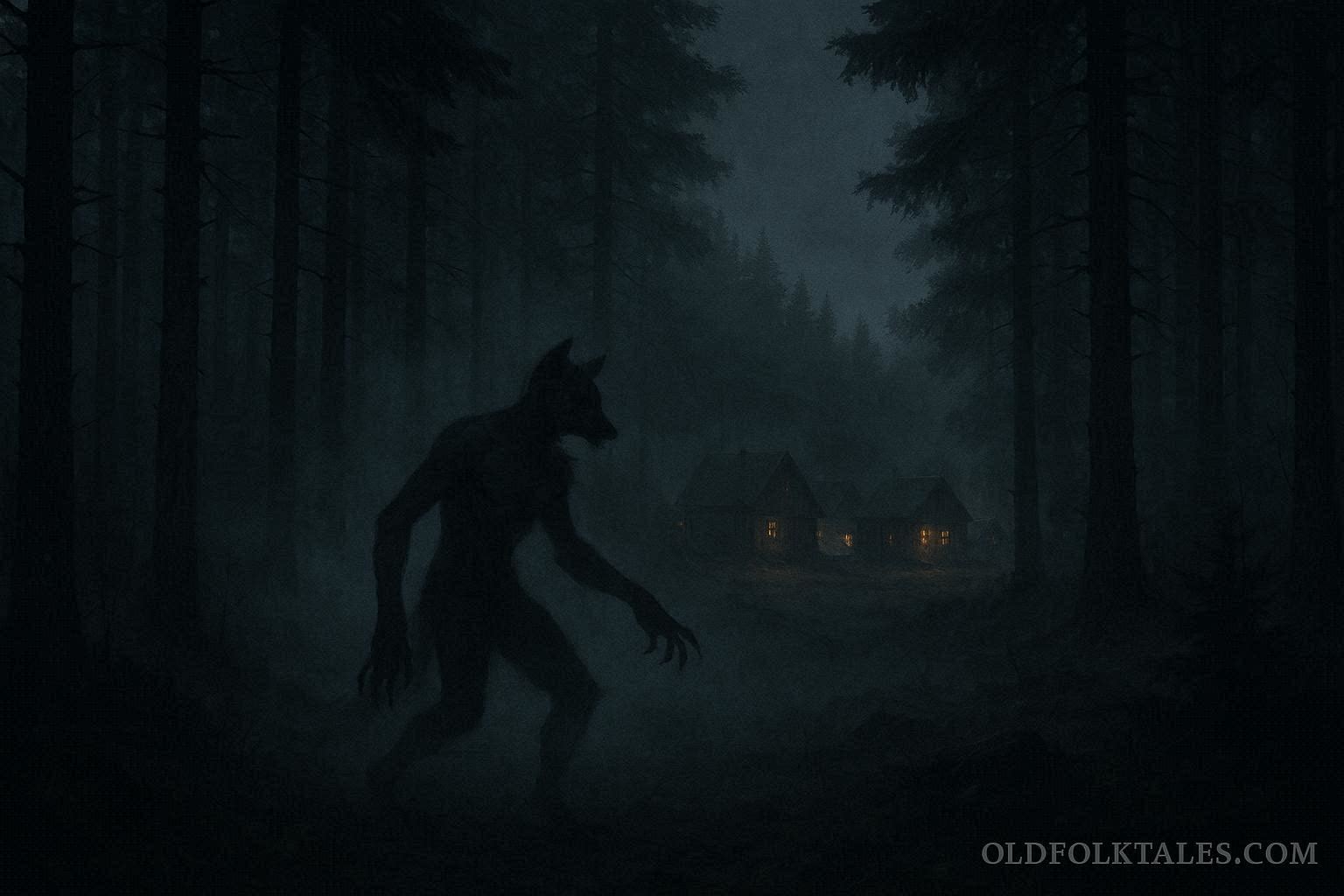
Some accounts describe the Skadegamutc as moving through villages after sunset, drifting quietly along forest paths or between homes. People claimed that the creature could pass through darkness like a shadow, leaving little sign of its presence except for sudden illness or strange disturbances. If livestock became sick or if someone fell mysteriously ill, villagers sometimes wondered whether a hidden supernatural force was responsible.
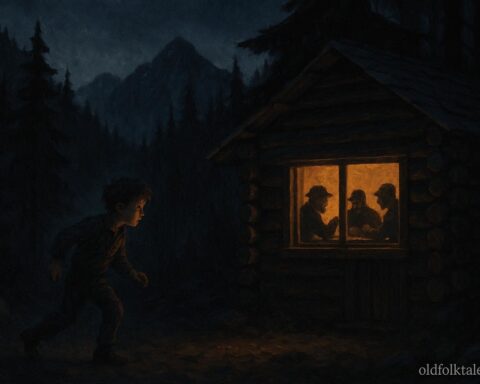
One story tells of a small village where several hunters suddenly became weak and feverish after returning from the forest. The elders believed that something unnatural had followed them back from their journey. As the nights passed, people began reporting strange sounds outside their homes and glimpses of movement near the tree line. The community grew fearful that a Skadegamutc might be wandering nearby.
The village spiritual leader performed protective rituals meant to reveal hidden spirits. According to the story, during one of these ceremonies the elders sensed a presence lingering just beyond the edge of the firelight. Although no figure could be clearly seen, many claimed they felt an unnatural chill moving through the air as if something invisible had briefly entered the gathering.
Stories like this reinforced the belief that the Skadegamutc could move between worlds without leaving physical evidence. The creature’s power was believed to lie not only in its ability to change shape but also in its ability to remain unseen while observing human life. In folklore, this invisibility symbolized hidden dangers that might exist beyond ordinary understanding.
Some versions of the legend suggest that the Skadegamutc originated from individuals who had abused spiritual power or broken sacred laws. In this interpretation, the ghost witch represents a corrupted spirit that no longer belongs fully to the human world or the spirit world. As a result, it wanders between both realms, influencing events in subtle and troubling ways.
The stories also served as moral lessons within Wabanaki communities. Elders used the legend to remind younger generations that spiritual knowledge carried great responsibility. Power used selfishly or destructively could lead to consequences that affected not only the individual but the entire community. The Skadegamutc symbolized the danger of misusing sacred wisdom.
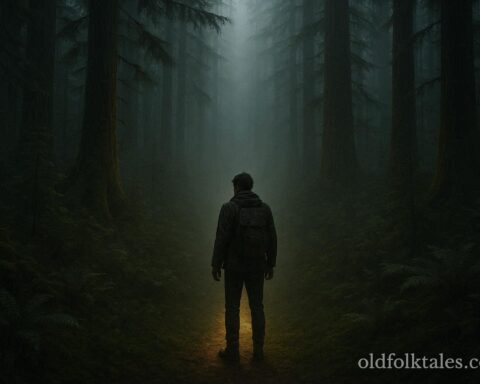
Another commonly told account describes a traveler who encountered a strange figure along a forest path at dusk. At first the traveler believed it was simply another person returning to their village. However, as the figure moved through the fading light, it appeared to shift shape and fade into the surrounding shadows. The traveler hurried back to the village and warned others that something unnatural might be wandering nearby.
Although the details of these stories vary, they share common elements. The Skadegamutc is rarely seen clearly, and its presence is usually inferred through unusual events or unexplained illnesses. This uncertainty contributes to the haunting nature of the legend because the creature’s existence cannot easily be confirmed or denied.
Folklore scholars who studied Wabanaki traditions collected several versions of the Skadegamutc legend during the nineteenth and early twentieth centuries. These accounts were preserved in ethnographic manuscripts and oral history records that documented Indigenous storytelling traditions. The stories demonstrate how spiritual beliefs were woven into explanations of health, morality, and community protection.
The Skadegamutc also reflects a broader pattern found in many Indigenous traditions where shapeshifting beings appear as warnings about spiritual imbalance. Such figures often represent forces that disrupt harmony when respect for sacred laws is forgotten. By telling these stories, communities reinforced the values that maintained balance between humans, nature, and the spirit world.
Today the legend of the Skadegamutc continues to be remembered as part of the cultural heritage of Wabanaki storytelling. While modern listeners may interpret the tale differently, it remains an important example of how folklore expresses deeper concerns about morality, unseen forces, and the consequences of harmful actions.
The ghost witch stands as a symbol of hidden danger but also of spiritual responsibility. Through generations of storytelling, the legend reminds people that power and knowledge must be used wisely, and that the unseen world is believed to exist alongside everyday life.
Click to read all American Cryptids & Monsters — creatures of mystery and fear said to inhabit America’s wild landscapes.
Moral Lesson
The legend teaches that spiritual power must be used responsibly. Harmful intentions and misuse of knowledge can disrupt harmony and bring misfortune to both individuals and communities.
Knowledge Check
- What supernatural ability is the Skadegamutc most known for?
Its ability to change shape and move unseen among people. - What kinds of problems were sometimes blamed on the Skadegamutc?
Mysterious illness, weakness, or unexplained misfortune. - When was the creature most often believed to appear?
At night or in dark forest areas. - What did elders believe caused someone to become a Skadegamutc?
Misusing spiritual power or breaking sacred laws. - Why was the creature difficult to identify?
Because it could become invisible or change its form. - What cultural lesson does the legend teach?
Spiritual knowledge must be used with responsibility and respect.
Source
Adapted from materials preserved in the American Philosophical Society Indigenous Manuscripts
Cultural Origin
Wabanaki traditions