In the frozen wilderness of the Upper Great Lakes, where icy winds sweep through pine forests and snow blankets the world in white silence, tales of the Snow Woman have drifted through generations of French-American voyageurs and Métis settlers. Among them, this winter folktale holds both awe and fear, a reminder that beauty and danger often share the same face.
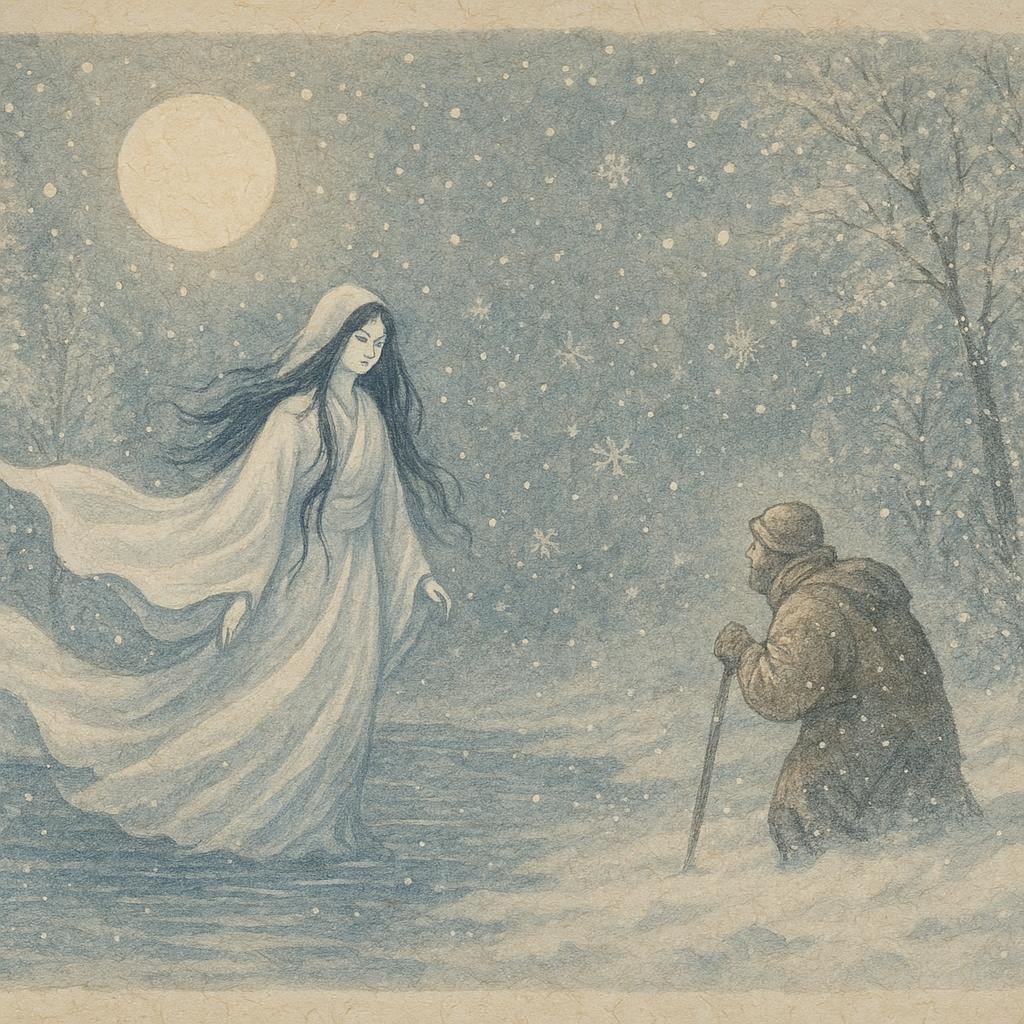
They say the Snow Woman appears on the coldest nights, when rivers lie sealed in glass and the moon hangs like a pale coin above the treetops. Wrapped in a shimmering cloak of frost, she glides across the frozen lakes, her voice carrying through the air, soft, sweet, and sorrowful. Some hear her as a whisper; others swear they see her dancing where the snow swirls into silver mist.
Click to explore all American Ghost Stories — haunting legends of spirits, lost souls, and mysterious places across the U.S.
Travellers who wander too far into the storm may hear her calling their names, beckoning them toward her icy glow. Many have followed, entranced by her beauty, only to be found frozen by dawn, faces calm and peaceful, as though merely dreaming. The old voyageurs would murmur around the fire that those who died in her presence did not suffer, they were simply claimed by winter herself.
But not all who met her perished. Those who greeted her with reverence, bowing low or making the sign of the cross, were said to survive the encounter. Come morning, they would find themselves warm and unharmed, their paths mysteriously cleared, leading safely home. To the wise, it was a lesson: respect nature, and she will spare you; defy her, and she will remind you who rules the north.
Mothers in the camps taught their children to never whistle in a snowstorm, for that was said to summon her. “Each note,” they warned, “is a call she cannot ignore.” The woodsmen, meanwhile, had their own signs. When the moonlight painted a halo of dancing snowflakes, they would nod knowingly, saying, “La Dame Blanche is spinning her cloak again, the season’s first snow is near.”
Around the cabin fires, voyageurs told how the Snow Woman appeared to the lost and the lonely, men who strayed too far from their companions, hunters who followed tracks deep into the woods, or children who wandered off chasing the shimmer of ice crystals. Some claimed she was the spirit of a woman lost long ago, frozen in a blizzard while searching for her beloved. Others believed she was a guardian of winter, neither cruel nor kind, simply enforcing the sacred balance between man and nature.
One story tells of Pierre Leclerc, a young trapper from Quebec who ventured into the wilderness one bitter January night. The snow fell thick, the forest silent but for the groan of bending trees. As he crossed the frozen river, a pale figure appeared ahead, her white hair drifting like mist, her eyes bright as the northern stars.
“Pierre,” she whispered. He stopped in his tracks, for she spoke his name though he had told no one where he’d gone. Her hand lifted, beckoning. The warmth of her voice drew him closer, yet the air around her shimmered with deadly cold. Remembering his grandmother’s warning, Pierre bowed his head and said softly, “Good evening, Madame.”
The Snow Woman paused, her expression unreadable. Then, with a sound like wind over ice, she vanished. When Pierre awoke the next morning, the storm had passed. He found himself safe beside his sledge, the forest glinting in dawn’s silver light, and a trail of untouched snow leading him home. From that day on, he told all who would listen: “Show respect to winter’s spirit, and she will guide your steps.”
As years passed, the tale of La Dame Blanche of the North became part of every winter night’s storytelling, a whisper carried on the wind, a flicker of frost at the edge of the lamplight. The Snow Woman remained both protector and punisher, a reflection of the wild season she ruled. For those who dwell in lands where snow reigns supreme, she is not just a ghost but a truth: that the cold can cradle life as easily as it takes it away.
Click to read all American Traditions & Beliefs — the living folklore of daily life, customs, and superstitions.
Moral Lesson
Nature’s beauty holds both wonder and peril. To walk safely through its power, one must walk with humility and respect.
Knowledge Check
1. Who is the Snow Woman in this American folktale?
She is a spirit of winter who roams frozen rivers and snowfields, testing travellers’ respect for nature.
2. What happens to those who follow her voice?
They are found frozen at dawn, peaceful as though sleeping.
3. How can travellers survive an encounter with the Snow Woman?
By greeting her respectfully, bowing or crossing themselves, to show reverence for her power.
4. What warning did mothers give their children during snowstorms?
They told them never to whistle in a snowstorm, as it was believed to summon the Snow Woman.
5. What natural sign did woodsmen associate with her presence?
A ring of snowflakes around the moon, said to be her spinning her cloak to bring snow.
6. What lesson does the story teach about human behaviour?
It reminds us that respect for nature’s might ensures harmony and survival.
Source: Adapted from Winter Oral Traditions Collection – American Folklife Center, Library of Congress.
Cultural Origin: French-American folklore (Upper Great Lakes and Canadian borderlands).