In the northern lands, where snow drifts rose higher than the tallest trees, the people once believed the sun could be trapped. They told that winter was not just cold, but a time when the sun itself had been captured by unseen forces. Without its warmth, rivers froze too solidly for travel, animals hid in shadows, and the land seemed to hold its breath. People huddled in their homes, whispering prayers and telling stories of the sun’s struggle.
It was said that the sun became trapped when humans forgot their duties to the earth. During harvest, some took more than necessary, cutting beyond what was needed, ignoring the rhythm of giving and receiving. Spirits of the land grew displeased and called upon winter to hold the sun prisoner. The sky dimmed, and the days shortened until light was scarce. Villages prepared for a long season of endurance.
Among the people, a young woman named Nayeli understood the rhythms of the seasons better than most. Her father had taught her to watch the sun’s rise and fall, to notice when the shadows stretched longer than usual. She studied ice on the rivers, patterns in animal behavior, and the way the wind whispered through the forest. She knew that if the sun remained trapped, survival would become impossible.
Encounter the strange and the unseen — from Bigfoot to regional monsters hiding in America’s forests.
Nayeli suggested a plan to the elders. They would perform a series of rituals meant to remind the sun of its power and persuade it to return. Fires would be lit in the highest clearings, and songs would be sung at dawn and dusk. The people prepared offerings of dried fish, berries, and small carved tokens to honor both the sun and the spirits of the land. The preparation itself required weeks, as every action had to be precise and respectful.
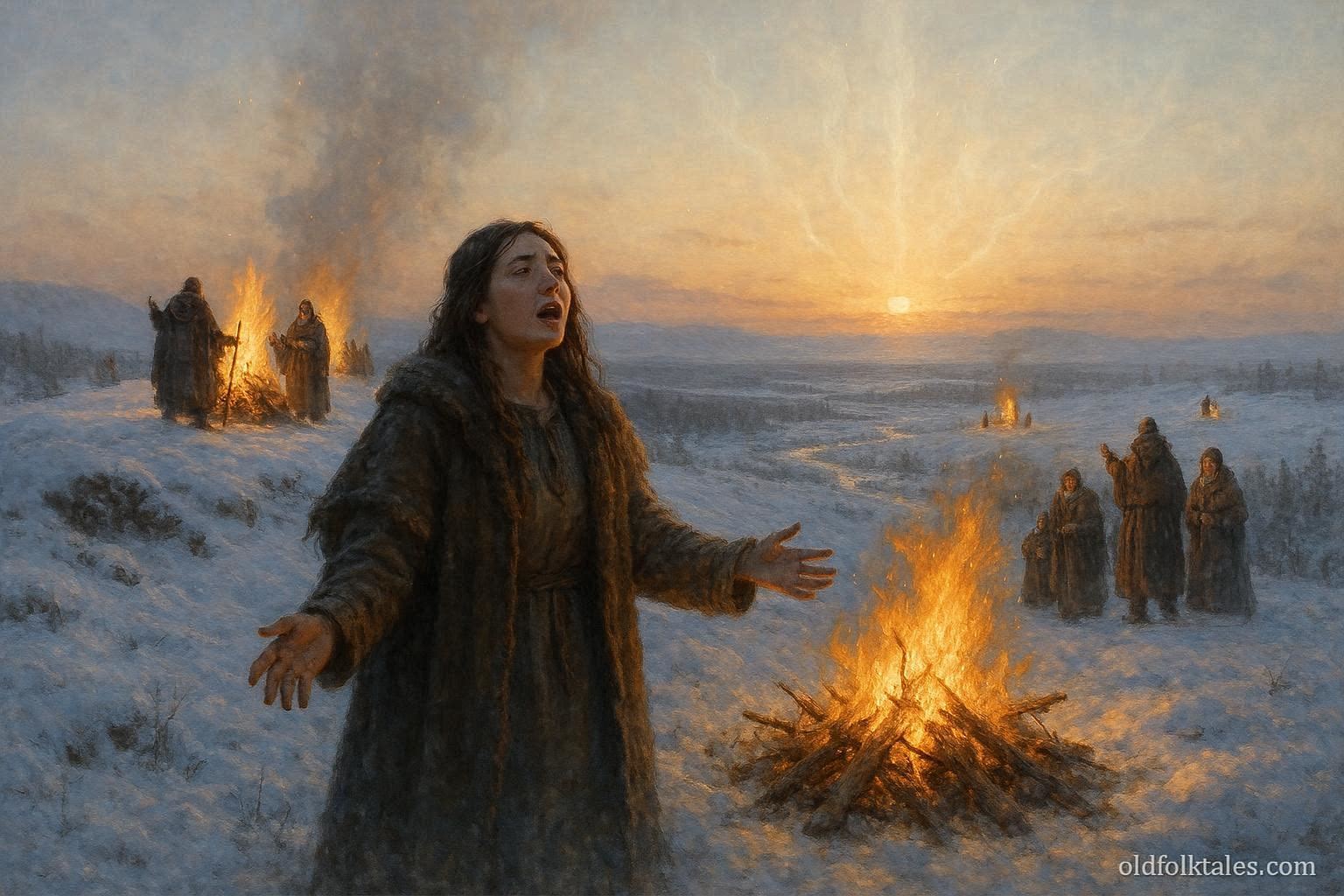
On the morning of the first ritual, the villagers gathered on a frozen hill overlooking the valley. Smoke from the fires rose like fingers reaching into the sky. Nayeli led the chanting, her voice steady despite the cold that bit at her cheeks. The elders instructed the young children to release small bundles of twigs, carrying their prayers on the wind. The sun had not yet appeared, but the people spoke as though it were listening.
Hours passed, and the sky remained pale and still. Some whispered doubt, wondering if their efforts were in vain. Nayeli reminded them that winter was always patient, and the sun would not move without acknowledgment of its role. The rituals continued night after night, each repetition reinforcing respect for the natural cycles. Even the animals seemed to respond, cautiously approaching the smoke and warmth, as though curious.
After several days, a change was noticed. The east began to brighten slightly earlier each morning, and a subtle warmth could be felt on the snow. People rejoiced quietly, understanding that the sun was beginning to break free. The elders explained that the sun could not be forced. Only through careful attention, honor, and shared effort could its path be restored.
As the season continued, the villagers maintained their practices. Children were taught to greet the sunrise with offerings of song and clapping sticks. Adults reinforced the importance of taking only what was needed and respecting the land. The sun rose higher each day, slowly but surely returning to its full strength. By the time the river ice began to melt, the sun shone warmly enough to awaken life across the valley.
Nayeli’s leadership was remembered in stories that lasted generations. People spoke of her patience, courage, and understanding of the balance between human actions and celestial forces. They said that even when the winter seemed endless, the sun was never truly gone. Its absence was a lesson in endurance, humility, and hope.
From that time forward, winter was not feared in the same way. The people honored the sun’s cycles, knowing that balance depended on respect, observation, and careful action. Villages placed small ceremonial fires on the hilltops each winter, reminding themselves and the spirits that the sun must be acknowledged before it could shine fully again.
The story spread beyond the valley. Travelers carried the tale of the trapped sun to distant communities. Each village adapted it, performing their own rituals to ensure the sun’s return. The myth became a guiding principle, teaching that survival was tied not only to skill and courage but to humility and harmony with the world around them.
Even today, elders speak of the long winter nights and the sun’s patient return. They say that when the first light glimmers over the ice, it is a reminder that perseverance and respect can overcome even the harshest obstacles. And the people continue to honor the sun, knowing it watches them as carefully as they watch it, ensuring the balance of life endures.
Explore ancient Native American creation myths and the symbolic tales that shaped America’s belief systems
Moral Lesson
The story teaches that endurance, respect for natural cycles, and collective effort restore balance and hope even during the most challenging times.
Knowledge Check
- Why was the sun believed to be trapped during winter?
Because human actions disrupted the balance of the natural world, angering the spirits. - Who was Nayeli and what role did she play?
She was a young woman who understood the seasons and led rituals to restore the sun. - What methods did the villagers use to release the sun?
They performed offerings, fires, songs, and careful attention to respect the land and spirits. - Why could the sun not be forced to return immediately?
Because balance requires acknowledgment and harmony, not coercion. - How did the villagers teach the lesson to children?
By having them participate in rituals and greet the sunrise with offerings. - What does the sun’s return symbolize in the story?
Renewal, hope, and the rewards of perseverance and respect for natural cycles.
Source
Adapted from University of Alaska Indigenous seasonal myth studies
Cultural Origin
Northern Plains and Subarctic Indigenous nations