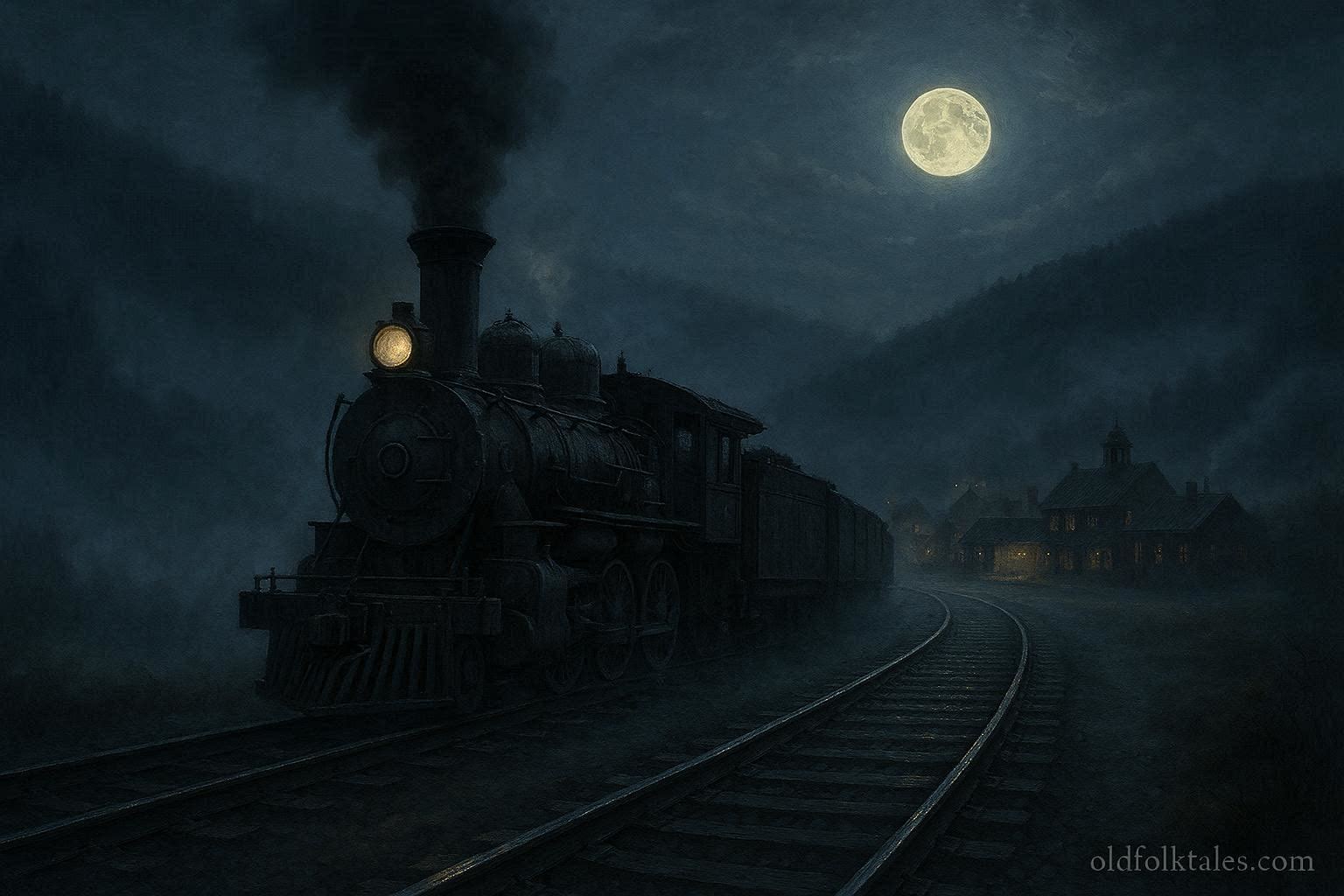
During the 19th century, railroads rapidly expanded across the United States, linking distant towns and transforming daily life. The arrival of the iron rails brought opportunity, trade, and travel to communities that had once been isolated. For many towns built near the tracks, the sound of a locomotive rumbling past became part of the rhythm of everyday life. The whistle of a passing train signaled arrivals, departures, and the movement of goods and people across the country.
Yet among railroad workers and the families who lived close to the tracks, one sound carried a sense of mystery and unease, a train whistle heard at midnight when no train was expected. According to local superstition, such a whistle was not ordinary. Many believed it served as a warning that misfortune might soon follow.
Railroad towns depended heavily on precise schedules. Conductors, engineers, and track workers all relied on strict timetables that determined when trains would pass through each station. Because of this, residents were usually aware of when a locomotive should be approaching. When a whistle suddenly echoed through the darkness long after the last train had passed, people noticed immediately.
Explore the heart of America’s storytelling — from tall tales and tricksters to fireside family legends.
One story often repeated in railroad communities tells of a small town where several workers were repairing a stretch of track along a wooded hillside. Late one quiet night, the town was asleep when a long, lonely whistle echoed across the valley. The sound seemed distant but clear, drifting through the cool night air. A few residents woke and looked toward the tracks, puzzled because the evening train had already gone through hours earlier.
The following morning, news arrived that a freight train many miles away had derailed during the night. Though the accident occurred far from the town, several people remembered hearing the mysterious whistle just before midnight. For them, the coincidence seemed too strong to ignore. From then on, whenever an unexplained whistle echoed through the darkness, many whispered that it was a warning carried along the rails.
Railroad workers themselves sometimes treated the superstition with cautious respect. Working on the tracks was dangerous. Loose rails, storms, mechanical failures, and human error could all lead to serious accidents. For men who spent long days inspecting rails and bridges, the idea that a mysterious whistle might warn of danger felt strangely meaningful. Some believed the sound was an echo from distant trains carried by the wind. Others thought it might be a sign from spirits connected to the railroad’s past.
Stories soon spread through towns along the railway lines. Some claimed the midnight whistle belonged to a ghost train, a phantom locomotive forever traveling the tracks after a tragic accident. Others believed it was the spirit of a train engineer who had died on the job, continuing to warn the living of possible danger. Whether people believed these tales or not, the stories added an air of mystery to the quiet nights in railroad towns.
Families living near the tracks sometimes developed small rituals when they heard the sound. Lamps were lit, quiet prayers were whispered, and people listened carefully for any further noise from the rails. If no bad news followed, many assumed the warning had simply passed. But if an accident or tragedy was later reported, the midnight whistle became proof that the omen had been real.
These beliefs reflected the uncertainty of a rapidly changing era. Railroads were powerful machines that connected the nation, but they also brought new risks. Communities tried to understand sudden accidents and unexplained events through folklore and superstition. The midnight whistle became one way people explained strange sounds in the darkness and the unpredictable dangers of the railway world.
Even as technology improved and train schedules became more reliable, the legend of the midnight whistle continued to circulate. Older railroad workers told the story to younger generations, and children growing up near the tracks listened carefully whenever a distant whistle echoed late at night.
Today, the sound of a train whistle still carries a haunting quality when heard in the quiet hours after midnight. While most people now understand it as the sound of a passing locomotive somewhere in the distance, the old superstition remains part of American railroad folklore. It serves as a reminder of a time when the rails were new, the night was mysterious, and every echo across the valley seemed to carry a message.
Step into America’s cultural roots — from folk healing and weather lore to seasonal celebrations.
Moral Lesson
The legend reminds people to remain alert and respectful of the dangers surrounding new technology and unfamiliar environments. It also shows how communities create stories and traditions to make sense of uncertainty and unexpected events.
Knowledge Check
- What unusual sound worried people in railroad towns?
A train whistle heard at midnight when no train was scheduled.
- Why did residents find the midnight whistle suspicious?
Because train schedules were known, and no train was expected at that hour.
- What misfortunes did people believe the whistle could warn about?
Railroad accidents, illness, or tragic news.
- Why were railroad workers especially connected to this superstition?
Their work on the tracks exposed them to dangerous conditions and accidents.
- What explanations did some people give for the mysterious whistle?
Some believed it was a ghost train or the spirit of a lost engineer.
- What does this superstition reveal about railroad communities?
It shows how folklore helped people cope with uncertainty and the risks of early rail travel.
Source
Adapted from materials preserved in the Newberry Library American Indian and Indigenous Studies Collection
Cultural Origin
19th-century American railroad communities