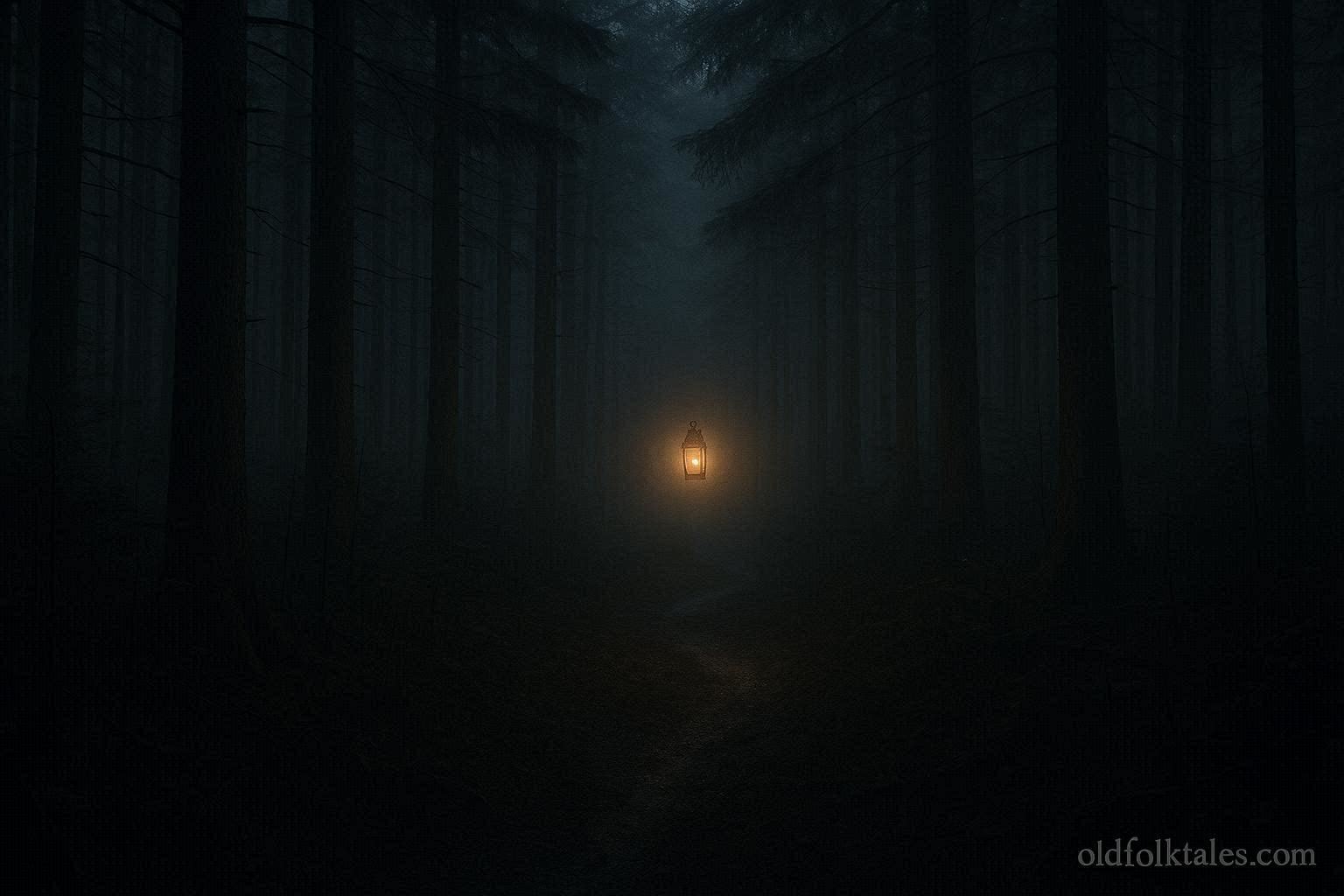
The forests of Vermont are known for their quiet beauty, but those who have spent enough time walking beneath their tall trees understand that the woods are never completely silent, and never entirely predictable. By day, the paths are clear enough to follow, marked by subtle signs and the memory of those who have walked them before. Sunlight filters through layers of leaves, touching the ground in broken patterns, and everything feels calm, steady, and familiar.
But the forest does not remain the same when the day begins to fade.
As evening settles in, the light changes slowly at first, then all at once. The sky dims above the treetops, and the shadows below begin to gather. The deeper parts of the woods darken quickly, swallowing color and detail until shapes lose their edges and distance becomes difficult to judge. The path that once seemed certain now feels narrower, less defined, and somehow longer than before.
It is at this hour, between the last of daylight and the arrival of full night, that the Lantern is most often seen.
Those who encounter it rarely expect anything unusual. Many are simply trying to make their way back before darkness settles completely. Some are hikers who have stayed out longer than planned. Others are travelers unfamiliar with the terrain, moving carefully through a place that feels both open and closed at the same time.
The first sign is usually a glow.
Faint at the beginning.
Barely noticeable.
Discover chilling ghost tales and haunted places that echo through America’s towns and countryside.
It appears ahead, between the trees, just far enough to be seen but not clearly understood. It does not shine like a flashlight or flicker like a fire. Instead, it moves with a steady softness, like a lantern carried by someone walking at a measured pace.
Naturally, the assumption is simple.
Someone else is on the trail.
Someone who knows the way.
Someone who can be followed.
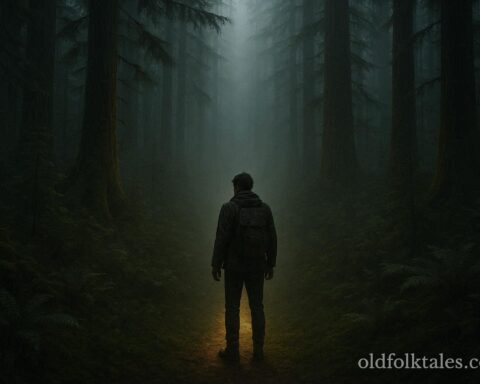
One traveler described the moment clearly. The forest had already grown dim, and the trail had begun to fade into the surrounding ground. The air was cool, and the stillness felt heavier with each passing minute. Just as uncertainty began to set in, a small light appeared ahead.
It moved slowly.
Deliberately.
Not drifting without direction, but following a path.
Relief came quickly.
The traveler stepped forward, keeping the light in view. It remained at a comfortable distance, never too far to lose sight of, never close enough to catch up to. Each time the traveler adjusted pace, the light seemed to respond, maintaining the same gap as if aware of being followed.
At first, nothing felt wrong.
The ground was firm.
The trees spaced enough to pass through easily.
But after some time, the surroundings began to change.
The forest grew denser.
Branches reached lower.
The path narrowed, then seemed to disappear entirely.
Still, the light moved on.
Steady.
Unwavering.
Always just ahead.
The traveler called out once.
Then again.
No answer came.
Only the sound of their own voice returning softly through the trees.
It was then that a new feeling emerged.
Not fear exactly.
But awareness.
The sense that something about the situation did not follow the expected pattern.
The traveler stopped.
The light stopped.
Not immediately, but just enough to be noticed.
When the traveler stepped forward again, the light resumed its movement.
That was the moment the experience changed.
The idea of following turned into hesitation.
The forest around had become unfamiliar. The direction of travel no longer matched the original path. The air felt colder, and the silence had deepened in a way that seemed unnatural.
Then, without warning, the light vanished.
There was no fading.
No movement away.
One moment it was there.
The next, it was gone.
The darkness that followed felt heavier than before. Without the glow ahead, the forest seemed larger, more confusing. Shapes shifted with every glance, and the path could no longer be found with certainty.
The traveler stood still for a long moment, trying to adjust to the sudden absence of light.
Then slowly, carefully, began to retrace steps.
Other accounts describe similar experiences, each with small differences but the same central pattern. A light appears. It moves with purpose. It draws attention. And when followed, it leads away from familiar ground before disappearing without explanation.
Some travelers report turning away before going too far, choosing not to follow the light once they realize it does not behave like an ordinary source. Others admit that curiosity keeps them moving forward longer than they intended, drawn by the steady glow and the quiet promise of direction.
The consistency of the movement is what remains most striking.
The light does not wander.
It does not flicker randomly.
It follows a path that feels intentional, yet never reveals where it leads.
Natural explanations attempt to account for the phenomenon. In dense forests, light can reflect and scatter in unusual ways. Moisture in the air can bend and soften distant light sources, making them appear closer or more defined than they are. Insects may produce brief flashes, and distant illumination from outside the forest can be distorted by layers of trees and terrain.
Yet these explanations struggle to match the behavior described in the stories.
The steady distance.
The responsive movement.
The sudden disappearance.
These details suggest something more structured than random light.
In the folklore of New England, lights in the forest have long been part of storytelling traditions. They are sometimes described as guides, appearing to those who are lost and leading them toward safety. In other accounts, they are warnings, drawing travelers away from known paths and into deeper, more uncertain terrain.
The Lantern in the Vermont woods exists between these meanings.
It does not clearly help.
It does not clearly harm.
It simply leads.
And then it is gone.
Those who have seen it often speak of the experience with a sense of reflection rather than fear. The moment stays with them, not because of what was seen, but because of what was felt.
The quiet.
The pull of curiosity.
The realization that not everything that appears to guide should be followed without question.
The forests of Vermont remain as they have always been, vast and layered with both natural beauty and the stories that grow within them. Paths continue to wind through the trees, and travelers continue to walk them, each with their own purpose.
And somewhere in those woods, at the edge of fading light, there are moments when a glow appears between the trees.
Soft.
Steady.
Waiting to be noticed.
Click to read all American Cryptids & Monsters — creatures of mystery and fear said to inhabit America’s wild landscapes.
Moral Lesson
Not everything that seems to guide you is meant to lead you in the right direction.
Knowledge Check
- Where is the story set?
Vermont - What unusual phenomenon do travelers see?
A floating moving light in the forest - What happens when they follow it?
They are led deeper into unfamiliar areas - What makes the light unusual?
It moves intentionally and maintains distance - What is one natural explanation?
Light reflection and atmospheric effects - What is the main idea of the story?
That curiosity without caution can lead to danger
Source
Adapted from materials preserved by University of Vermont
Cultural Origin
New England folklore