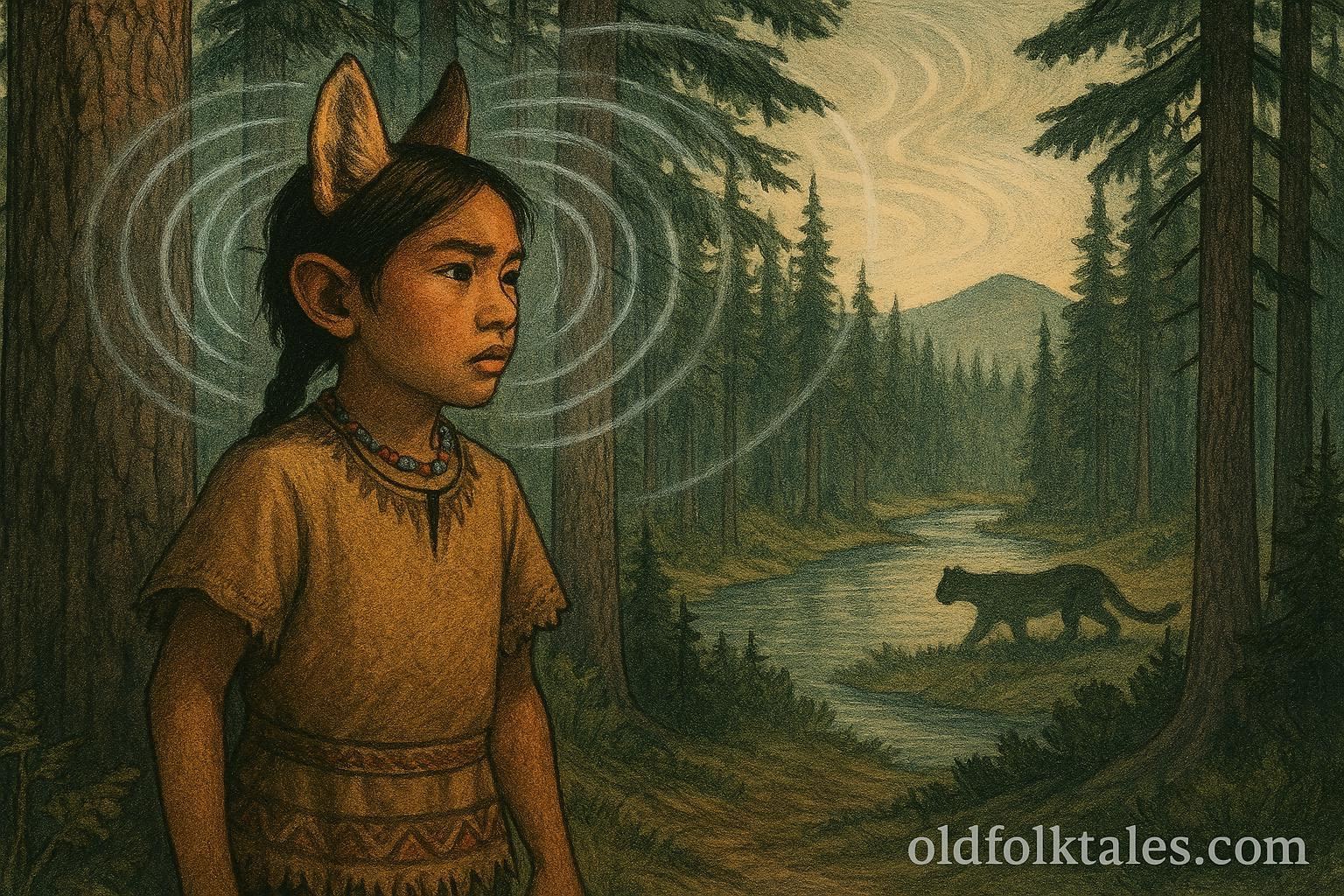
In the dense forests along the Klamath River, where the pines swayed tall and the mist clung to every branch, there lived a young boy named Kiona. His village had always thrived along the riverbanks, hunting, fishing, and gathering the bounty of the land. But the elders often spoke of dangers that came swiftly and silently threats that did not announce themselves with sight, only with sound.
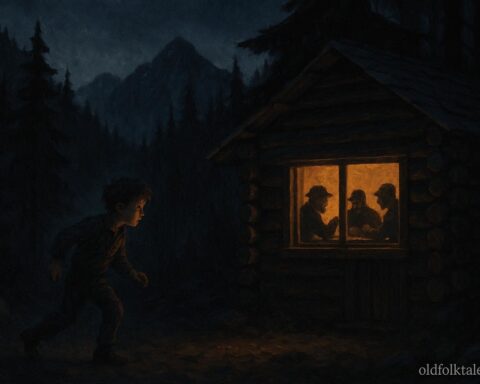
One crisp autumn morning, Kiona wandered near the edge of the forest, gathering kindling for the village fires. Birds chirped and leaves rustled, but suddenly, a faint voice echoed through the trees. It was not the voice of a person he knew; it was higher and sharper, almost like the whisper of wind through reeds. “Beware,” it seemed to say, carrying urgency with each syllable. Kiona paused, straining his ears. Nothing appeared yet.
He remembered the stories of the elders. “Sometimes the forest warns before danger shows itself,” they had said. The voice before footsteps, they called it a gift of awareness given to those who listened closely. Most villagers ignored such subtle warnings, relying only on sight. Kiona, however, had learned from his grandmother to trust his ears and his instincts.
Encounter the strange and the unseen — from Bigfoot to regional monsters hiding in America’s forests.
Suddenly, the faint snap of a branch broke the silence. Kiona turned slowly and saw a shadow moving quickly between the trees. He recognized it as a mountain lion, stalking silently toward a deer that grazed near the clearing. Remembering the voice, he quietly backed away, taking care to keep the trees between him and the predator. The mountain lion sprang at the deer but missed as the animal bolted into the thicket. Kiona exhaled slowly, his heart pounding, grateful for the warning that had come before the danger itself.
He returned to the village and told the elders what had happened. They nodded solemnly, praising Kiona for listening. “The forest speaks first,” one elder said, “but only to those who have learned to hear. Many walk blindly and are caught unaware, but you listened. That is the first step toward survival.”
Over the weeks that followed, Kiona practiced this skill. He noticed patterns in the sounds around him, the soft rustle that signaled a deer grazing, the low growl that indicated a predator nearby, the quiet snap that meant another human approached. His awareness grew sharper, and soon he became a guide for other children, teaching them that sound often came before sight.
One evening, a violent storm rolled across the valley. The wind howled through the pines, and the river swelled with sudden runoff from the mountains. Villagers were caught off guard, yet Kiona had already heard the subtle warning in the distant tremor of the ground and the faint cracking of unstable branches. He helped lead the village to higher ground just as the river’s edge surged dangerously close. Many later said that the voice had saved lives that day, though no one could pinpoint the source of the warning.
Years passed, and Kiona grew into a wise hunter and protector of his people. He remembered the lessons of his childhood that the forest spoke, that the river murmured warnings, and that every creature, every rustle, and every whisper could carry a message. Children who trained under him learned the same discipline: to listen first, to observe second, and to act with care.
The elders taught that this gift was a responsibility. Heed the voice before footsteps, they said, and you live in harmony with the land. Ignore it, and you invite danger. Stories of Kiona’s attentiveness spread through the Klamath territory. Hunters and gatherers alike began to pay closer attention to the subtle cues of nature, understanding that survival depended not only on strength or weapons but on perception, patience, and intuition.
In time, Kiona became known throughout the region as the boy who could hear the forest itself. He never boasted of his skill, understanding that it was a gift rather than a personal achievement. The river, the trees, the animals, all were teachers and the voice that came before footsteps was their messenger.
Generations later, elders still tell the tale to children. They remind them that the forest and river have always spoken to the people who listen carefully. They tell of the boy who survived because he heard the warning before the danger appeared. In this way, the legend endures, teaching the importance of awareness, preparation, and living in harmony with the natural world.
Explore the heart of America’s storytelling — from tall tales and tricksters to fireside family legends.
Moral Lesson
Awareness and attentiveness to the subtle warnings of the natural world can protect and guide us. Intuition, observation, and respect for the environment are keys to survival.
Knowledge Check
- Q: What did Kiona hear before the danger appeared?
A: A faint warning voice from the forest. - Q: What predator did Kiona encounter in the story?
A: A mountain lion. - Q: What lesson did the elders teach about sound and danger?
A: That warnings often come as sound before sight, and listening carefully is vital. - Q: How did Kiona use the voice to protect the village during a storm?
A: He heard subtle cues and led people to higher ground before the river surged. - Q: Why is the voice described as coming “before footsteps”?
A: It symbolizes early warnings and intuition that precede visible danger. - Q: What did children learn from Kiona?
A: To listen first, observe second, and act carefully.
Source:
Adapted from University of Oregon Plateau Indigenous sensory folklore archives
Cultural Origin:
Klamath communities