Weddings have always been celebrations filled with love, joy, family, and community. They are more than just a ceremony; they are gatherings where customs, rituals, and superstitions often guide the day, adding meaning, humor, and anticipation to the event. Among these many customs in American weddings, one of the most beloved and playful traditions is the practice of hiding a ring inside the wedding cake. According to folklore, the person who discovers the hidden ring in their slice would be the next to marry.
This custom has roots in 19th- and early 20th-century America, when weddings were grand social events and community gatherings. Cakes were carefully prepared, often fruitcakes, rich layered sponge cakes, or decorated confections that represented prosperity, sweetness, and the hope for a long and happy marriage. Before the cake was baked or served, a small ring usually silver or gold and carefully wrapped in cloth or foil was hidden inside. The location of the ring was a closely guarded secret, creating suspense and excitement among the wedding guests.
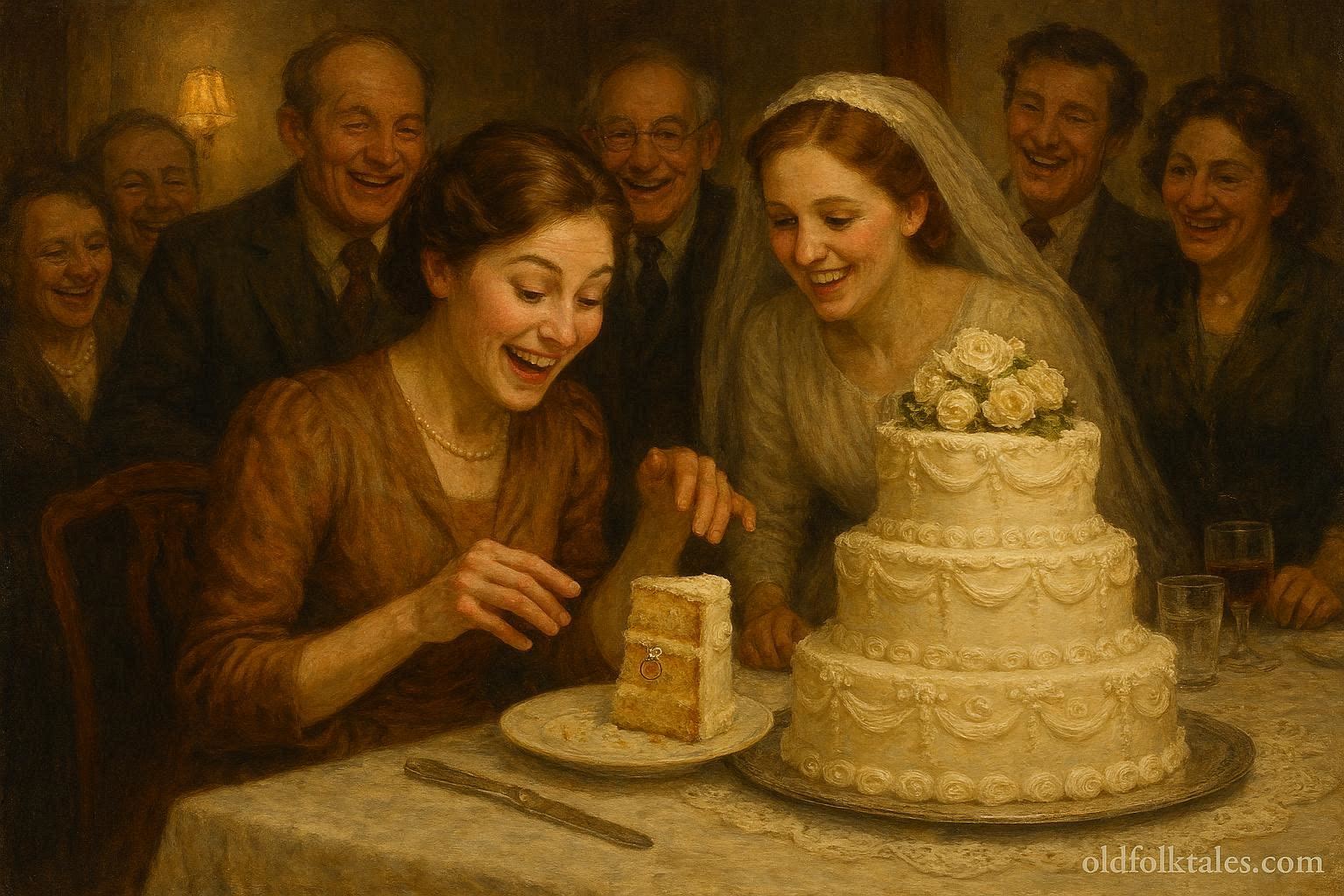
As the cake was brought out during the reception, everyone’s attention focused on the table. The bride and groom ceremoniously cut the first slice together, symbolizing their unity and shared future. Then, slices were distributed among family and friends. Guests leaned in with anticipation, hoping that luck would favor them. The playful nature of the custom turned a simple dessert into a thrilling moment of suspense and laughter.
Encounter the strange and the unseen — from Bigfoot to regional monsters hiding in America’s forests.
Accounts from Appalachian and Southern communities describe how eagerly guests examined each slice, sometimes even gently shaking their pieces before biting, trying to spot the hidden ring. The tension and excitement often created a lively, cheerful atmosphere. Children squealed, adults whispered jokes, and family members teased one another as slices were passed. The moment when someone finally discovered the ring was typically met with loud laughter, applause, and good-natured teasing about impending weddings.
One well-known story from a small rural town in Kentucky illustrates the charm of this tradition. A young bride, deeply devoted to her family’s customs, insisted that the wedding ring be hidden in the cake. Her grandmother, who had passed down the ritual from her own mother, carefully wrapped a silver ring in cloth and inserted it into the batter before the cake went into the oven. The grandmother’s careful hands ensured the ring was perfectly hidden but safe from harm during baking.
During the reception, guests gathered around the table as the first slices were cut. Conversation paused momentarily as everyone anticipated the outcome. Several slices were served, and finally, a young cousin of the bride noticed a glint in her cake. She held it up for everyone to see. Cheers and laughter erupted as the family teased her about her upcoming wedding. According to the story, within a year, she did become engaged, adding to the mystique and playful belief surrounding the tradition. Stories like this circulated for generations, strengthening the legend of the wedding ring in the cake.
Over time, variations of the custom emerged. Some weddings included several charms hidden in the cake instead of a single ring. Each charm symbolized a different fortune. For example, a small coin might represent wealth, a heart symbolized love, and a tiny figure indicated fertility or prosperity. Guests who discovered a charm would often share their fortune with everyone at the table, turning the cake-cutting into a playful divination ritual. In these ways, the wedding cake became more than just a dessert; it became a symbolic centerpiece connecting guests to traditions, storytelling, and playful predictions about the future.
The tradition also highlights the role of community and family in weddings. In an era when weddings were major social gatherings in towns and rural areas, rituals like the hidden ring helped involve everyone, young and old, in the celebration. Children, cousins, neighbors, and even visitors from distant towns were engaged, creating a shared moment of joy and anticipation. It also emphasized intergenerational connections, as elders taught younger family members the proper way to honor and celebrate the tradition.
Beyond the fun and playfulness, the hidden ring tradition also represents the human desire to look toward the future with hope. Weddings, after all, are about beginnings. The ritual of the ring in the cake gave guests a way to participate in imagining happy outcomes for themselves and others. It connected them symbolically to the couple’s journey while creating personal stories they could tell for years to come.
Even as modern weddings have evolved, the tradition of hiding a ring in the cake continues in many families, though sometimes adapted for contemporary tastes. Today, some couples place the ring in a small box beside the cake or use charms made of sugar or chocolate. However, the essence remains: the playful prediction, the anticipation, and the shared laughter that unites everyone at the celebration.
In many ways, this superstition exemplifies how folklore survives through generations. While science cannot explain why a person might marry after finding a ring, the stories persist because of the social and emotional value they carry. The wedding ring in the cake is remembered not just for the superstition but for the joy, the shared anticipation, and the way it brings people together in a communal celebration of love, hope, and family.
Ultimately, the legend reminds us that traditions, even playful ones, serve deeper purposes. They provide continuity, connect people to their heritage, and create lasting memories. A single ring hidden in a cake can become a story told across generations, a symbol of anticipation, love, and the enduring human desire to find meaning and joy in shared celebrations.
Step into America’s cultural roots — from folk healing and weather lore to seasonal celebrations.
Moral Lesson
The wedding ring in the cake teaches that playful traditions and communal rituals strengthen social bonds, inspire joy, and encourage hope for the future. Even small gestures in celebrations can create lasting memories and meaningful connections among family and friends.
Knowledge Check
- What object was hidden inside the wedding cake in this tradition?
A small ring.
- What did finding the ring in a slice of cake signify?
The person who found it would be the next to marry.
- How did guests typically react when the ring was discovered?
With laughter, applause, and playful teasing.
- Who often placed the ring in the cake?
A family elder or someone knowledgeable about the tradition.
- What variations of this custom emerged over time?
Some cakes contained multiple charms, such as coins, hearts, or small figures, each with its own symbolic meaning.
- What does the ring-in-the-cake tradition represent in American folklore?
Hope, joy, shared celebration, and playful predictions about love and marriage.
Source
Adapted from materials preserved in the Smithsonian Center for Folklife and Cultural Heritage
Cultural Origin
American wedding folklore