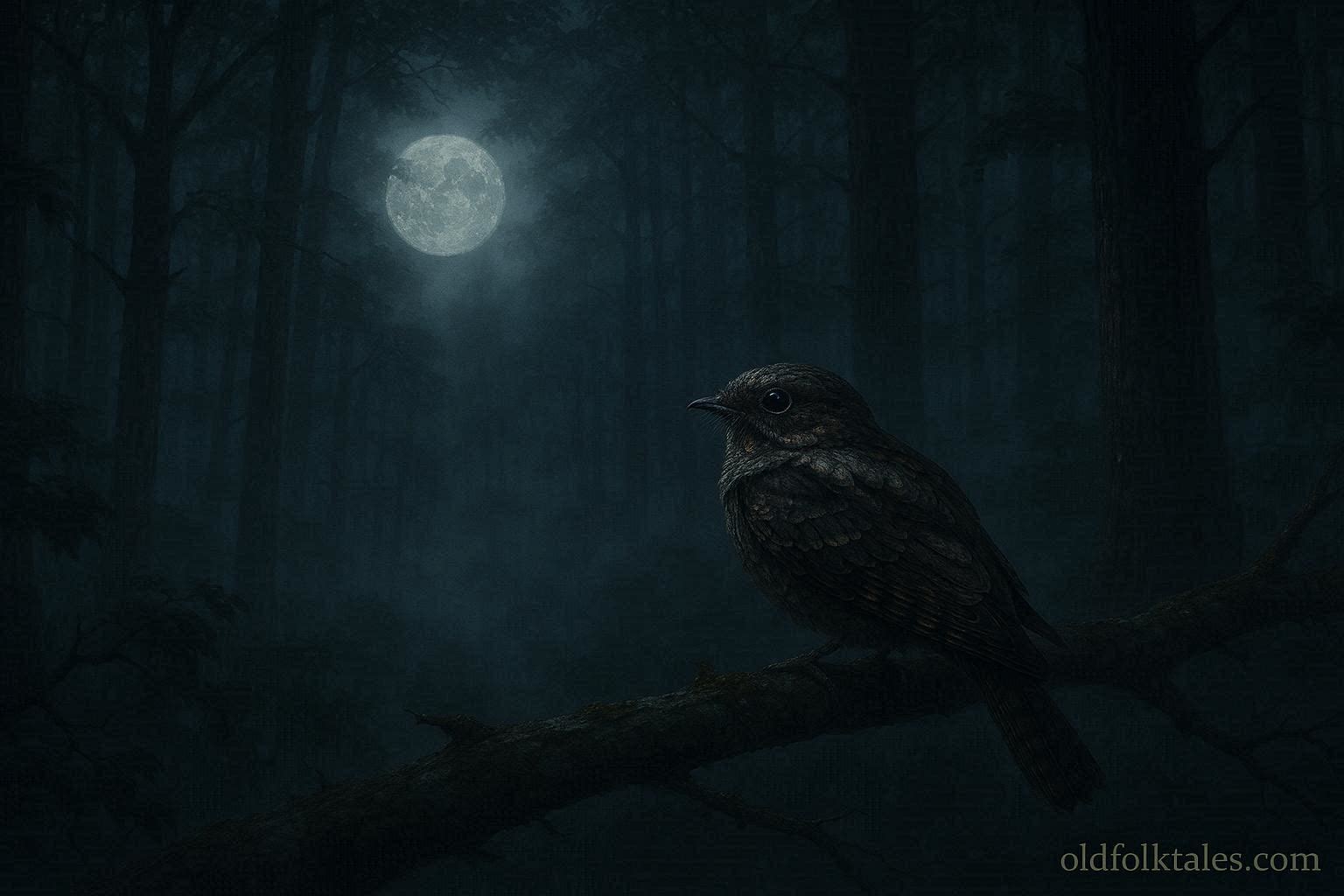
In the rugged hills and valleys of Appalachia, nature’s rhythms were closely observed by the people who lived in its forests and hollows. Life in these communities was intertwined with the land, the animals, and the sounds that echoed through the night. Among the most chilling beliefs passed down through generations was the superstition surrounding the whippoorwill, a small nocturnal bird with a haunting, repetitive call.
According to Appalachian folklore, hearing a whippoorwill call near a home, especially at night, was an omen of impending death. The superstition was taken seriously, not merely as a tale to frighten children, but as a warning from the natural world. Families listened carefully, and the call of a whippoorwill could send them into hushed anticipation or fearful preparation.
The origin of this belief lies partly in the bird’s elusive nature and its distinctive vocalization. The whippoorwill’s call is a series of clear, repeated notes that echo through the night: “whip-poor-will… whip-poor-will…” To the untrained ear, it can sound almost human, like a voice calling out warnings in the dark. In the dense forests of Appalachia, where the night could be long and silent, this call carried across the hollows with an eerie clarity, reinforcing the sense that something otherworldly was afoot.
Explore how American legends shaped the nation — from frontier heroes to Revolutionary War tales.
One story from a West Virginia community tells of an elderly farmer who was awakened by the bird’s repeated call just outside his cabin. The sound was unnerving, persistent, and seemed to circle the house. He gathered his family, explaining that the bird’s call had traditionally been associated with the dying or spirits leaving the world of the living. That very night, neighbors came with news that his oldest friend had passed quietly in his sleep. The family’s recollection of the whippoorwill’s call became a cautionary tale shared for generations, a testament to the bird’s supernatural reputation.
The belief was not universal across all Appalachian regions, but where it was held, it influenced daily life. People often prepared for the worst when the bird’s call was heard, lighting lamps, checking doors, and offering prayers for health and protection. Some families performed small rituals to ward off misfortune, including sprinkling salt across thresholds, keeping candles burning, or reciting protective verses. Children were taught to respect the sounds of the night and to remain silent and watchful if the whippoorwill called, reinforcing obedience, mindfulness, and reverence for the unseen world.
The superstition also carried symbolic weight beyond literal interpretations. The whippoorwill, nocturnal and mysterious, became a symbol of mortality and the thin veil between life and death. Its presence reminded people of the fragility of life and the importance of living respectfully and morally. Many tales emphasized that the bird did not bring death directly but served as a messenger, a warning to prepare, reflect, and honor both the living and the dead.
One particularly chilling account from Tennessee involves a young mother who heard the bird calling near her home. Concerned for her elderly father, she stayed awake through the night, praying and ensuring he had everything he needed. The next morning, she discovered that her father had fallen ill during the night, though he survived. The story spread, reinforcing the superstition that the whippoorwill’s call could indicate danger or illness, not just death, reminding communities of their need for vigilance and care for one another.
Anthropologists and folklorists have noted that this superstition reflects a broader pattern of animal omens in Appalachian and Native American traditions, where birds, insects, and other wildlife serve as carriers of messages from the spiritual world. Unlike modern technological warnings, these signs were interpreted within the natural and cultural environment of the people. A bird’s song or call was never dismissed as mere sound; it was a living link between humans and unseen forces, reinforcing social cohesion, respect for nature, and attentiveness to the rhythms of life.
In many ways, the whippoorwill superstition also served a practical function. Listening for unusual sounds at night encouraged people to remain aware of their surroundings, creating a form of natural vigilance. It promoted community care, as hearing the bird’s call often prompted neighbors to check on each other, fostering solidarity and mutual concern. The superstition was both spiritual and social, entwining moral behavior, environmental awareness, and cultural identity.
Over the decades, the belief has persisted, though more as a cultural story than a widely feared omen. Modern residents of the Appalachian region still recount tales of the whippoorwill, especially during campfire gatherings or storytelling sessions. The bird’s haunting call continues to inspire awe and caution, connecting people to their heritage, the natural world, and the enduring mystery of life and death.
Ultimately, the superstition of the whippoorwill reminds us that humans have long sought meaning in the natural world. By listening carefully, observing patterns, and interpreting signs, communities created rich folklore that guided behavior, reinforced values, and provided spiritual guidance. The bird’s call, echoing through forests and valleys, serves as a timeless symbol of mortality, vigilance, and the subtle ways nature communicates with those willing to listen.
Step into America’s cultural roots — from folk healing and weather lore to seasonal celebrations.
Moral Lesson
The superstition teaches the importance of attentiveness, respect for life, and mindfulness of the natural and spiritual worlds. It reminds communities to care for one another, honor traditions, and approach mysterious signs with both caution and reflection.
Knowledge Check
- What bird is associated with death omens in Appalachian folklore?
The whippoorwill.
- What did repeated calls of the whippoorwill near a house signify?
That someone inside might soon die or fall ill.
- How did families traditionally respond to the bird’s call?
By lighting lamps, reciting prayers, performing protective rituals, and staying vigilant.
- Did the bird cause death directly?
No, it served as a messenger or warning from the spiritual world.
- How did this superstition influence community behavior?
It encouraged attentiveness, care for neighbors, and respect for life and cultural traditions.
- What broader cultural lesson does the whippoorwill superstition convey?
That humans should listen to nature, respect spiritual omens, and maintain moral and communal responsibility.
Source
Adapted from materials preserved in the Library of Congress American Folklife Center
Cultural Origin
Appalachian folklore traditions