High above the lakes and forests of the Great Lakes region, the skies often rumbled with the wings of Thunderbird, the powerful spirit bird known to the Ojibwe and neighboring nations. Thunderbird was not only a creature of awe-inspiring size; it was a protector of humans, a guardian of balance who intervened when chaos threatened the world.
One spring, after the long winter snows began to melt, the rivers swelled beyond their banks. The elders whispered that the water spirits were restless. These spirits, invisible to human eyes, could stir the currents into floods, overturn canoes, and drown entire villages if angered or ignored. For generations, the people had left offerings at the water’s edge, asking for calm and protection, but this year, the streams roared louder than ever, and strange ripples distorted reflections on the lake.
The villagers huddled in their homes as the winds howled. Fish leaped violently from the water, and the trees bent under the force of sudden storms. It was then that the first thunder rolled through the valley, and the villagers knew that Thunderbird had taken flight.
Discover chilling ghost tales and haunted places that echo through America’s towns and countryside.
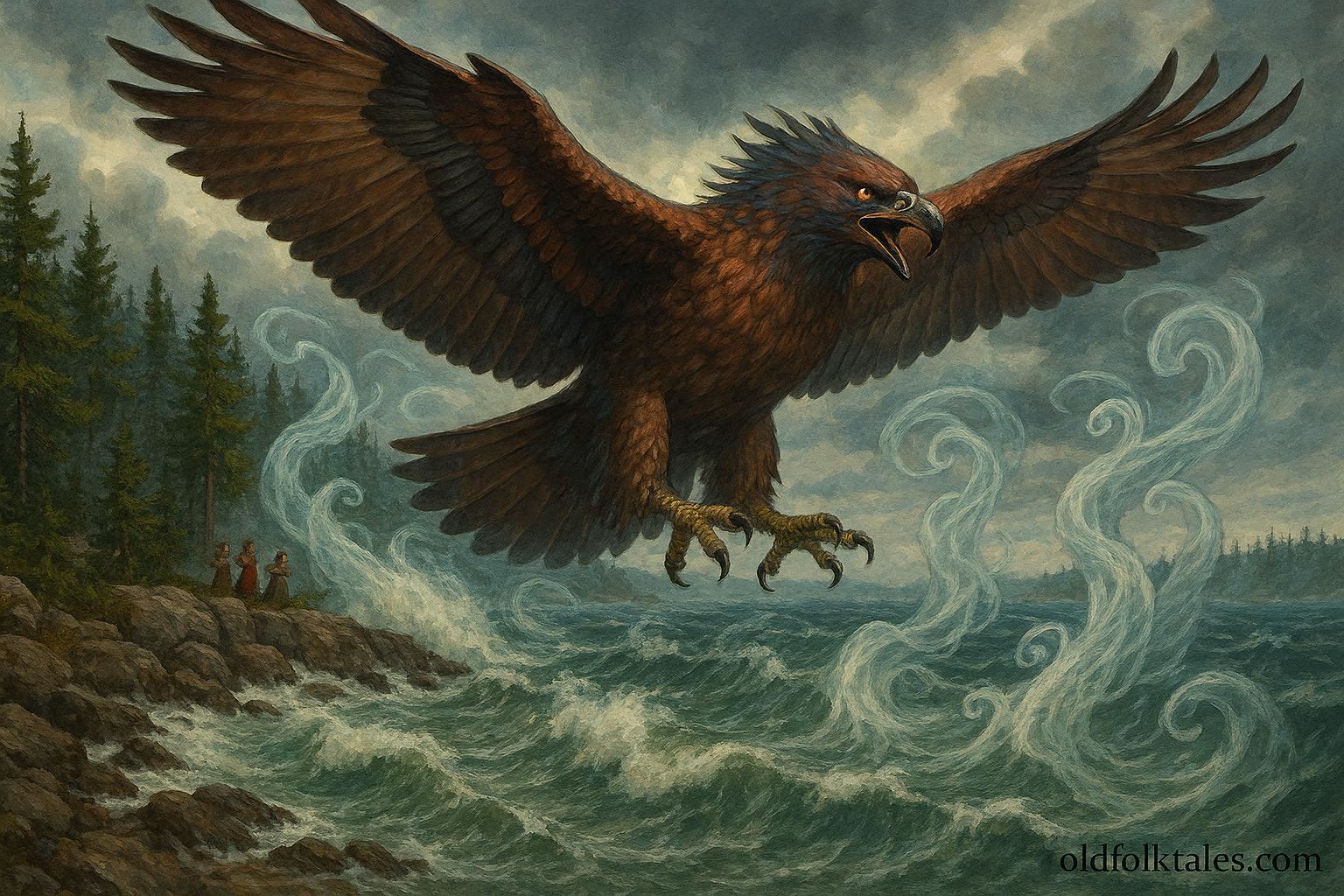
High above, Thunderbird’s massive wings created shockwaves, cracking the clouds and stirring the air into whirling currents. Its eyes, bright as lightning, scanned the waters for the source of the disturbance. The water spirits had emerged in full strength, swirling and churning, rising like twisting serpents that threatened to overflow the rivers and lakes. Their voices were carried on the wind, hissing and laughing, a sound that chilled even the bravest of hunters.
Thunderbird descended, talons poised, wings cutting through the storm. Each flap created bursts of wind that pushed against the spiraling currents of the water spirits. The battle raged across the skies and lakes, lightning clashing with watery coils. Thunderbird’s call echoed like thunder itself, shaking the cliffs and forests, warning all creatures to take shelter.
Below, the villagers watched from safe distances, awestruck by the spectacle. Canoes had been lifted by sudden waves, and the shoreline churned with white-capped fury, yet Thunderbird moved with purpose, driving the spirits back, asserting the ancient balance that humans depended upon for survival. Some of the elders whispered prayers, giving thanks for the power of Thunderbird and the sacred covenant between sky, water, and land.
For hours, the struggle continued. The water spirits twisted and lunged, attempting to flood the villages, but Thunderbird’s might could not be overcome. With a final cry that split the heavens, it struck the largest of the spirits with its talons, forcing it deep below the water. One by one, the other spirits retreated, leaving the rivers calmer than they had been in weeks.
When the battle ended, Thunderbird hovered high above the lake, wings outstretched, surveying the land. The villagers stepped from their shelters and offered prayers, smoke rising from their fires to honor the bird. They knew the fight was not simply about raw power — it was a lesson about the delicate balance of nature. Thunderbird acted to protect humans, but also to remind them that the waters were sacred, alive with spirits that demanded respect and care.
In the days that followed, the rivers returned to their steady flow, and the fish swam calmly once more. The villagers held ceremonies at the water’s edge, leaving gifts of tobacco and food for the spirits, thanking Thunderbird for its protection. Children were taught to listen for the rumble of thunder and to watch the skies for signs of the great bird, learning that courage and reverence go hand in hand.
Thunderbird became a symbol not only of protection but of balance. It reminded the Ojibwe and other Great Lakes peoples that humans are part of a larger world, and that even the most powerful spirits act in harmony with nature. Stories of that spring spread through neighboring communities, passed from elders to youth, ensuring that the legend of the battle with the water spirits would endure across generations.
Even today, when the storms come roaring across the lakes, some elders say that Thunderbird is still patrolling the skies. They warn children to respect the rivers and lakes, to leave offerings when taking from the water, and to never underestimate the spirits that inhabit the land. For those who listen, the thunder is a song of protection, a reminder that power, courage, and balance are the true forces that preserve life in the Great Lakes.
Click to read all American Folktales — timeless oral stories passed through generations across the United States.
Moral Lesson:
Protection and balance require respect for nature, courage in the face of danger, and the understanding that humans are part of a larger web of life.
Knowledge Check :
- Q: Who battled the water spirits to protect humans?
A: Thunderbird. - Q: What threat did the water spirits pose to the villages?
A: Flooding rivers, overturning canoes, and endangering lives. - Q: How did Thunderbird fight the water spirits?
A: Using its wings to push currents and talons to strike the spirits. - Q: What did the villagers do to honor Thunderbird after the battle?
A: They offered prayers, gifts, and ceremonies at the water’s edge. - Q: What lesson do the elders teach about storms today?
A: That Thunderbird protects humans and that the waters and spirits should be respected. - Q: What does Thunderbird symbolize in Ojibwe culture?
A: Protection, balance, and the sacred relationship between humans and nature.
Source:
Adapted from Great Lakes Indian Fish & Wildlife Commission oral tradition documentation
Cultural Origin:
Ojibwe and other Great Lakes nations