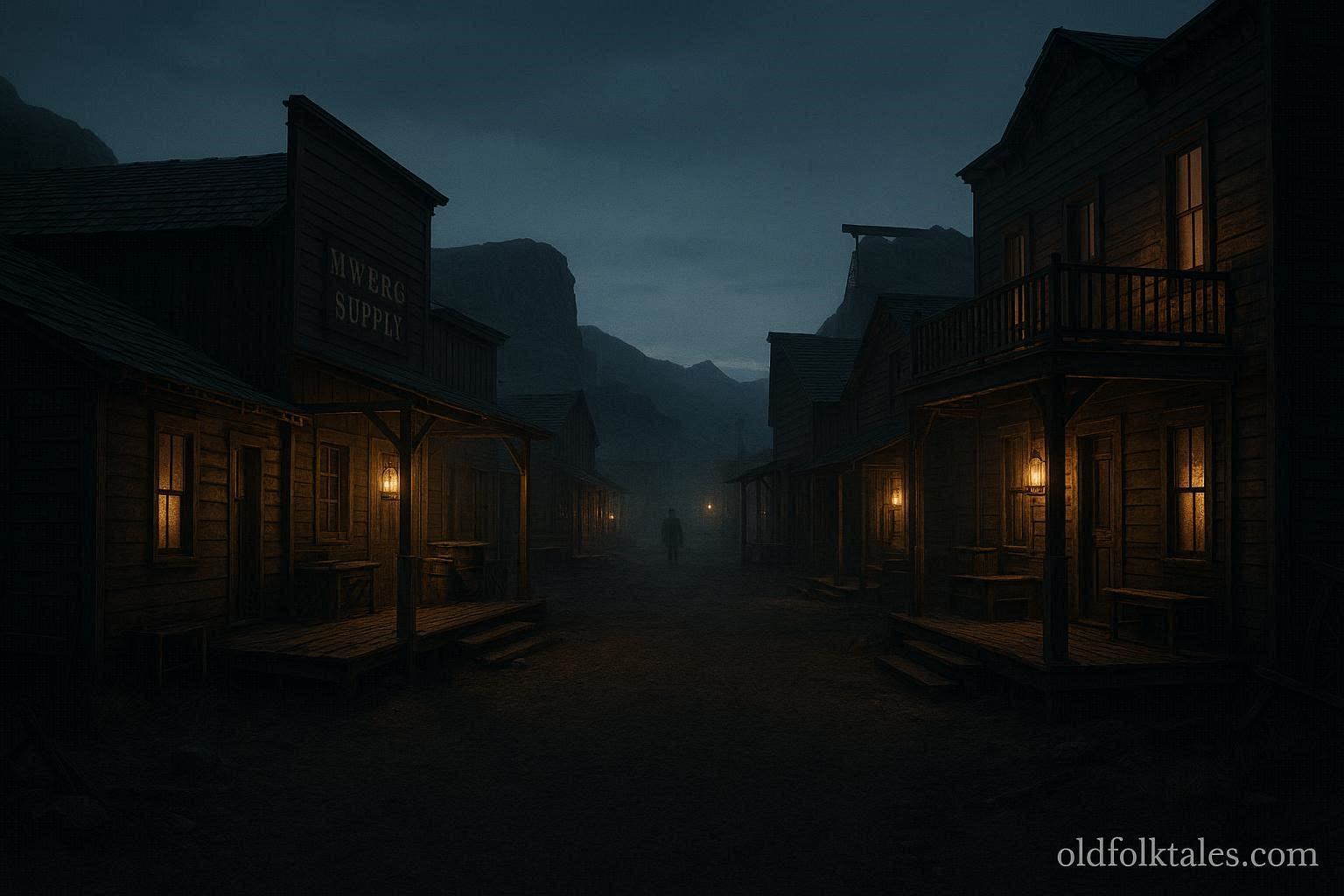
High in the desert hills of Nevada lies Virginia City, a town that once thrived during the mining boom of the 19th century. Its streets, lined with wooden buildings and narrow walkways, still reflect the energy of a time when people arrived in search of opportunity and fortune.
Today, the town remains preserved.
Visitors walk the same roads where miners, merchants, and travelers once moved through daily life. The buildings stand as reminders of a past that shaped the region, holding stories within their walls.
But as the day fades and the streets grow quiet, some say the town does not become completely still.
It is during these quieter hours that unusual experiences are often reported.
One of the most common is the sound of footsteps.
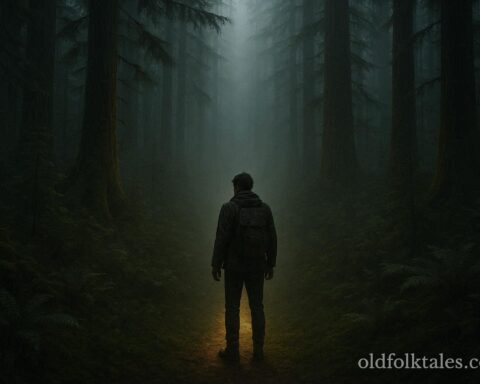
Not the casual movement of a passerby, but a steady rhythm that echoes along the wooden paths. Visitors describe walking alone, hearing steps that seem to follow just behind or just ahead, yet finding no one when they turn to look.
The sound is clear.
Measured.
Encounter the strange and the unseen — from Bigfoot to regional monsters hiding in America’s forests.
And often too consistent to ignore.
A traveler once described walking along one of the main streets just after sunset. The light had dimmed, and most of the activity in town had settled. As he moved forward, he heard footsteps on the wooden boards beside him.
He paused.
The sound continued for a brief moment, then stopped.
When he looked around, the street was empty.
No movement.
No sign of anyone nearby.
When he resumed walking, the footsteps returned.
Always at a distance.
Always just out of view.
Alongside these sounds are reports of shadow figures.
These are not detailed sightings, but quick impressions. A figure crossing a doorway, a shape standing briefly at the edge of a building, or movement seen from the corner of the eye. Those who experience it often describe a sense that the figure is part of the surroundings, not separate from them.
In one account, a visitor standing near an old storefront noticed a shadow move across the window from inside the building. The structure was closed, with no lights and no visible occupants. When the visitor stepped closer to look, the interior remained still.
The shadow did not return.
Other reports come from those who explore the quieter parts of Virginia City, away from the more active areas. These locations, less visited and more isolated, are often where the experiences feel strongest.
The silence in these areas is deeper.
The environment more still.
And small changes, sounds, movement, or shifts in light become more noticeable.
There are several ways people interpret these events.
Some believe they are natural.
Old wooden structures can create sounds as they expand and contract with temperature changes. Wind moving through narrow streets can carry echoes, making it difficult to determine where a sound begins or ends. Shadows can also shift unexpectedly as light changes, especially in environments with uneven surfaces and structures.
Others see the experiences as connected to the town’s history.
During its peak, Virginia City was a place of constant activity. People moved through its streets at all hours, working, trading, and living in close quarters. The idea that such a place might retain an impression of that activity is one that some find meaningful.
In this view, the footsteps are not new.
They are echoes of movement that once filled the streets.
The shadow figures are not separate presences, but reflections of a time when the town was alive with motion.
There are also those who approach the stories with curiosity rather than certainty.
They listen to the accounts, visit the town, and observe for themselves. Whether they experience anything unusual or not, they leave with an appreciation for the atmosphere that the town carries.
Institutions such as the University of Nevada continue to document the historical significance of mining towns like Virginia City, preserving records of the people and events that shaped them. These records provide context, helping visitors understand the environment in which these stories exist.
The combination of preserved structures, historical depth, and quiet surroundings creates a setting where the past feels close.
Not visible.
But present in subtle ways.
Not every visitor hears the footsteps.
Not every visitor sees the shadows.
For many, the town remains exactly as it appears a historical site, carefully maintained and open to exploration.
But for those who do notice something unusual, the experience often leaves a lasting impression.
It is not always dramatic.
Sometimes it is just a sound that does not match the moment.
A movement that disappears too quickly.
A feeling that the space is not entirely empty.
And in those moments, the line between past and present becomes less certain.
As if the streets, worn by time and memory, still carry the quiet rhythm of those who once walked them.
Click to explore all American Ghost Stories — haunting legends of spirits, lost souls, and mysterious places across the U.S.
Moral Lesson
Places with rich history can leave lasting impressions, reminding us to respect and reflect on the past.
Knowledge Check
- What location is featured in the story?
Virginia City. - What sounds are commonly reported?
Footsteps along the streets. - What visual experiences do visitors describe?
Shadow figures and brief movements. - When do these events usually occur?
During evening or quiet hours. - What is one natural explanation for the experiences?
Environmental sounds and shifting light. - What is another interpretation?
That the town holds echoes of its past activity.
Source
Adapted from materials preserved by University of Nevada
Cultural Origin
Western folklore