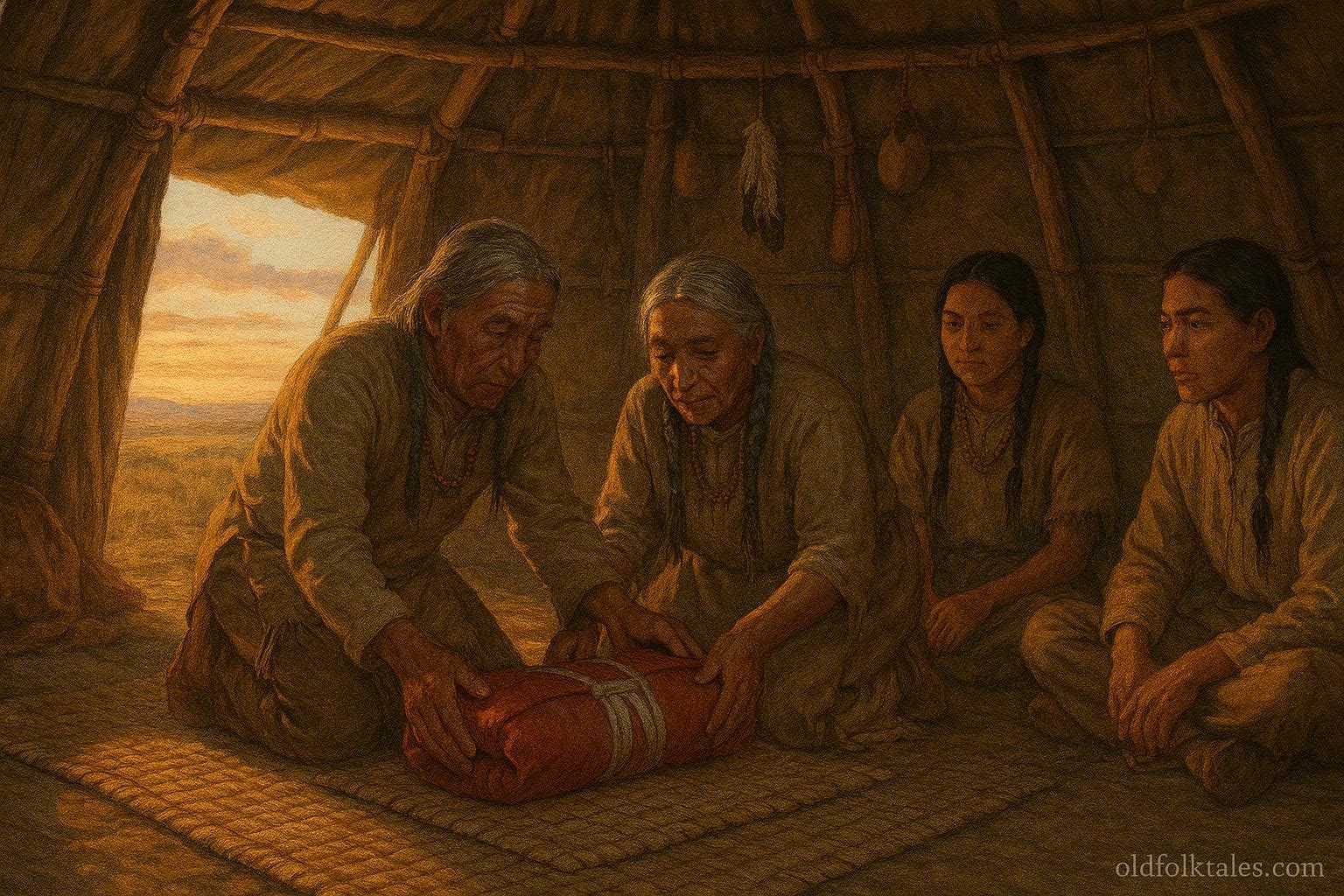
Morning light filtered gently through the lodge walls, illuminating the careful hands of the elders as they prepared the sacred bundle. A young apprentice knelt nearby, eyes wide with anticipation, feeling both awe and a quiet weight of responsibility. The bundle rested on a mat of woven grasses, wrapped in layers of cloth and leather, its contents hidden but known to carry the wisdom and courage of generations past. Today, as always, the ritual of opening the bundle would teach more than what lay inside it would teach respect, memory, and duty.
The sacred bundles, preserved in families and communities across the Great Plains and Great Lakes regions, were never ordinary objects. They were symbols of connection between the past and the present. Oral histories describe how these bundles contained items from previous conflicts, stones worn smooth by handling, feathers from sacred birds, medicines, and small ceremonial tools. Yet it was not the objects themselves that were powerful; it was the knowledge, protection, and stories they embodied.
Elders emphasized that each bundle was entrusted to someone ready to bear its responsibility. Young leaders were often guided to sit quietly and observe, to learn patience before touching the bundle. The ritual of unwrapping the layers was deliberate, every fold of cloth a lesson in care. Hands that touched the bundle had to do so with intention, and eyes that looked upon it had to do so with respect. Improper handling, according to tradition, could disrupt the balance the bundle maintained.
Step into shadowy legends of restless spirits and ghostly travelers in American Ghost Stories.
One story recounts a young girl who, having been chosen to carry the family’s war bundle for the first time, approached with nervous reverence. She listened closely as elders spoke of the battles fought by her ancestors and the courage required to protect the community. Each object within the bundle was described in detail, not just for what it was, but for the memory it carried. As she held the bundle, she felt the weight of history—not a burden, but a reminder that protection, leadership, and care were her responsibilities now as well.
Bundles were also a teaching tool. Communities explained that the protection they carried was not magical, but a form of knowledge: where to move during conflict, which paths were safe, and how to act with foresight. The bundles reminded people that memory itself could be a safeguard. By preserving the stories of past battles, strategies, and decisions, the communities ensured that future generations would benefit from the experience of those who had come before.
The bundles traveled carefully. Some remained in lodges, wrapped and hidden, while others accompanied warriors or leaders during significant events. The elders taught that the bundle was not an ornament or trophy, but a guide. Its presence reinforced ethical behavior, courage, and vigilance. It reminded all who touched it that their actions were connected to a larger history, and that every decision carried consequences for the community.
Stories emphasize the communal aspect of the bundles. Decisions regarding their use or movement were never made individually. Families and councils of elders determined when a bundle should be brought forward, to whom it should be entrusted, and how its lessons should be conveyed. In this way, the sacred object reinforced shared responsibility and collective wisdom.
Even in times of peace, the bundles held importance. They were used during teaching ceremonies, storytelling sessions, and rites of passage. Children learned early that the bundles represented more than protection in war, they symbolized the enduring continuity of memory, identity, and moral duty. This knowledge, carried silently within the layers of cloth and objects, shaped character long before any conflict arrived.
Some elders explained that the bundles could “speak” in their own way. Not with sound, but through the guidance and vigilance they inspired. Communities remembered that those who treated the bundles carelessly were reminded, sometimes through misfortune or error, that respect and attentiveness were essential. By contrast, those who honored the bundles’ teachings often became wise leaders and protectors of the people.
Generations later, the bundles remained a living thread connecting past to present. Young members who received a bundle for the first time were reminded of the courage of ancestors, the decisions that saved lives, and the ethical responsibility inherent in leadership. The stories of these bundles, preserved through oral history and practice, continue to guide communities today.
The legacy of the sacred war bundles demonstrates that protection is not only about physical defense. It is about awareness, memory, moral courage, and the willingness to act responsibly. Communities that preserve and honor these objects maintain a connection to history, culture, and shared responsibility, a bond stronger than any single battle could create.
Even now, elders remind the young that handling the bundle is a privilege, not a right. The careful preservation of its contents and the wisdom it embodies is a form of stewardship. In this way, the war bundles continue to teach vigilance, unity, and the enduring importance of remembering the past to protect the future.
Explore how American legends shaped the nation — from frontier heroes to Revolutionary War tales.
Moral Lesson
Preserving memory and wisdom across generations strengthens communities. Responsibility, respect, and attentiveness are as powerful as courage in safeguarding life and culture.
Knowledge Check
- What items were typically contained in a sacred war bundle?
Stones, feathers, medicines, ceremonial tools, and objects connected to past conflicts. - Why were bundles never handled casually?
Because they carried the responsibility, memory, and protection of generations. - How did elders teach the young to interact with the bundles?
Through careful observation, respect, patience, and deliberate unwrapping rituals. - What purpose did the bundles serve beyond physical protection?
They preserved memory, guided ethical behavior, and taught vigilance. - Who decided when a bundle could be used or moved?
Families and councils of elders, ensuring collective responsibility. - Why are the war bundles considered a “living thread” between past and present?
Because they carry lessons, memory, and guidance that connect generations.
Source
Adapted from Field Museum Indigenous collections documentation
Cultural Origin
Great Plains and Great Lakes Indigenous communities