In the misty valleys and rugged hills of the Appalachian Mountains, stories of the seventh son were told with both reverence and awe. According to old belief, when a man fathered seven sons in succession, the last of them carried a divine gift, the mysterious power to heal. It was said this power flowed not from potions or herbs, but from the spirit itself, passed through generations like an invisible flame.
This virtue, as mountain folk called it, was not learned but born. The seventh son was a healer of wounds, a comforter of pain, and a bringer of peace to the afflicted. Villagers whispered that his touch could calm burns, ease fevers, and draw out snake venom, all through faith and whispered charm. These healers were often called “powwow men” or “granny witches”, though few used the title themselves. Their ways were quiet, humble, and filled with old prayer.
Click to read all American Traditions & Beliefs — the living folklore of daily life, customs, and superstitions.
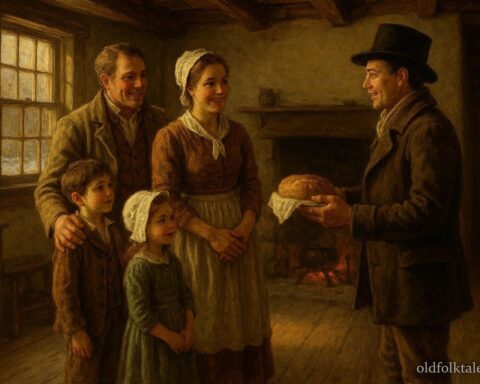
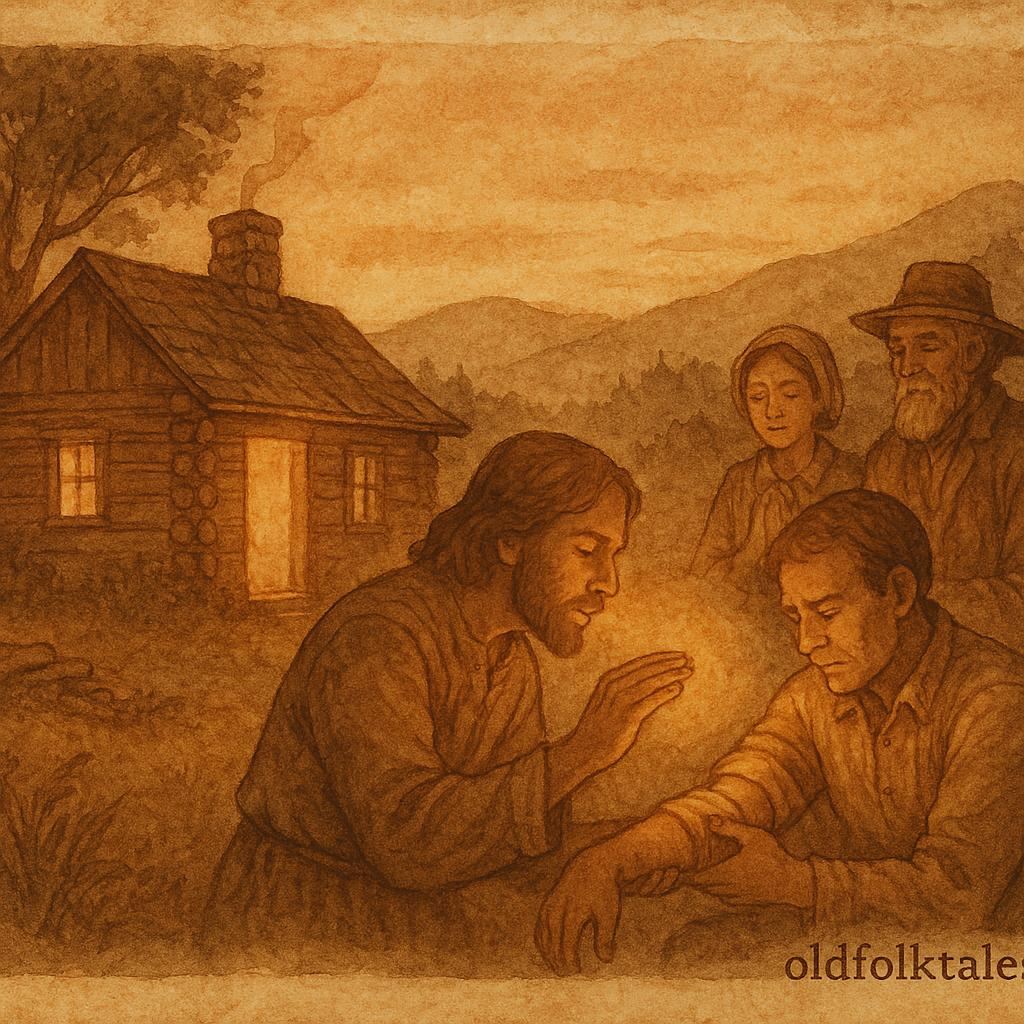
Among the mountain hollers, when a child burned their hand by the hearth or a farmer scalded his skin by boiling tar, neighbours would say, “Find the seventh son.” And so people came, walking through foggy paths and winding roads, bringing with them tokens of gratitude, a loaf of bread, a basket of eggs, or a pouch of tobacco. They never brought money, for to take payment was to lose the power. The healing had to remain pure, a gift given freely, as it had been received.
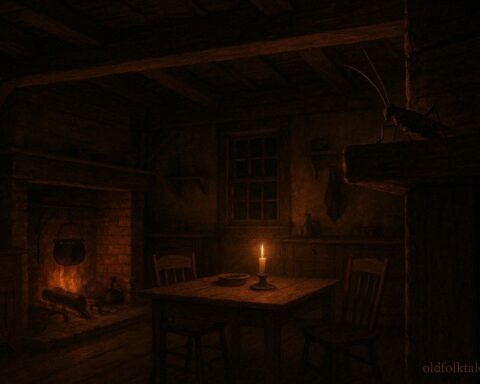
When someone arrived, the healer would light a small lamp, whisper a prayer, and begin his sacred words, known as the Fire Charm:
“Fire out,
Fire go away,
In the name of the Father,
And the Son,
And the Holy Ghost.”
With each line, he would make the sign of the cross over the wound and breathe softly upon it. The warmth would fade, the pain would ease, and by dawn the burn would cool as though touched by dew. Some swore the wound healed overnight; others said they saw light shimmer briefly at the healer’s hands.
Those who witnessed these acts believed the seventh son stood between earth and spirit, chosen by heaven to mend what the body could not. Mothers prayed to bear such a child; fathers counted their sons with hope. Yet not all were blessed, for the true gift came only once in a generation, and only to those pure of heart.
Still, not every healer lived without burden. Some carried the weight of loneliness. Their calling often demanded isolation, for too much pride or greed could strip away the virtue. Others doubted their own strength, wondering if faith or bloodline truly made them powerful. Yet through every generation, the legend endured, proof that belief, when bound with humility, could heal more than flesh.
As the Appalachian people say, “Faith makes the fire cool.”
Moral Lesson
True healing flows not from wealth or pride, but from faith, humility, and the goodness of heart. The story reminds us that gifts are sacred only when shared freely, without desire for reward.
Knowledge Check
-
Who possessed the healing power in this Appalachian folktale?
The seventh son of a seventh son, believed to be born with divine healing virtue. -
What was the name of the charm used to heal burns?
It was called the “Fire Charm.” -
Why couldn’t the healer accept payment for his work?
Accepting money would break the spiritual purity of the gift and cause it to lose power. -
What did people usually offer instead of money?
Simple gifts such as bread, eggs, or tobacco. -
What spiritual element did the healer invoke during the charm?
The Christian Trinity: the Father, the Son, and the Holy Ghost. -
What lesson does the tale teach about spiritual gifts?
That true virtue lies in selflessness and faith, not in personal gain.
Source: Adapted from the Appalachian healing tale “The Seventh Son Healer’s Charm” in Appalachian Folk Magic: Generations of Granny Witchcraft and Spiritual Work (Smithsonian Center for Folklife & Cultural Heritage, 2020).
Cultural Origin: United States (Appalachian Mountains – Tennessee, Kentucky, North Carolina).