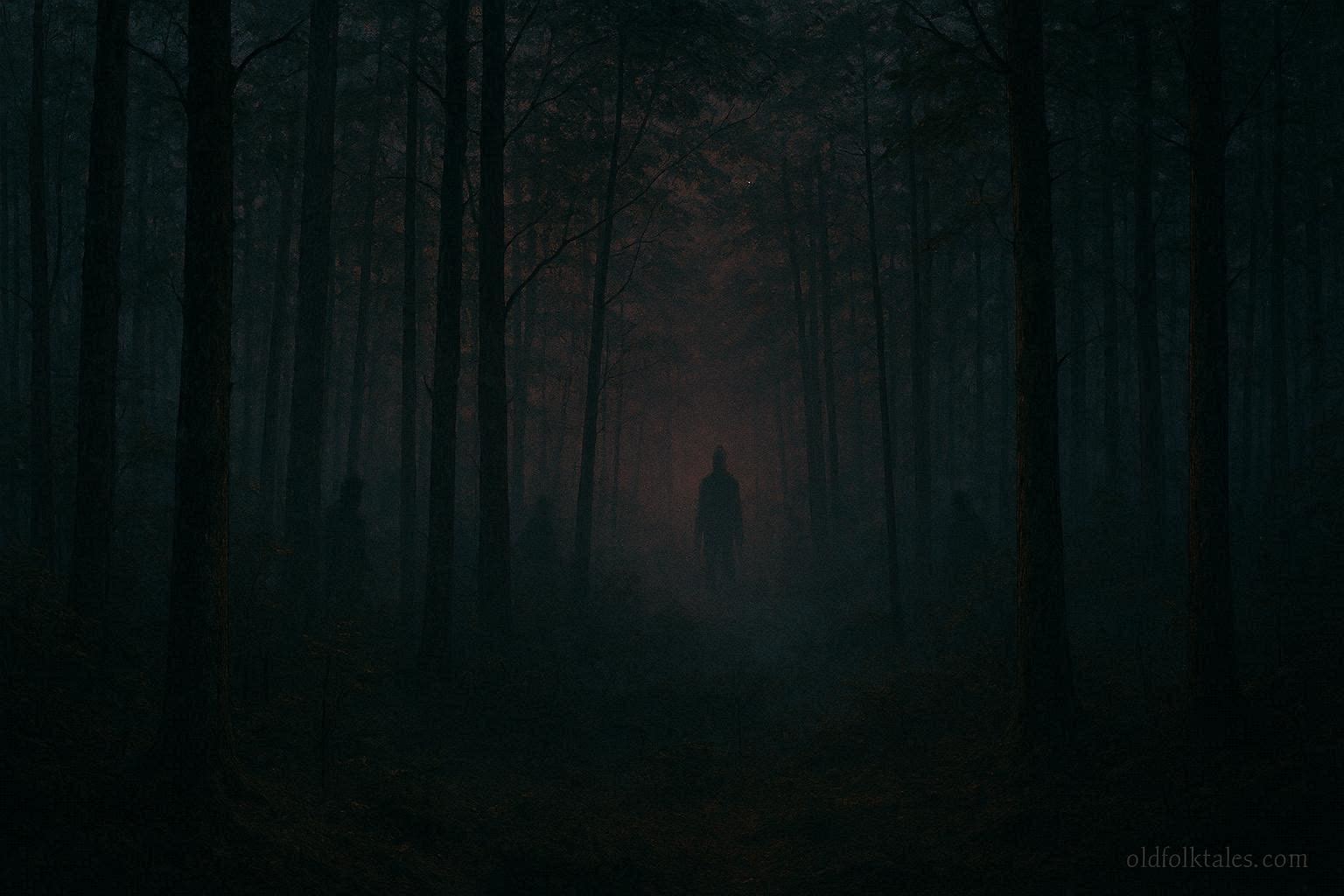
The Appalachian Mountains are full of deep hollows, winding ridges, and dense forests that stretch for miles. Residents know these forests hold secrets, both natural and uncanny. Among the strangest tales passed down is that of the Appalachian Mimic Voice. Travelers and locals alike have reported hearing voices that sound exactly like friends, family, or neighbors, yet the source lies far from any human habitation.
The phenomenon usually occurs on forested slopes and narrow hollows, especially during late spring and early summer. Hikers, hunters, and farmers recount stopping in their tracks when a familiar voice calls their name or speaks words they recognize. The voice seems to respond to their movements, sometimes mimicking their own words in unsettling repetition. Despite this, no person is ever seen nearby.
Those who have experienced the Mimic Voice often describe a creeping unease. The sound is perfect: the accent, tone, and cadence are indistinguishable from the real person. This makes it difficult to ignore. Many instinctively answer, believing a loved one is calling. Others recognize the trick too late and find themselves disoriented or lost in the forest.
Discover African American wisdom, Native American spirit stories, and the humor of early pioneers in American Folktales.
The legend has persisted for generations, rooted in Appalachian oral tradition. Stories suggest that the forest itself or a spirit within it can imitate human speech to teach caution. Some elders tell children that the Mimic Voice is a test: it rewards the cautious and punishes the reckless. Hikers who pause, observe, and stay on known paths remain safe. Those who blindly follow the sound risk losing their way.
East Tennessee State University folklorists have collected numerous accounts from Southern Appalachian communities. Witnesses consistently report the same features: a perfectly imitated voice, originating from an unseen location, often echoing through a hollow or across a ridge. The repetition of details over decades shows the story’s role as a cultural warning, blending observation with imagination.
Some theorists suggest that natural acoustic phenomena may explain parts of the experience. Certain hollows amplify and reflect sound, creating eerie repetitions. Wind and animal calls can sometimes resemble human speech. Yet the precision of the imitated voices, especially in multiple accounts before widespread technology, indicates the story is more than a simple acoustic curiosity. It has become folklore.
The Mimic Voice also serves a social purpose. It reminds communities of the dangers of trusting appearances and sounds blindly. In dense forests where humans are small and vulnerable, even the familiar can become misleading. Parents warn children to stay together and think carefully before responding to a voice in the woods. Hunters respect the legend, teaching apprentices to recognize the difference between real calls and echoes.
Over the years, encounters with the Mimic Voice have inspired awe and caution rather than outright fear. Many adults recall hearing a parent, sibling, or neighbor calling them across a slope, only to discover no one was there. Such experiences are recounted at dinner tables, community gatherings, and church meetings, preserving both the story and the behavioral lesson it contains.
The Appalachian Mimic Voice endures because the forests themselves remain, because human experience continues to seek patterns in sound, and because the story is valuable as both a mystery and a moral guide. It is a reminder that the natural world has ways of testing perception, trust, and awareness, and that the mountains hold lessons in their quiet, echoing spaces.
Encounter the strange and the unseen — from Bigfoot to regional monsters hiding in America’s forests.
Moral Lesson
Do not trust appearances or sounds blindly. Stay aware of your surroundings, and respect the power of the natural world. Observation and caution are as important as courage.
Knowledge Check
1. Where does the Appalachian Mimic Voice usually appear?
In forested slopes and hollows of the Southern Appalachian Mountains.
2. What does the creature do?
Perfectly imitates the voices of familiar people from a distant, unseen location.
3. Is the voice harmful?
Not directly, but it can mislead or disorient those who respond without caution.
4. Who typically reports hearing the Mimic Voice?
Hikers, hunters, and local community members.
5. What lesson does the legend teach?
To remain aware of surroundings and exercise caution, even with familiar cues.
6. Why has the Mimic Voice story persisted in folklore?
Because it blends human experience with forest mysteries and has been passed down through generations.
Source
Adapted from East Tennessee State University Appalachian oral tradition archives and regional folklore collections.
Cultural Origin
Southern Appalachian mountain communities.