Before the world learned the weight of endings, life moved in an endless circle. Beings rose, aged, and rested, only to return again as they once were. The land remembered every footstep, and the people believed that nothing truly vanished. In this early age, death was not permanent. It was a pause, a doorway that always led back.
Among the beings who walked freely between worlds was Coyote. Clever, restless, and endlessly curious, Coyote was admired for his wit and feared for his unpredictability. He was not evil, but he was impulsive. He delighted in testing limits and bending rules, often without considering what his actions might leave behind.
The people lived without fear of loss. When a loved one lay still, they sang songs and waited. Soon enough, breath returned, eyes opened, and life continued. This rhythm shaped how humans treated one another. Arguments faded quickly. Grudges could not last forever. The land itself reflected this gentleness. Animals hunted without excess. Rivers flowed calmly. Time felt wide and forgiving.
Step into America’s cultural roots — from folk healing and weather lore to seasonal celebrations.
One day, after a long journey, Coyote encountered a gathering of spirits discussing the future of the world. Some believed that endless return made life careless. Without finality, beings failed to value each moment. Others argued that permanence would bring sorrow too heavy to bear. The debate stretched across the plains, echoing through valleys and hills.
Coyote listened, growing impatient. He disliked waiting and distrusted long deliberations. To him, the answer seemed obvious. Life needed urgency. Meaning required an ending. Without risk, there could be no wisdom.
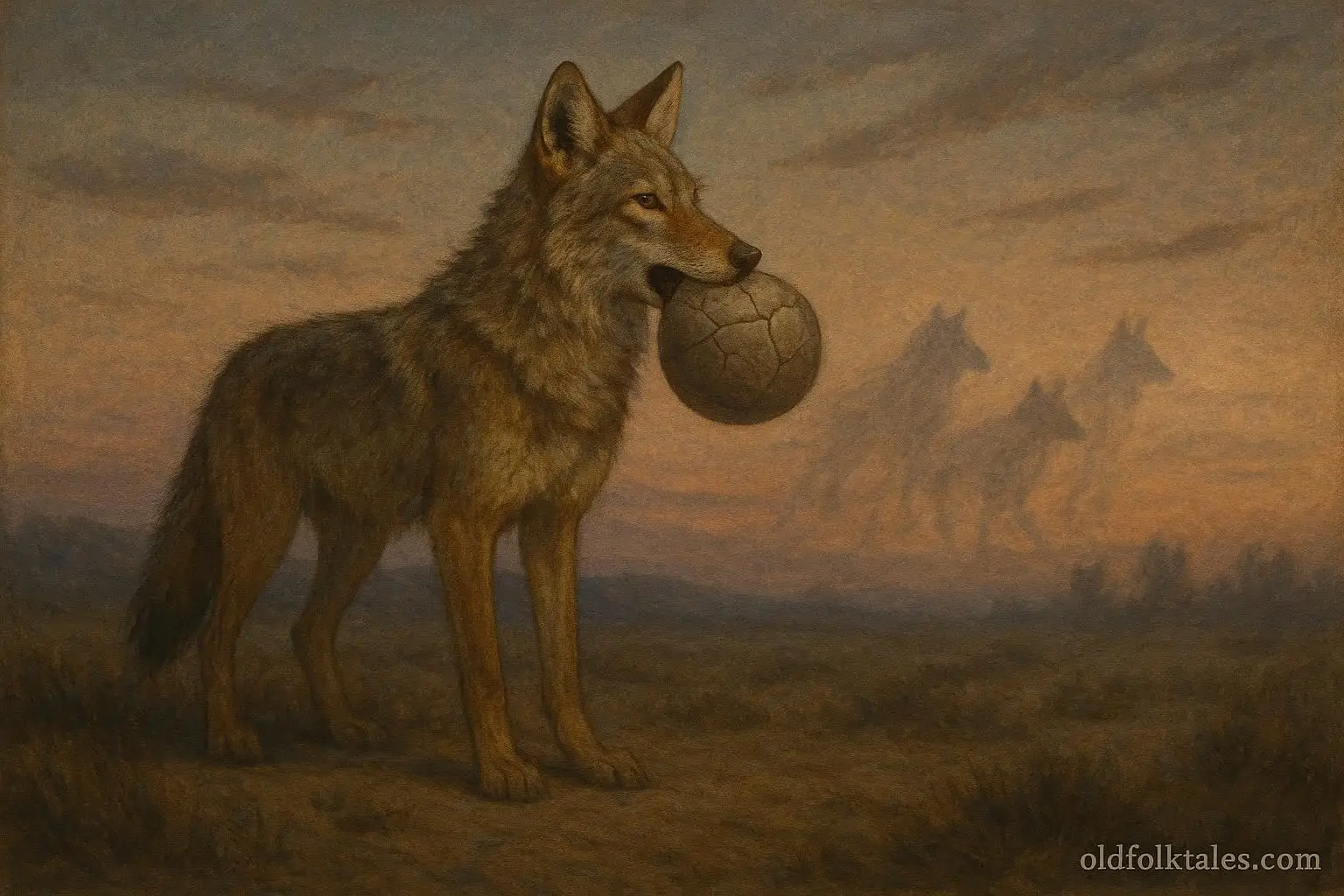
Ignoring warnings, Coyote seized a ceremonial stone used to guide balance between worlds. He raised it and declared that from that moment onward, death would be final. No more returns. No more second awakenings. The stone cracked the earth beneath his feet, sealing the passage between life and rebirth.
Silence followed.
The spirits recoiled. The wind stilled. Even Coyote felt a chill, though he refused to show it. He laughed and insisted the world would be better this way. People would live fully, he claimed. Love would deepen. Time would matter.
The change was immediate. When the next death came, the songs did not work. The body remained still. The people waited, confused, frightened. Days passed. The realization settled like frost. Something precious had been taken from them forever.
Grief entered the world.
Families mourned not just individuals but the loss of certainty. Fear followed closely behind. The knowledge that life could end permanently altered how people behaved. Some grew cautious. Others became reckless, desperate to feel alive before time ran out.
Coyote watched these changes unfold. At first, he defended his decision. He reminded others that crops grew stronger when seasons mattered and that hunters respected animals more when each life counted. In some ways, he was right. Communities began to plan. Elders taught lessons with urgency. Stories were remembered carefully, knowing they might be lost if not passed on.
But sorrow deepened as well.
Parents buried children. Elders feared dying alone. The balance Coyote imagined proved fragile. Life gained meaning, but it also gained pain. The trickster felt the weight of his choice pressing on him in quiet moments he could not laugh away.
Some versions of the story say Coyote tried to undo what he had done. He searched for the cracked stone and attempted to mend it, but the seal held fast. Mortality could not be reversed. Other beings confronted him, accusing him of arrogance. Coyote did not deny it. He admitted that he had acted alone, believing cleverness was enough to guide the world.
Over time, Coyote withdrew. He became a wanderer, watching from a distance as humans adapted to mortality. Rituals formed around death. Burial practices emerged. Songs shifted from waiting to remembering. Life became precious not because it was endless, but because it was brief.
The land changed too. Seasons sharpened. Storms felt more dangerous. Birth became miraculous. Love became fierce. Every choice carried weight, and every mistake left a mark.
Coyote remained part of the world, but his role transformed. No longer just a bringer of laughter and chaos, he became a warning. His story reminded people that choices shape reality, and cleverness without wisdom can wound the world.
Elders taught that Coyote was not to be hated. He reflected human flaws: impatience, pride, the desire for control. Through him, people learned responsibility. They learned that not all problems can be solved quickly and that some decisions echo forever.
Death, though painful, brought reflection. It taught people to care for one another deeply, to speak truths before it was too late, and to live with intention. The world grew heavier, but also richer.
Coyote still walks the edges of the world, laughing softly at campfires and disappearing into shadows. His choice cannot be undone, but his story endures as a lesson carried through generations. Mortality defines life not because it ends, but because it demands meaning.
Moral Lesson
Choices made without patience or shared wisdom can alter the world forever. Mortality brings pain, but it also gives life depth, responsibility, and purpose.
Knowledge Check
1. What was life like before death became permanent?
Life followed a cycle where beings returned after death, and loss was temporary.
2. Why did Coyote decide to make death permanent?
He believed finality would give life urgency and meaning.
3. How did Coyote change the world?
He sealed the passage between life and rebirth, making death irreversible.
4. What emotions entered the world after Coyote’s choice?
Grief, fear, longing, and deeper attachment emerged.
5. Did Coyote intend to cause suffering?
No, he acted impulsively, believing cleverness was enough to guide the world.
6. What lasting lesson does Coyote represent?
That wisdom requires patience, humility, and shared responsibility.
Source
Adapted from University of California Native Californian oral tradition archives
Cultural Origin
Plains and Western tribal nations