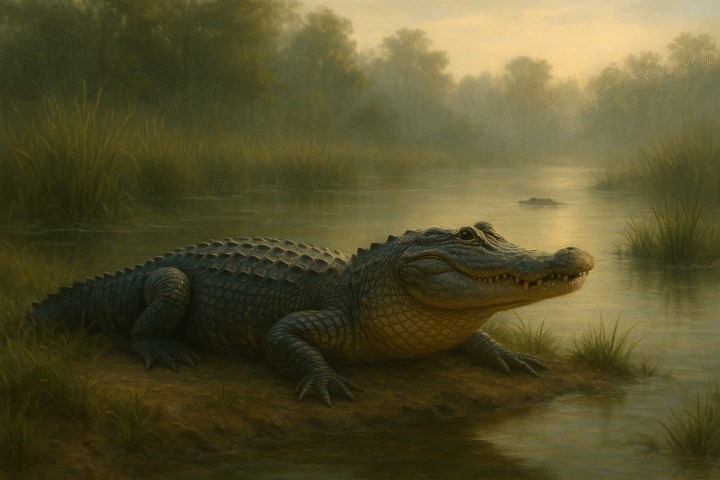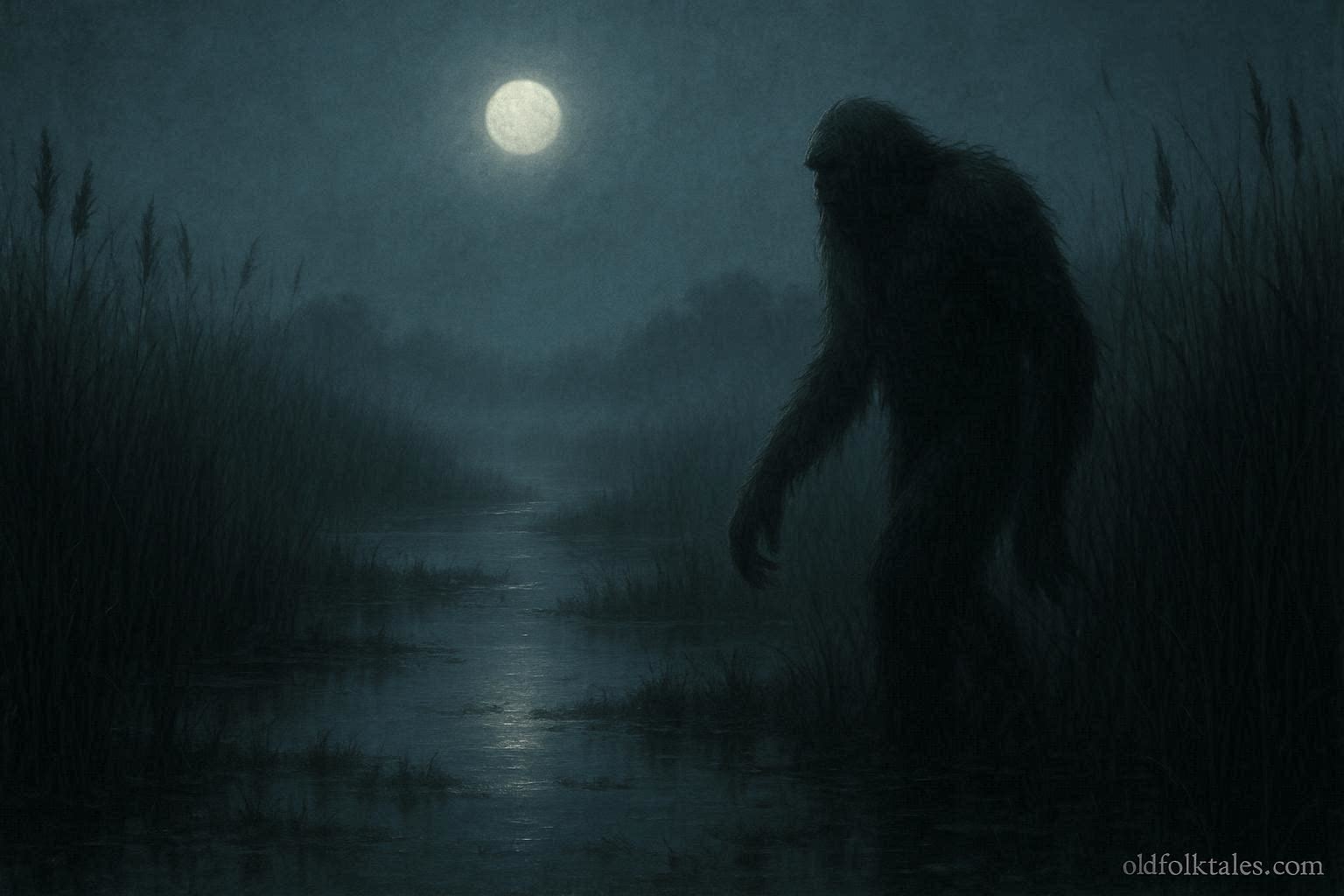
Along the low tidal marshes where southern Delaware meets eastern Maryland, the land flattens into a maze of reeds, shallow water, and winding creeks. At night, these wetlands breathe with sound. Frogs call, insects hum, and the wind carries the smell of mud and salt. Yet beneath these ordinary rhythms, residents speak of something else that moves when darkness settles fully. They call it the Selbyville Swamp Monster.
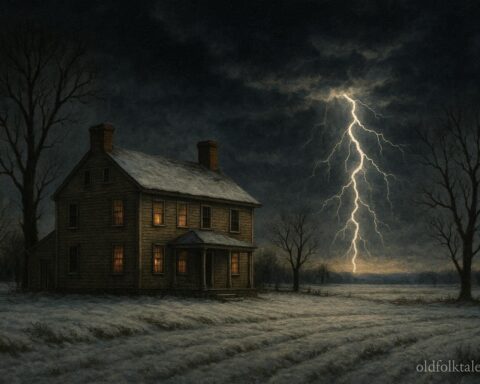
Farmers living near the marshes were among the first to speak openly about the creature. Chickens disappeared from coops without broken fencing. Heavy footprints appeared in mud where no person had walked. Wooden doors were pushed open with force, yet nothing was stolen except livestock. These incidents occurred repeatedly, often after nights of dense fog when visibility dropped to almost nothing.
Those who claim to have seen the creature describe a tall, broad figure covered in long, matted hair darkened by swamp water. Its shoulders appear hunched, its arms unusually long, hanging close to the ground as it moves. Witnesses say it walks upright but leans forward, as if accustomed to pushing through reeds and shallow water. Its movements are slow and deliberate, never rushed, as though it knows the land intimately.
Discover chilling ghost tales and haunted places that echo through America’s towns and countryside.
The monster is rarely heard, but when it is, the sound is unsettling. Low breathing, heavy footfalls in water, and the occasional splash break the silence. Dogs grow restless near the marsh at night, refusing to venture toward the reeds. Horses shy away from certain trails, reacting as though they sense something unseen ahead.
Local legends suggest the creature has lived in the marshlands for generations. Older residents recall stories told by their grandparents of a “swamp walker” that guarded the wetlands and punished those who overhunted or drained the land. These tales describe the monster not as mindless but as territorial, reacting strongly to intrusion or disruption.
Sightings tend to cluster around abandoned farms and isolated roads where marsh and woodland meet. Drivers recount seeing a large figure standing motionless near the road, only to vanish when headlights draw closer. Others describe glimpsing it wading through shallow water, its reflection distorted and broken by ripples and moonlight.
The Selbyville Swamp Monster is also linked to seasonal changes. Reports increase during late summer and early autumn when fog rolls in from the water and harvest activity peaks. Some believe the creature follows food sources, while others say it becomes more active as nights grow longer and quieter.
Despite modern development, the marshes remain difficult to fully access. Thick mud, hidden channels, and unstable ground discourage exploration. This isolation has allowed the legend to persist, passed along at local diners, fishing docks, and farmhouses. Even those skeptical of the monster admit that the wetlands feel different after dark, heavier with presence and watchfulness.
The creature’s endurance mirrors the resilience of the marsh itself. As farms expand and roads encroach, the wetlands shrink, yet the stories do not fade. The Selbyville Swamp Monster stands as a symbol of land that resists control, reminding residents that not all territory belongs to humans alone.
For some, the monster is a warning rather than a threat. It represents nature’s response to imbalance, a living reminder that the marsh remembers every footprint left behind. Whether flesh and blood or folklore given form, the Selbyville Swamp Monster continues to haunt the edges of land and water, moving where maps fail and silence reigns.
Explore Native American beings, swamp creatures, and modern cryptid sightingsacross the country.
Moral Lesson
The Selbyville Swamp Monster teaches respect for boundaries, both natural and human. When land is ignored or exploited without care, consequences follow. Harmony comes from understanding that some spaces demand humility rather than control.
Knowledge Check
- Where is the Selbyville Swamp Monster said to live?
Answer: In the marshlands of southern Delaware and eastern Maryland. - What evidence is commonly linked to its presence?
Answer: Large footprints, missing livestock, and disturbed coops. - How is the creature described physically?
Answer: As a tall, hairy, upright figure with long arms and a hunched posture. - When do sightings most often occur?
Answer: At night, especially during foggy late summer and autumn evenings. - How do animals typically react near the marsh?
Answer: They become restless, fearful, or refuse to approach certain areas. - What does the monster symbolize in local folklore?
Answer: Nature’s resistance to intrusion and the importance of respecting wetlands.
Source
Adapted from regional swamp monster folklore and oral traditions.
Cultural Origin
Delaware and Maryland marsh regions