Long before her name became legend, Mary Fields was simply known as the woman who never turned back. On the western frontier, where roads were little more than stubborn ideas carved into dirt, mail routes were lifelines. Letters carried news of births and deaths, payments and warnings, hope and heartbreak. To miss a delivery was to cut a settlement off from the world. And Mary Fields understood that better than most.
They called her Stagecoach Mary because she drove mail wagons through places others refused to go. Snow, heat, bandits, broken wheels, and swollen rivers were treated as inconveniences rather than obstacles. She did not speak much about courage. She spoke about work.
Mary had lived many lives before taking on the mail route. She had labored, guarded, hauled, and protected. By the time she became a mail carrier, she had learned that survival on the frontier was less about strength than resolve. Once she accepted a route, she accepted responsibility for everyone waiting at the other end.
Explore ancient Native American creation myths and the symbolic tales that shaped America’s belief systems.
Her final winter on the route was the hardest anyone could remember.
Snow fell early and did not stop. Drifts swallowed fence posts. Horses slipped on ice hidden beneath fresh powder. Supplies ran low, and tempers ran shorter. Some carriers suspended service altogether, claiming the routes were impossible. Mary refused.
“The mail still matters,” she said simply.
The route she worked stretched between isolated communities, passing through narrow canyons and wooded stretches where sound traveled strangely. Bandits were known to hide there, waiting for wagons slowed by snow. Mary was warned more than once to carry a rifle openly. She did not argue. She already planned to.
On the morning of her last stand, the sky hung low and gray. Mary loaded the mail carefully, securing each bundle beneath canvas and rope. She checked her horses, rubbed warmth into their legs, and spoke to them as if they were partners rather than tools. Then she climbed onto the seat and set out.
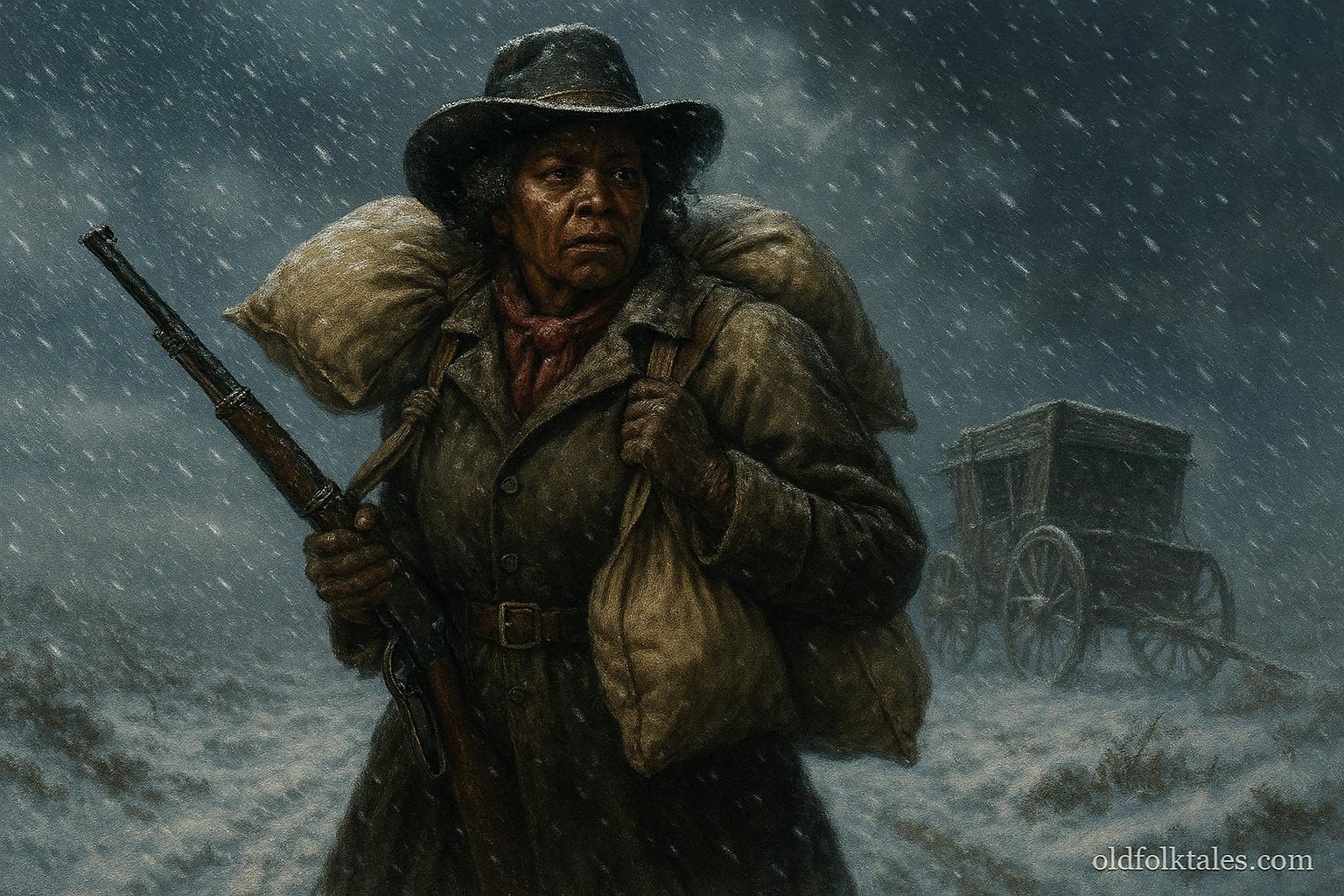
By midday, the storm worsened. Snow whipped sideways, stinging exposed skin. The road disappeared entirely, forcing Mary to navigate by memory and instinct. Several miles in, one wheel struck a hidden rock and cracked. The wagon lurched violently before settling crookedly into the snow.
Mary climbed down and examined the damage. The wheel could not carry a full load much farther. Turning back was the sensible choice. No one would fault her. The storm alone was reason enough.
Instead, she unloaded the mail.
She wrapped the sacks tightly, slung them across her shoulders, and left the broken wagon behind. With rifle in hand and mail on her back, she continued on foot.
It was then that the bandits revealed themselves.
Three figures stepped from the trees ahead, their faces half covered, rifles low but ready. They had been waiting for a wagon, not a woman on foot. Still, they smiled when they saw the mail sacks.
Mary stopped walking.
She did not raise her rifle immediately. She looked at them calmly, as if measuring distance and weather rather than danger. When one of the men demanded the mail, she answered quietly.
“This route is under my protection.”
The men laughed. One pointed out that she was alone. That the storm was thick. That no one would find them if things went wrong.
Mary raised her rifle then.
She did not fire. She did not threaten. She simply stood her ground, snow gathering on her shoulders, eyes steady. The wind howled between them. Time stretched.
The bandits hesitated. They saw not bravado, but certainty. They saw someone who had already decided the outcome and was prepared to accept whatever followed. One by one, they backed away into the trees.
Mary waited until the forest was silent again. Then she adjusted the mail sacks and continued forward.
By nightfall, her hands were numb, her breath shallow. She moved slowly now, placing each step carefully. When she finally reached the next station, she collapsed against the doorframe, the mail still strapped to her back.
The station keeper rushed forward, alarmed. Mary handed over the mail before allowing herself to sit.
“You’re late,” she said, attempting a smile. “But not too late.”
Word of that journey spread quickly. When spring came, Mary announced she would retire from the route. The work had taken its toll, and others were finally willing to step up.
On her last day, the community gathered. They thanked her, praised her, and called her brave. Mary accepted their words politely, but she corrected them once.
“I wasn’t brave,” she said. “I was responsible.”
After her retirement, no one ever took her route lightly again. And whenever a delivery arrived against impossible odds, people remembered Stagecoach Mary and her last stand against storm, fear, and silence.
Click now to read all American Legends — heroic tales where truth and imagination meet, defining the American spirit.
Moral Lesson
True courage is not found in fighting danger, but in protecting others even when retreat would be easier.
Knowledge Check
- Why was the mail so important to frontier communities?
Answer: It was their primary connection to the outside world - What caused Mary to abandon her wagon?
Answer: A broken wheel hidden beneath the snow - How did Mary respond to the bandits?
Answer: She stood her ground and refused to surrender the mail - Why did the bandits retreat?
Answer: They recognized her resolve and certainty - What did Mary say bravery truly was?
Answer: Responsibility - What legacy did Mary leave behind?
Answer: A standard of duty and protection for future carriers
Source
Adapted from National Archives frontier transportation folklore records
Cultural Origin
Western American frontier communities