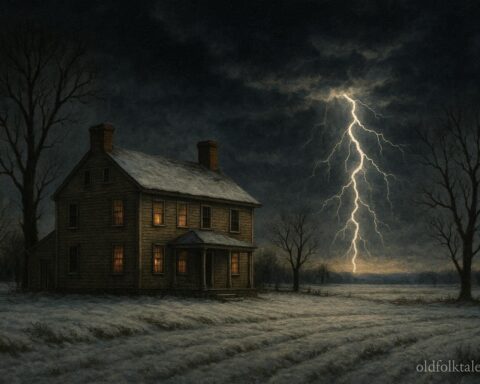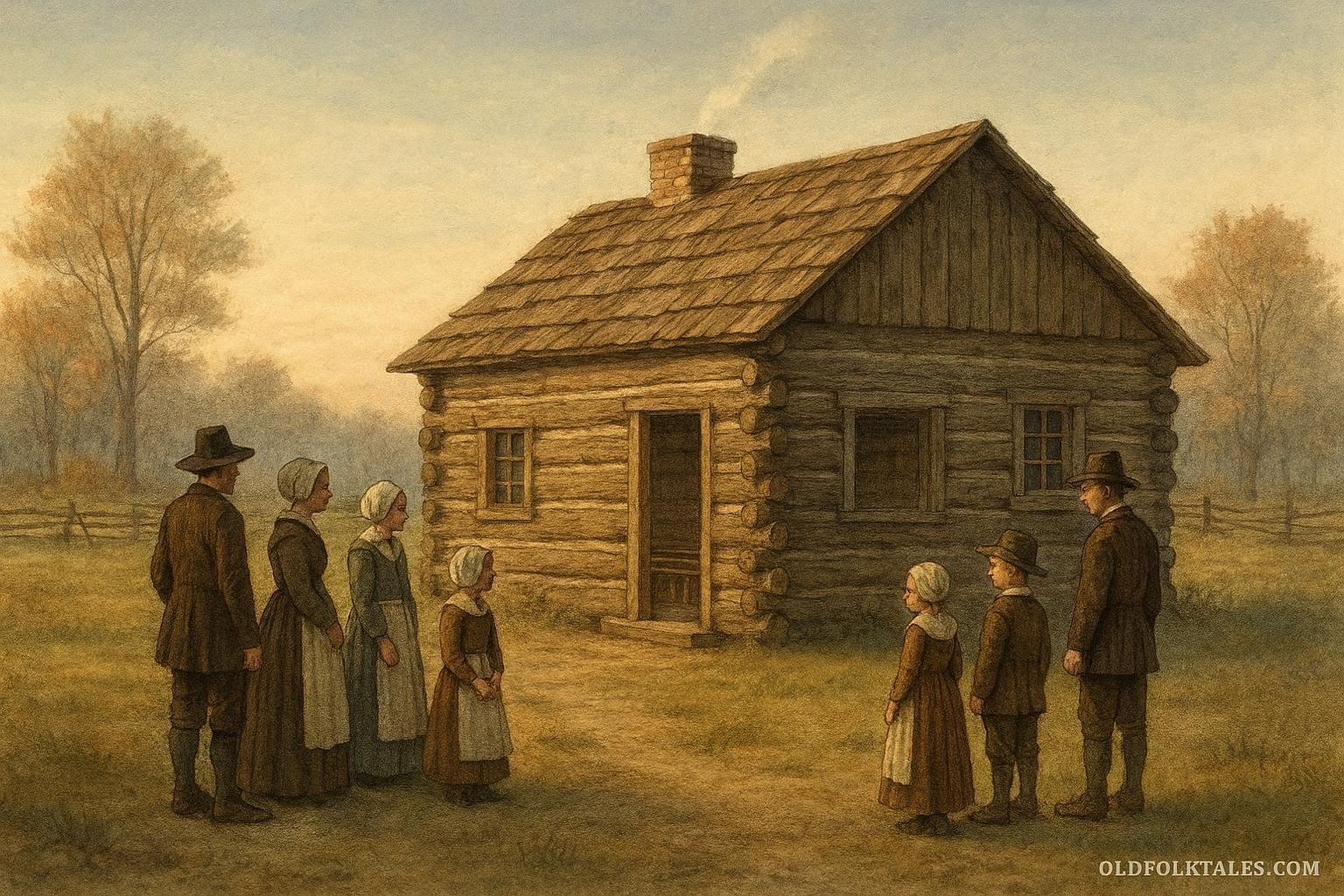
In the early days of settlement, when the land still felt larger than the people who tried to claim it, there stood a small frontier community at the edge of forest and field. The settlers had crossed oceans and endured months of hunger, storms, and uncertainty to reach this place. Their houses were plain. Their clothes were worn thin. Winter arrived early and stayed long. Every decision the community made was weighed against survival.
Food came first. Shelter came second. Everything else waited.
Yet among the elders and parents of the settlement, a quiet debate began to grow. It did not begin loudly, nor did it begin in anger. It began around shared fires and long tables where bread was scarce and stories were plentiful. Some spoke of the future rather than the present. Some spoke of children who would grow up knowing only hardship if nothing more was offered to them.
The question was simple but heavy. Should the settlement build another storehouse for grain or should it build something no one could eat or sleep in.
A schoolhouse.
Explore ancient Native American creation myths and the symbolic tales that shaped America’s belief systems.
Many resisted the idea. Wood was limited. Time was precious. Every able hand was already stretched thin between farming, hunting, and repairing homes battered by weather. A building that produced no food and no warmth seemed like a luxury the settlement could not afford.
But others argued that knowledge was a form of survival just as real as bread. They spoke of reading contracts so land could not be stolen. They spoke of counting stores so famine could be avoided. They spoke of teaching children to write their own names so they would not live under the power of those who could.
The debate lasted weeks. Winter drew closer. The wind carried warnings across the fields.
At last a decision was made. The settlement would build a schoolhouse first.
It would be small. It would be simple. It would take only what the land could spare. But it would stand.
The day construction began, the community gathered before sunrise. Men cut timber while women shaped rough benches. Older children carried tools. Younger ones collected stones for the hearth. No single family claimed ownership of the building. It belonged to everyone or to no one at all.
By nightfall, the frame stood. By the end of the week, walls enclosed the space. A single window was cut to catch the morning light. A slate board was hung at the front. When the door was finally placed, it creaked loudly, as if announcing itself to the future.
The first teacher was not young. He was a man who had once kept books for merchants across the sea. His hands were stiff from years of labor, but his voice carried patience. He accepted no payment beyond food and shelter. He said knowledge did not belong to him and he would not sell what was meant to be shared.
Classes began at dawn. Children arrived with frozen fingers and eager eyes. They learned letters carved into wood. They learned numbers scratched into slate. They learned stories of places they had never seen and ideas they had never been allowed to imagine.
Not every lesson was written. The children learned discipline by arriving on time. They learned respect by listening. They learned responsibility by teaching one another when the teacher was absent.
Some days lessons were interrupted by storms or illness. Some days the benches were nearly empty. But the door was never closed for long.
Years passed. The settlement grew.
Those first children became farmers who could measure land fairly. They became traders who could read agreements. They became leaders who could debate rather than fight. When neighboring settlements struggled with disputes and division, this community found ways to speak and listen instead.
The schoolhouse aged as the people did. Its walls darkened. Its roof sagged. Repairs were made when possible. Additions were added when needed. The building was never grand, but it was always respected.
Travelers passing through would ask why such a small settlement held learning so highly when comfort was still uncertain. The elders would answer simply. A warm house shelters the body. A taught mind shelters generations.
Long after the first families were gone, the schoolhouse still stood. Children who never knew hunger like their ancestors sat at the same benches. They learned not only reading and writing but also the story of why the building existed at all.
It reminded them that their community was built not just by strong hands but by foresight. That survival alone was not enough. That a future worth living required intention.
And so the tale of the first American schoolhouse was passed down. Not as a boast, but as a lesson. When comfort and knowledge stand in opposition, choose the path that carries forward. What feeds the mind today can nourish an entire people tomorrow.
Click to read all American Folktales — timeless oral stories passed through generations across the United States.
Moral lesson
A community that invests in knowledge invests in its future. Comfort sustains the present, but education protects generations yet to come.
Knowledge check
- Why did the settlers hesitate to build a schoolhouse?
Answer: Because resources and labor were limited and survival needs came first - What argument convinced the community to choose education?
Answer: Knowledge was seen as a tool for survival and long term stability - Who helped build the schoolhouse?
Answer: The entire community including adults and children - Why did the teacher accept no payment?
Answer: He believed knowledge should be shared rather than sold - How did the schoolhouse shape the settlement’s future?
Answer: It produced educated leaders farmers and traders who strengthened the community - What lasting lesson did the schoolhouse represent?
Answer: That foresight and education create enduring strength
Source
Adapted from early American education folklore, Smithsonian National Museum of American History
Cultural origin
Colonial American communities