Even before dusk settles over Manhattan, the Dakota apartment building casts a quiet, imposing presence on its surrounding streets. Tourists admire its architecture, but for those who live inside, there is an awareness of another layer hidden beneath its elegance. It is in the stairwells, away from the hum of elevators and the chatter of hallways, that residents feel a presence older than themselves, a shadow that seems to belong to the building’s past rather than its present.
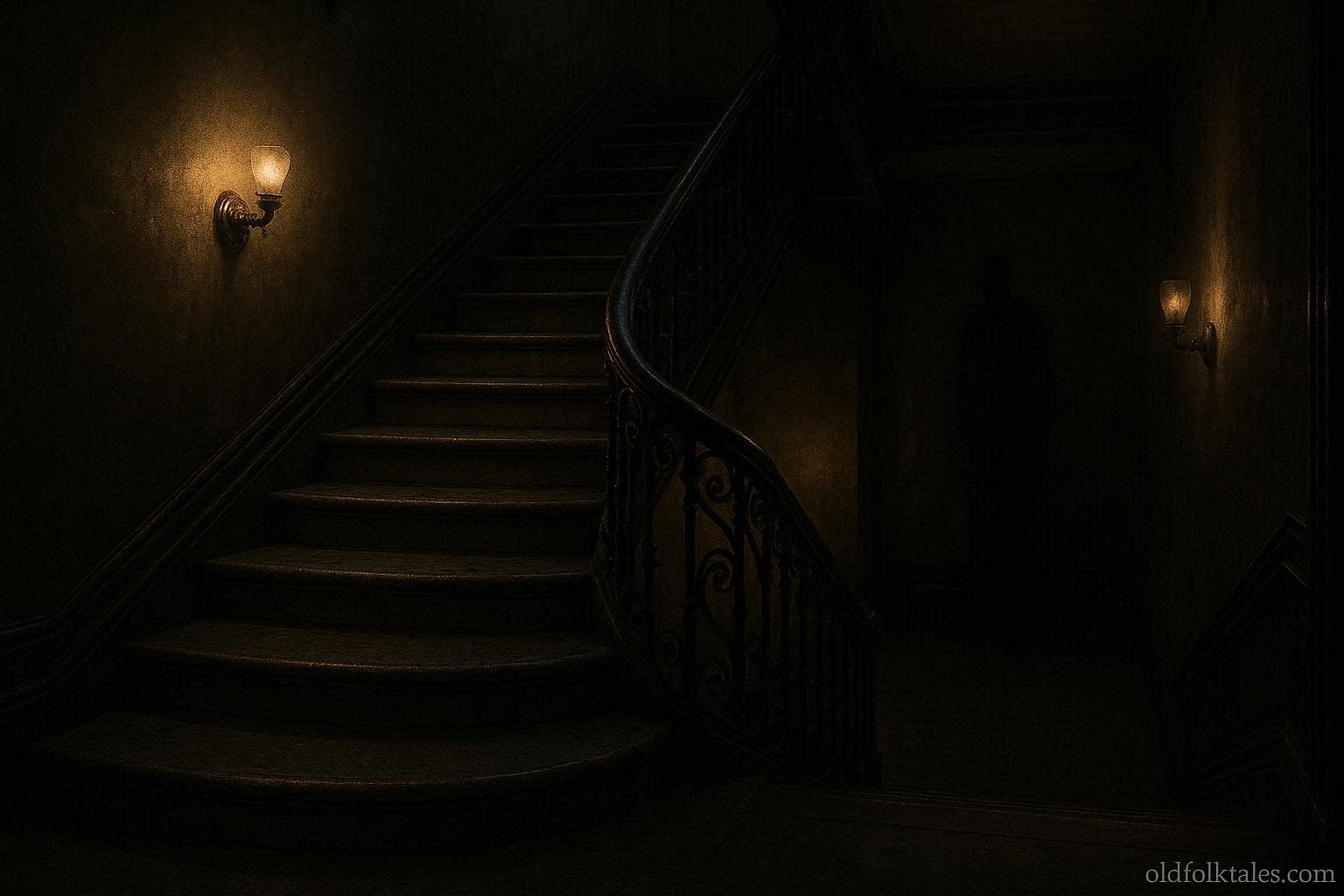
The earliest reports came from tenants who had lived in the building for decades. They spoke of footsteps echoing on the old wooden stairs when the stairwell was empty, soft yet deliberate, pacing up and down as if retracing the movements of a life once lived. Doors that had been closed would suddenly creak open, and railings appeared as if recently touched. At first, these incidents were shrugged off as quirks of an old building, yet their frequency made disbelief increasingly difficult.
Shadowy figures are a recurring element of the stories. Residents describe them as human-shaped but undefined, darker than the dim lighting allows. The figures move silently, slipping from one floor to another, always along the stairwells connecting the Dakota’s original wings. Some say the figure seems aware of who is present, appearing near those who are alone or uncertain, as if attempting to interact without breaking the boundary between worlds.
Explore Native American beings, swamp creatures, and modern cryptid sightingsacross the country.
The ghost’s behavior varies. At times, it simply observes, lingering at the edge of vision before vanishing. On other nights, it is more active, shifting small items left in the stairwell—a loose newspaper, a coat left draped over the railing, or a forgotten package. These movements are subtle but purposeful, as though the presence is maintaining the space, arranging the environment in ways that human eyes may not immediately notice.
Tenants often notice the phenomenon most vividly during moments of transition. Late-night arrivals, early-morning departures, and long pauses between elevator rides are prime times. The stairwell, empty except for one resident, seems to carry a life of its own. Sounds echo differently here than in the rest of the building; the soft creak of stairs amplifies, and whispers, faint and unintelligible, sometimes accompany the footsteps.
Historical accounts suggest a possible origin. The Dakota has seen generations of residents, some famous, many unknown. Tragic deaths, sudden disappearances, and unexplained illnesses have all occurred within its walls. It is believed that the ghost may belong to a former resident who never fully departed, a life interrupted and now bound to the spaces they once knew intimately. The stairwell, as a conduit between floors, may serve as the pathway for lingering energies.
While the presence is unnerving, it is not aggressive. Residents emphasize a sense of watchfulness rather than threat. Those who move respectfully through the stairwell report fewer disturbances, while those who rush or act carelessly seem to draw more attention. Some long-term tenants treat the stairwell like sacred ground, walking quietly and speaking softly, acknowledging the unseen inhabitant as a part of the building’s ongoing story.
The phenomenon extends beyond physical manifestations. Some residents have reported sudden drops in temperature when passing certain landings or the inexplicable sensation of being accompanied even when alone. Others experience emotional reactions—an unprovoked sadness, nostalgia, or even a fleeting sense of comfort. The ghost appears attuned to the moods and behaviors of those who occupy the building, reinforcing its connection to the human history of the Dakota.
Observers note that the ghost is particularly active near stairwells that connect to older wings of the building, those least renovated and closest to the original 19th-century construction. These areas retain creaking floorboards and narrow hallways, creating the ideal environment for echoes of past events to manifest. Residents passing these stairwells often report stronger auditory and visual phenomena than elsewhere in the building.
Attempts to capture the ghost photographically have been largely unsuccessful. Cameras either fail to register the presence or produce blurred, ambiguous shapes. Some interpret this as deliberate concealment, suggesting the spirit chooses who may perceive it, reinforcing the sense that it exists for those attentive enough to notice subtle signs rather than as a spectacle to be recorded.
Stories of the Dakota stairwell ghost are shared quietly among residents. Newcomers are informed as a matter of tradition rather than fear. Even skeptics acknowledge the strangeness of recurring footsteps and shadowy figures, often accepting that some aspects of the building defy ordinary explanation. The ghost has become part of the Dakota’s identity, a bridge between the historical past and contemporary life.
In the end, the ghost of the Dakota stairwell embodies the persistence of memory. It is a reminder that buildings retain traces of those who inhabit them, that transitions leave echoes, and that history is not limited to what is written in records or displayed in plaques. The stairwell becomes more than a passage between floors; it becomes a living archive of lives once lived, a silent presence guiding, observing, and connecting residents to the building’s enduring story.
Discover chilling ghost tales and haunted places that echo through America’s towns and countryside.
Moral Lesson
The story teaches that spaces are shaped not only by physical structures but by human presence and memory. Respecting history and the lives that came before allows us to coexist with echoes of the past, preserving harmony between the living and unseen.
Knowledge Check
- Where is the ghost primarily observed?
Answer: In the stairwells of the Dakota apartment building. - What kinds of activity are associated with the ghost?
Answer: Footsteps, moving small objects, creaking railings, and faint whispers. - How is the figure described visually?
Answer: As a dark, human-shaped shadow without distinct features. - When is the ghost most active?
Answer: Late at night, early morning, or during quiet transitions in the building. - What historical explanation is suggested for the ghost?
Answer: It may be the spirit of a former resident whose life ended abruptly or under unresolved circumstances. - How do residents respond to the presence?
Answer: With respect, quiet movement, and awareness, often acknowledging it as part of the building’s history.
Source
Adapted from New York Historical Society urban folklore documentation.
Cultural Origin
New York City, New York