The sun blazed relentlessly over the endless expanse of the Great Basin, casting long shadows across the cracked desert floor. Heat shimmered in the distance, and the wind carried only the dry scent of sagebrush and sand. Travelers, weary from the relentless march across barren washes, often found themselves disoriented and desperate. It was in these moments of peril that stories spoke of a figure known simply as the Great Basin Guide, a solitary wanderer whose knowledge of the desert was unrivaled and whose courage was whispered in awe around campfires.
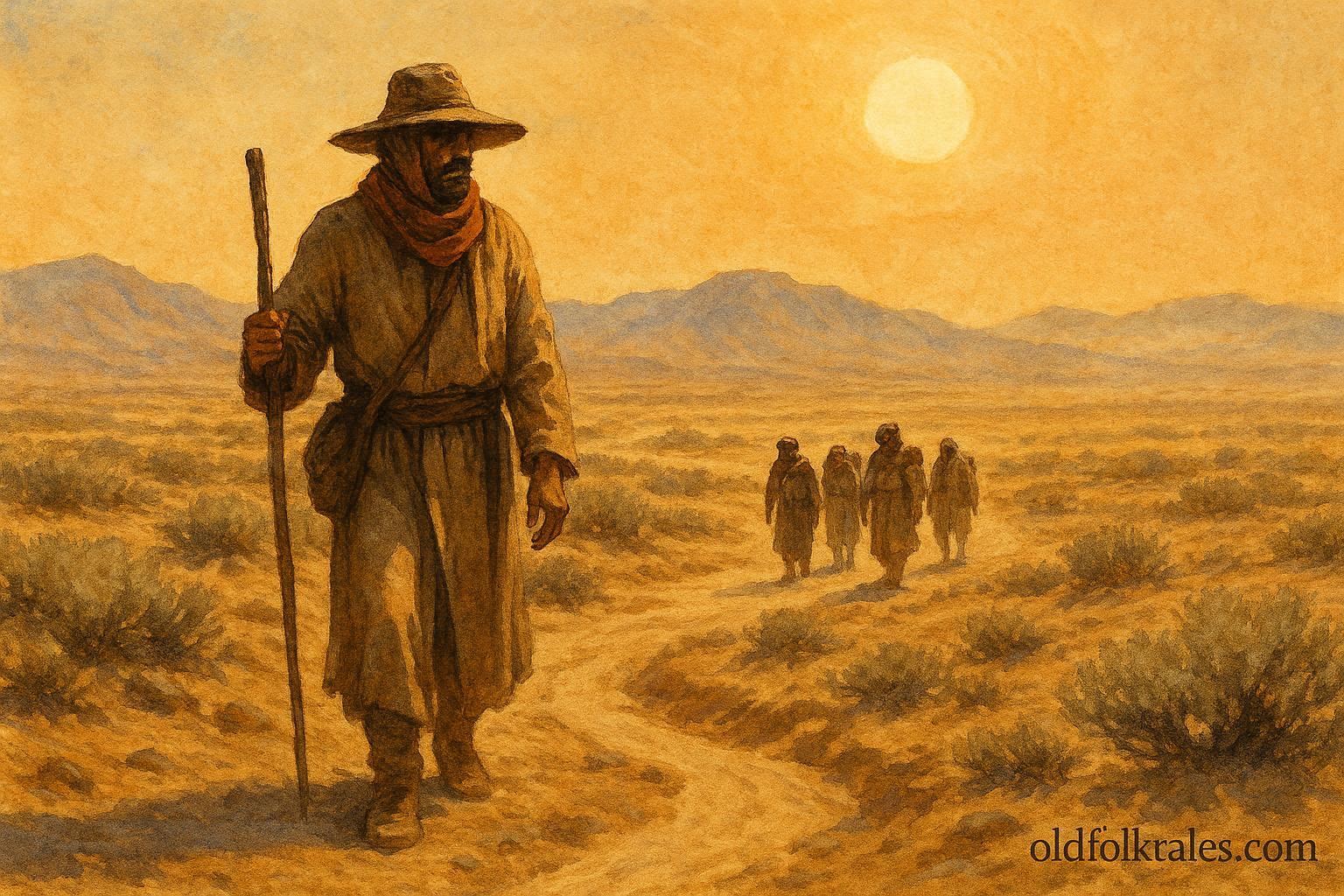
One sweltering afternoon, a small caravan of settlers found themselves hopelessly lost. Water skins were nearly empty, and the sun scorched their shoulders as they staggered along a dry wash. Panic began to rise when a young girl tripped on the hard-packed sand, and her father cursed the barren landscape. “We’ll never find the trail to the springs before sunset,” he muttered, his voice cracking from fear and thirst. Suddenly, from a distant ridge, a lone figure appeared, moving with calm, confident steps. His wide-brimmed hat shaded his eyes, and a long staff guided his stride. The settlers could hardly believe their eyes.
The Guide approached without hurry, scanning the travelers with a keen gaze. “You’ve wandered off the main trail,” he said, his voice steady and reassuring. “Follow me, and we’ll reach water before nightfall.” His words carried authority, but there was warmth in his tone that inspired trust. Without hesitation, the settlers fell in line behind him, their fear slowly replaced by hope.
Discover chilling ghost tales and haunted places that echo through America’s towns and countryside.
As they walked, the Guide pointed out landmarks others would have overlooked. “See that ridge?” he asked. “It casts a shadow in the afternoon sun that marks a hidden wash. Water pools there after the morning dew.” The travelers strained their eyes, and sure enough, a shallow pool of fresh water glimmered in the shadow. The children rushed forward, cupping the cool liquid in their hands, and relief spread through the group. It was a small miracle, but it spoke volumes of the Guide’s unparalleled knowledge.
During the journey, the Guide shared lessons without preaching. “The desert speaks if you know how to listen,” he said, motioning to a cluster of stones. “Notice the birds’ flight, the direction of sand ripples, and even the scent of the wind. They tell where water and shelter can be found.” The settlers marveled at his observations, realizing that survival in such harsh conditions required not just strength but awareness, patience, and ingenuity.
The night fell quickly, and the desert transformed into an alien landscape. Shadows stretched across the dunes, and strange noises echoed in the cool night air. Yet, under the Guide’s steady leadership, fear did not take hold. He instructed them to rest under a natural rock overhang, and with careful arrangement, he created makeshift bedding that shielded them from the chill. Around the fire, he shared stories of travelers who had perished from overconfidence, teaching through narrative rather than warning alone. By morning, the caravan had not only survived the night but learned skills they would carry for the rest of their lives.
Word of the Guide spread quickly across the Great Basin. Miners, ranchers, and wagon parties told tales of being saved from dehydration, blinding sandstorms, and treacherous washes by a mysterious man who always appeared at the right moment. Some said he could read the stars like a map, hear the faintest trickle of hidden springs, and sense storms before they reached the horizon. Others claimed he could traverse the desert without leaving footprints, appearing as a shadow at dusk or dawn to lead those in need.
One tale described a group of prospectors trapped in a canyon as flash floods swelled the creek bed. Just as panic set in, the Guide appeared atop a ridge, signaling them to climb a hidden ledge. With calm authority, he guided each man and woman to safety, directing the flow of the group like a conductor leading an orchestra. When they finally reached higher ground, drenched but alive, they looked back, only to see the desert empty, as if the Guide had vanished into the sands. Such stories became legend, blending historical guidance with the aura of mysticism, and cemented the Great Basin Guide as a hero of the American frontier.
Even beyond life-threatening scenarios, the Guide was a figure of wisdom and community. He helped settlers identify edible plants, track wildlife, and preserve scarce resources. In times of drought, he advised how to dig wells and trap rainwater. In moments of despair, he shared encouragement, reminding travelers that courage and observation often mattered more than physical strength. Through his deeds, he embodied the ideals of selflessness, ingenuity, and leadership the qualities that defined American hero myths in frontier settings.
The Great Basin Guide’s legend continues to inspire. Today, campers and hikers in Nevada and Utah still speak of a lone figure glimpsed on desert ridges, guiding the lost or pointing toward hidden springs. Scholars note that while the stories may have been embellished over generations, the essence remains: a hero myth that teaches survival, ingenuity, courage, and the importance of guidance in the most challenging environments. The desert, harsh and unyielding, is transformed by such stories into a place where human skill, observation, and heroism are celebrated and remembered.
Moral Lesson
True heroism comes from knowledge, courage, and selflessness. Helping others navigate challenges, even in the harshest conditions, defines the enduring value of a hero.
Knowledge Check
- Who is the central hero in the Great Basin Guide legend?
A legendary desert wanderer who helps lost travelers - How did the Guide assist settlers and travelers?
By leading them to water, shelter, and safety across harsh desert terrain - What skills made the Guide legendary?
Observation of natural signs, knowledge of survival techniques, and leadership under pressure - How did the Guide teach lessons to travelers?
Through stories, guidance, and hands-on demonstrations rather than lectures - What supernatural or mystical qualities are attributed to the Guide?
He could appear suddenly, traverse deserts without leaving footprints, and sense hidden water and approaching storms - Why is the Great Basin Guide considered an American hero myth?
Because he embodies courage, knowledge, ingenuity, and selflessness in frontier survival stories
Source
Adapted from Nevada and Utah folklore collections
Cultural Origin
Great Basin desert storytelling