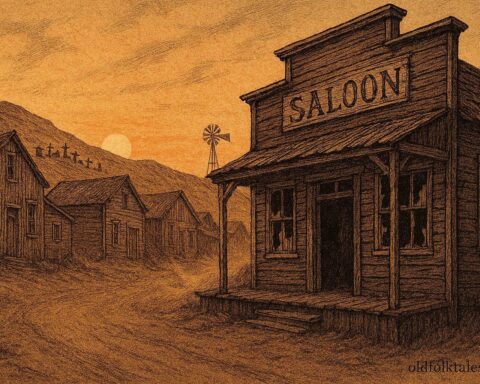
Long after Deadwood Gulch stopped appearing on maps, the road through it remained. It curved gently between low hills, cut into stone by wagons that once carried ore, supplies, and hope. Grass had grown thin along its edges, and weather had softened its ruts, but the path still remembered the weight of footsteps. At dusk, when shadows stretched unevenly across the ground, the gulch felt less abandoned and more paused, as if something expected to resume.
During its brief rise, Deadwood Gulch depended on routine more than ambition. The mine brought people, but order kept them alive. Streets were narrow and uneven. Shafts opened without warning. Saloons spilled noise and trouble well into the night. Darkness turned small mistakes into fatal ones. Light mattered.
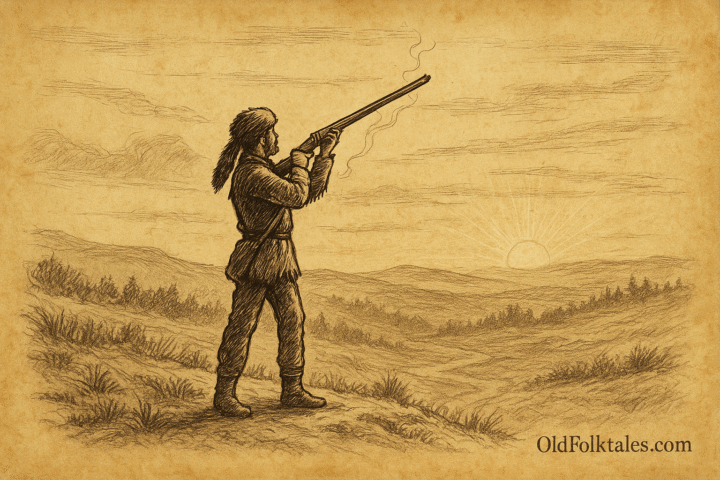
Each evening, just as the sky dulled from blue to gray, the lamp lighter began his work. He followed the same route every night, carrying his ladder and flame, stopping at each post. A single spark turned glass and oil into reassurance. One lamp lit another, forming a fragile line between buildings, guiding miners home and strangers toward shelter.
Explore Native American beings, swamp creatures, and modern cryptid sightingsacross the country.
The lamp lighter was not a man of conversation. He was known by habit rather than personality. People noticed when the lamps came on, not who lit them. Yet when illness or injury delayed him even once, the town felt it immediately. Darkness arrived unevenly. Arguments flared. Accidents multiplied.
Order depended on repetition.
When the gold thinned and the mine slowed, routines began to break. The lamp lighter kept walking his route even as businesses closed. Lamps still burned, though fewer people passed beneath them. The light stretched longer than the town’s confidence.
Eventually, funding ran out. Lamps were removed or sold. Posts were taken down for scrap. The town emptied faster after that. Without light, the road lost its meaning. Buildings collapsed inward. Silence replaced routine.
The lamp lighter was dismissed with little ceremony. Some said he nodded and said nothing. Others said he protested briefly, insisting the road still needed marking. No record confirms either. What is known is that he remained nearby long after everyone else left.
Winter came early that year. Snow filled the gulch, smoothing the road into something almost new. When spring arrived, the lamp lighter did not.
The haunting began quietly.
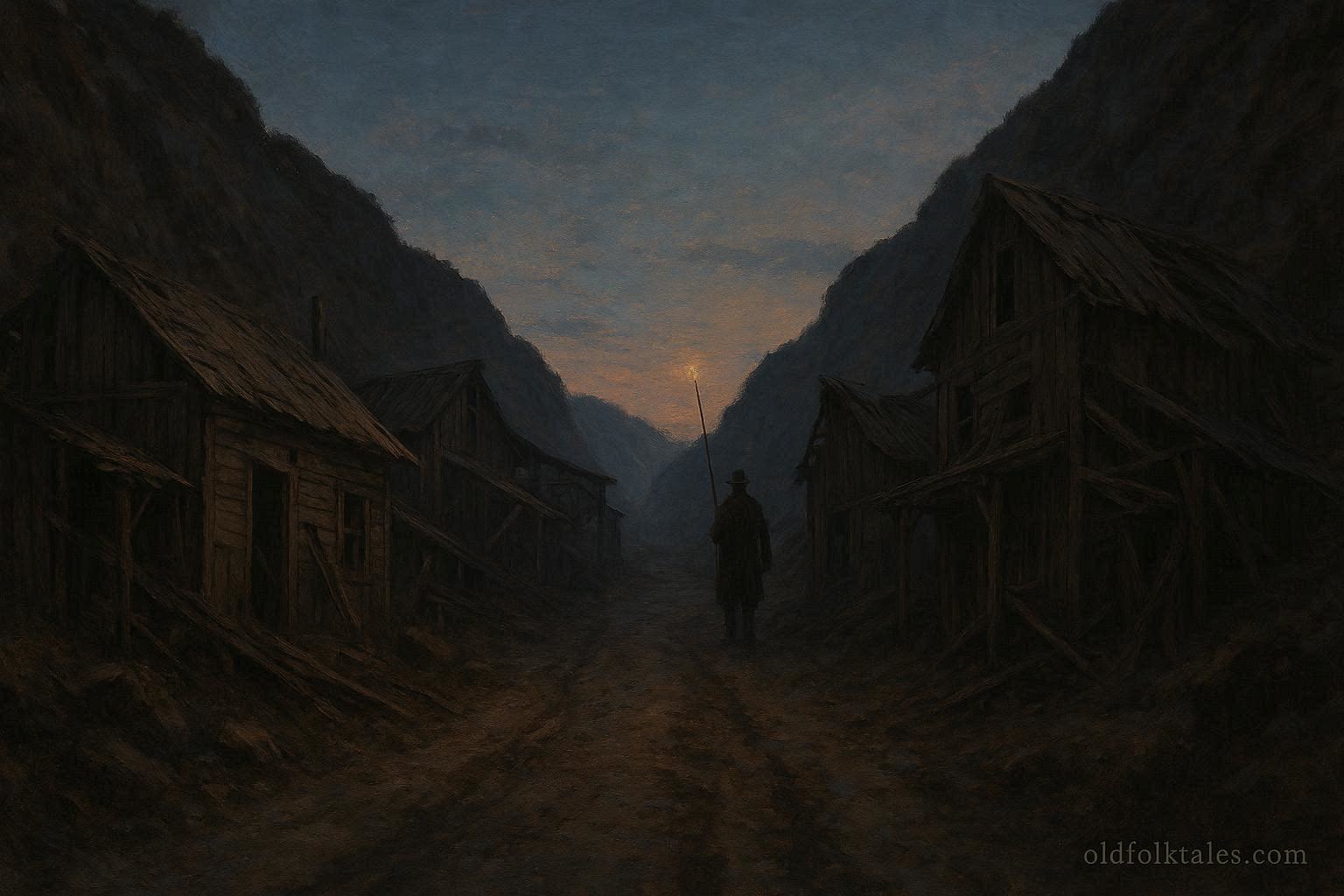
Travelers passing through at twilight noticed movement along the old road. A man walking alone, stopping at precise intervals. He carried something long over his shoulder. He raised it toward the air where lamps once hung. His motions were careful and exact. He paused, as if waiting for a flame to catch, then moved on.
There was no light.
At first, people dismissed the sightings. The gulch played tricks on depth and shadow. Memory filled gaps. But reports continued. Always the same behavior. Always the same route. Always at the edge of night.
One prospector camped nearby described watching the figure from a distance. The man appeared solid, dressed plainly, his movements unhurried. When the prospector approached, the figure did not turn. He completed his round and faded into the dark as if swallowed by it.
Another account came from a pair of surveyors working late. As dusk fell, they noticed faint points of warmth along the road, appearing and vanishing quickly. Not true light, but something like afterimage. They marked the locations out of curiosity. Later, comparing notes with historical maps, they realized the points matched the exact placement of the old lamps.
The lamp lighter never acknowledges observers. He does not change his pace. He does not react to voices. He performs his duty as if nothing has altered.
Locals began to speak of him not as a ghost, but as a presence. He does not intrude. He maintains.
Some believe he preserves boundaries between safe passage and danger. Even now, people walking the gulch near sunset report adjusting their steps unconsciously, staying centered on the road, avoiding sudden drops they cannot fully see. They follow a line no longer marked by light, yet somehow still felt.
Others believe the haunting reflects a deeper truth about frontier labor. Many jobs in mining towns required absolute reliability. Lives depended on routines performed correctly every day. When such work ended abruptly, the workers were left without identity as much as employment.
The lamp lighter embodied that truth. His work was invisible when done well. Its absence was noticed immediately. When the town disappeared, his purpose did not.
Deadwood Gulch does not frighten modern visitors. It feels solemn instead. The haunting carries no malice. There are no sudden noises or aggressive signs. Just repetition performed with care.
On rare evenings, when weather shifts suddenly and cloud cover thickens, some claim the road appears subtly outlined, as if light rests just beneath the surface of the ground. It never lasts. It is not enough to see by. Only enough to suggest that order once existed here and has not entirely released its hold.
The lamp lighter never completes his task. He never rests. His work has no end because the road no longer leads anywhere that needs illumination.
Yet he continues.
And in doing so, he keeps Deadwood Gulch from vanishing completely.
Click to explore all American Ghost Stories — haunting legends of spirits, lost souls, and mysterious places across the U.S.
Moral Lesson
Routine gives structure not only to places, but to people. When duty becomes identity, its echo can endure even after the world that required it has disappeared.
Knowledge Check
1. Where does the Lamp Lighter appear?
Along the abandoned mining road of Deadwood Gulch.
2. What task does he repeatedly perform?
Stopping at regular intervals to light street lamps that no longer exist.
3. When is the Lamp Lighter most often seen?
At dusk or shortly after nightfall.
4. Why were lamps essential to the town during its operation?
They provided safety, order, and guidance in a dangerous frontier environment.
5. How does the haunting affect modern visitors?
People report unconsciously following safer paths and slowing their pace.
6. What does the Lamp Lighter symbolize?
The persistence of duty and routine beyond the lifespan of a community.
Source
Adapted from Black Hills State University frontier folklore collections and mining settlement labor narratives.
Cultural Origin
Western mining settlements of the Black Hills region.