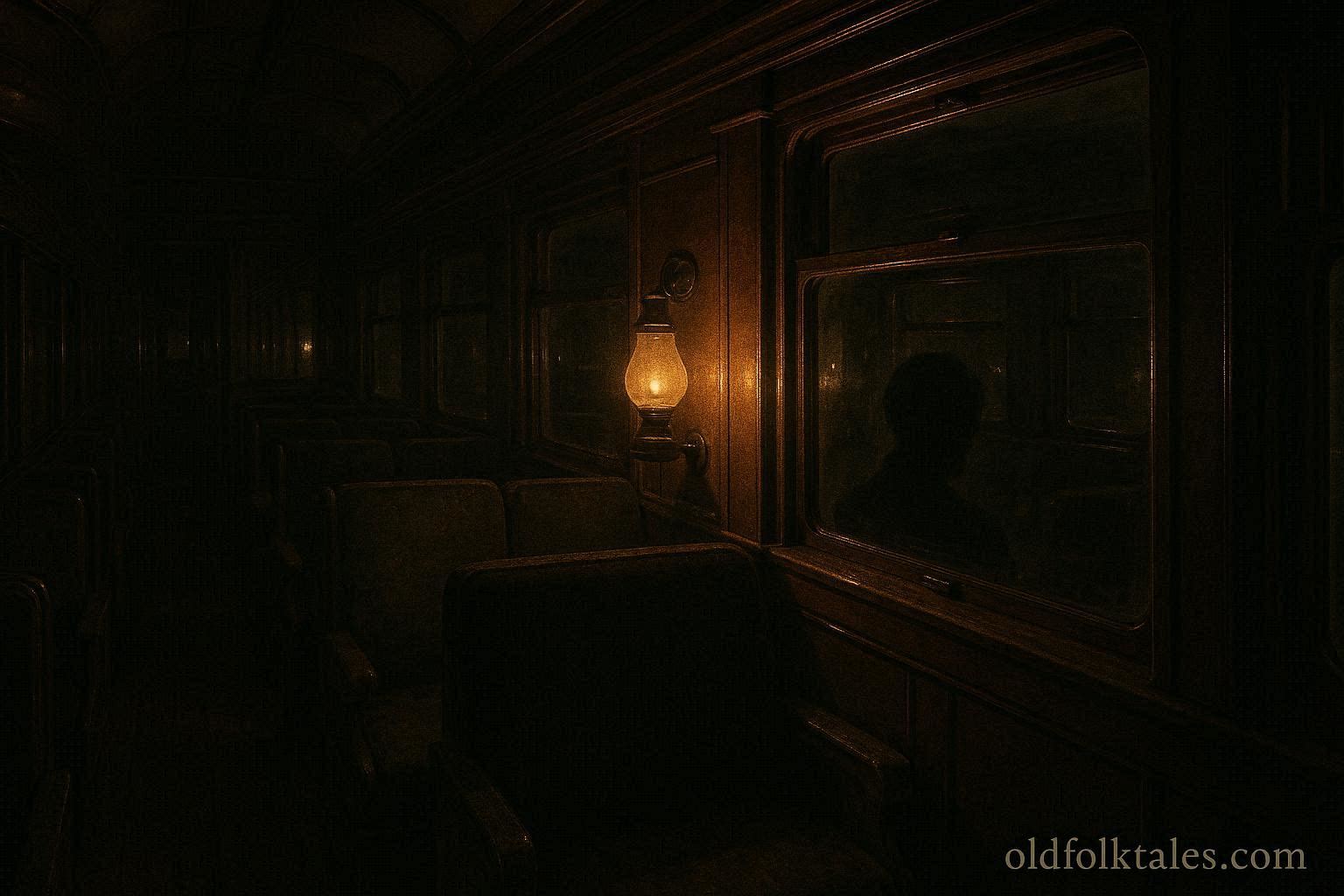
Night trains move differently than day trains. The rhythm is slower. The air feels heavier. Conductors who work late hours learn to trust their instincts because the darkness hides details that daylight reveals. Along certain southern rail routes, those instincts began to warn of something unusual long before any figure was seen.
The first reports came quietly, shared in hushed words among railway workers. A veteran conductor described finishing a routine inspection and noticing a passenger seated alone in a car that should have been empty. The train was moving steadily, the manifest accounted for every passenger, yet the seat was undeniably occupied.
The passenger did not speak or move. They sat upright, hands folded neatly in their lap, facing forward. No luggage rested nearby. No ticket appeared. The posture suggested waiting, a patient endurance that seemed out of place in a modern railcar.
Encounter the strange and the unseen — from Bigfoot to regional monsters hiding in America’s forests.
No one ever saw the passenger board.
Conductor after conductor reported similar experiences. The seat would appear empty when first checked, only to be filled once the train gained speed. When approached, the passenger remained silent. If a conductor stepped away and returned, the seat might be empty again, as if the presence had simply decided to vanish.
The passenger never appeared on newly modernized routes. They were visible only on lines that had once enforced segregation by law, where certain railcars were reserved for Black passengers and others for white passengers. These were routes marked not by distance or destination, but by identity and enforced separation.
Older conductors recognized the pattern immediately. They remembered the routes where silence had been mandatory, where dignity had depended on obedience, and where endurance was the only form of power available to those forced into the segregated cars.
The passenger did not react to station announcements. They did not move during stops. They never acknowledged other travelers. The presence existed only while the train was moving, occupying a space that had long since been abandoned by history but remembered by the rails themselves.
Some conductors described the air near the seat as heavier or colder. Others noted a stillness, a quiet insistence that something important was passing through. No one reported feeling fear, but all described a profound respect, a sense that the passenger represented something far greater than a single human.
One conductor tried to speak. He approached slowly, rehearsing the words he would say. As he drew closer, a weight pressed down on his chest. His voice failed. He turned away, realizing that any attempt to interact would disrupt something sacred. From that night on, no one ever approached the seat.
An unspoken rule formed. If the seat was occupied, it was left untouched. No one reassigned a passenger there. No one tried to confront the presence. The journey continued quietly, with the passenger silently accompanying it from start to finish.
Some believed the figure represented all those who once rode in enforced silence. People who traveled long distances under restriction, unseen and unheard, enduring journeys defined not by choice, but by law. Others thought the passenger was not one person, but a collective memory given shape, a witness to countless acts of endurance and suffering.
As rail companies modernized tracks and retired old cars, sightings became rare. Where tracks were rebuilt and signs removed, the passenger no longer appeared. Yet on older lines, stories persisted, quietly passed down between conductors, a ritual acknowledgment that some histories cannot be erased.
The passenger never left the seat. Never stood. Never acknowledged the living. They existed only within the rhythm of the train and the boundaries of memory, a presence that moved silently along tracks once defined by injustice.
Some conductors began to see the passenger as a symbol of transition. A reminder that progress does not erase memory. Change moves forward, but the past travels with it, occupying seats, whispering in silence, insisting that it be remembered.
The Last Passenger of the Segregated Railcar is not a threat. The passenger does not haunt in anger. They witness. They remind us that the tracks of history continue to carry the stories of those who endured the journeys we would rather forget.
The train moves on. The rails remain. And sometimes, the past takes a seat.
Click now to read all American Legends — heroic tales where truth and imagination meet, defining the American spirit.
Moral Lesson
Progress without remembrance is incomplete. True transition requires acknowledging the journeys shaped by injustice, even when those journeys were carried out in silence.
Knowledge Check
- Where did the silent passenger appear?
On train routes that were once segregated by racial law. - When was the passenger most often seen?
During nighttime journeys between stations. - How did conductors describe the passenger’s behavior?
Silent, motionless, and never interacting with others. - What happened when conductors returned to the seat?
The passenger vanished without sound or movement. - Why did workers believe the passenger existed?
To represent those who endured enforced separation and silence. - What does the legend ultimately symbolize?
The persistence of memory and the unfinished work of justice.
Source
Adapted from Howard University African American folklore and transportation history archives
Cultural Origin
Jim Crow era Southern rail communities