Balance is not something that announces its absence loudly. It slips away quietly, through sleepless nights, lingering sadness, unexplained fatigue, or a sense that the world has tilted just enough to make ordinary life feel heavy. In many Mexican American communities of the Southwestern United States, such moments have long been understood not as random misfortune, but as signs that harmony between body, mind, spirit, and environment has been disturbed.
In a small desert town shaped by sun, wind, and inherited memory, lived a curandera known simply as Doña Isabel. She was not introduced with ceremony or advertisement. People came to her because someone they trusted whispered her name, because their grandmother once did the same, or because a problem had resisted every other solution. Her home stood near the edge of town, modest and whitewashed, its doorway swept clean each morning as a quiet act of intention.
Doña Isabel practiced limpia, a spiritual cleansing ritual central to curanderismo, the traditional Mexican American healing system that blends Indigenous knowledge, Catholic symbolism, and community ethics. To outsiders, limpia was sometimes misunderstood as superstition. To those who sought it, it was a way of restoring alignment when life’s unseen pressures had pulled someone out of balance.
Step into shadowy legends of restless spirits and ghostly travelers in American Ghost Stories.
One summer evening, a young woman named Marisol arrived at Doña Isabel’s door. Marisol had recently moved back after years away. She complained of exhaustion, headaches, and a feeling she could not name. Doctors found nothing wrong. Sleep brought no rest. Conversations felt hollow. She feared something inside her had come undone.
Doña Isabel did not interrupt. Listening was the first step of healing. When Marisol finished, the curandera nodded and said simply, “We will begin with cleansing, not curing.”
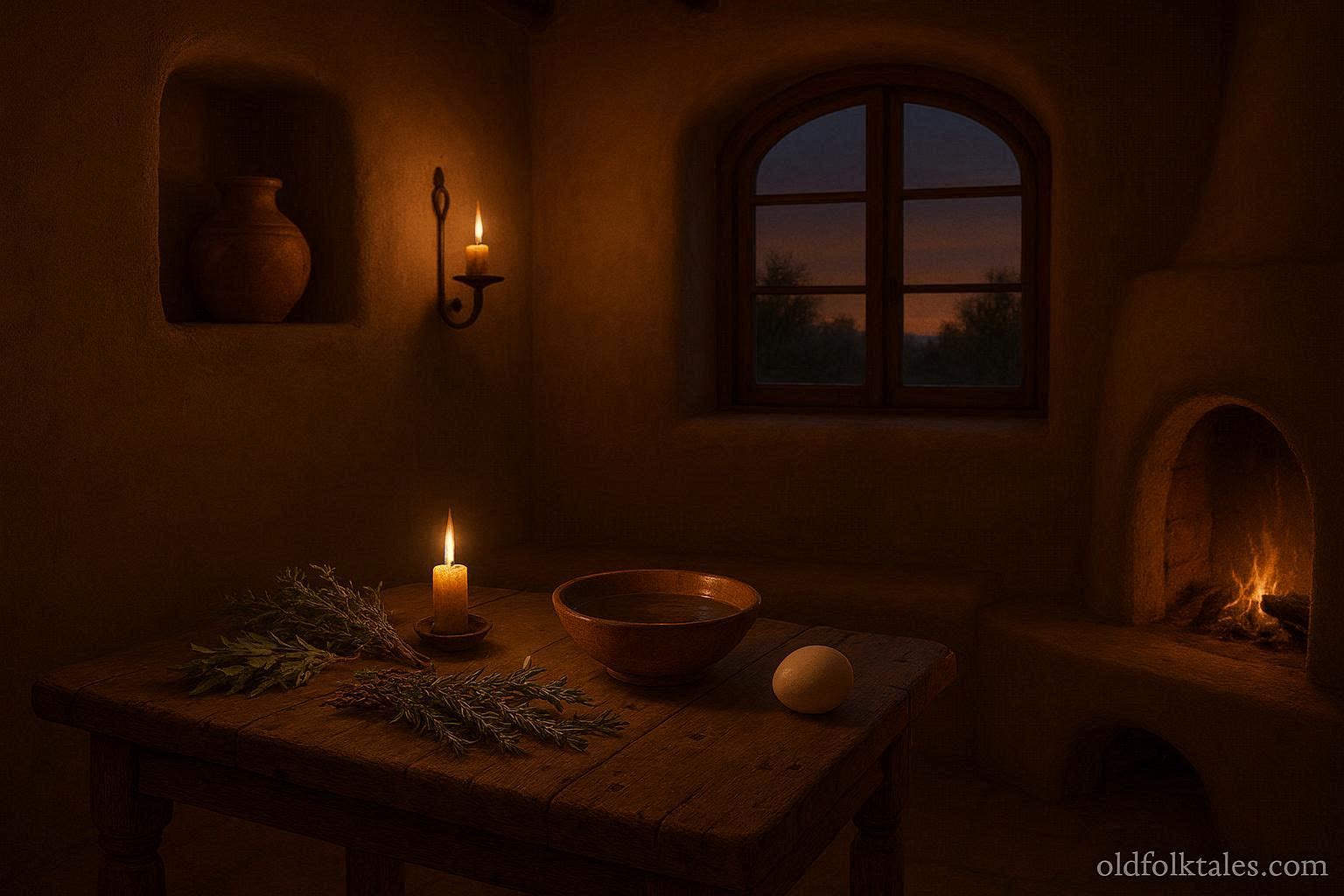
The limpia took place at dusk, when the heat softened and the desert exhaled. Doña Isabel prepared the space carefully. A bowl of water reflected the fading light. A bundle of fresh herbs rested on the table. An egg, smooth and cool, waited beside a candle. Every object carried meaning, but none worked alone. The ritual’s power came from intention, tradition, and relationship.
Marisol stood quietly as Doña Isabel moved the herbs over her body, brushing the air around her head, shoulders, chest, and back. She murmured prayers in a low voice, mixing Catholic invocations with older phrases passed down through generations. These words were not spells but acknowledgments: of fear carried too long, of sorrow left unspoken, of envy or anger absorbed unknowingly from others.
Next came the egg limpia. Doña Isabel passed the egg gently along Marisol’s body, drawing out heaviness the way a sponge draws water. The act was slow and deliberate. Nothing was rushed. Healing, Doña Isabel believed, could not be commanded. It had to be invited.
Afterward, the egg was cracked into the bowl of water. Doña Isabel studied it carefully, not as a prediction of fate, but as a reflection. Shapes and bubbles told a story of stress, of emotional strain, of imbalance rather than malice. “You have been carrying more than your share,” she said.
The final step was grounding. Doña Isabel instructed Marisol to wash her hands and face, to breathe deeply, and to step outside barefoot onto the earth. Healing did not end inside the room. It continued in how one returned to the world.
Over the following days, Marisol noticed subtle changes. She slept through the night. Her headaches eased. Conversations felt lighter. Nothing dramatic had happened, yet everything felt steadier. The limpia had not erased her problems. It had restored her footing so she could face them.
In the community, limpia served a broader purpose than individual healing. It reinforced shared values: responsibility for one’s energy, respect for unseen forces, and care for emotional well-being as seriously as physical health. Curanderas like Doña Isabel were not separate from the community. They were its caretakers, historians, and ethical anchors.
Limpia also taught restraint. A curandera could refuse a ritual if the request came from greed, vengeance, or manipulation. Healing was not a tool for control. It was a service rooted in balance and accountability.
As years passed, Doña Isabel trained younger women, insisting they learn patience before technique, humility before knowledge. “The ritual does not heal,” she told them. “The relationship does.”
When Doña Isabel eventually passed, her home did not become silent. Others carried the practice forward. Limpia continued, not as a relic, but as a living tradition adapting, enduring, and reminding each generation that wellness begins where balance is restored.
Click to read all American Traditions & Beliefs — the living folklore of daily life, customs, and superstitions.
Moral Lesson
True healing is not about domination over illness but restoration of balance, respect for tradition, and responsibility toward oneself and others.
Knowledge Check
1. What is the primary purpose of a limpia?
To restore balance between body, mind, and spirit.
2. Who traditionally performs a limpia?
A curandera trained in community-based healing traditions.
3. What items are commonly used during a limpia?
Herbs, an egg, water, prayer, and symbolic gestures.
4. Does a limpia replace medical treatment?
No, it complements emotional and spiritual well-being.
5. Why is intention important in the ritual?
Because healing depends on respect, sincerity, and ethical purpose.
6. What cultural value does limpia reinforce?
Community responsibility and holistic wellness.
Source
Adapted from University of Texas Mexican American folklore collections
Cultural Origin
Mexican American communities in the Southwestern United States