On the frontier, where the land stretched wide and the horizon seemed endless, people often relied on nature to mark the passage of time. The rising and setting of the sun shaped their work, their meals, and even their stories. It was a rhythm everyone trusted, predictable and familiar.
One evening, as families gathered outside to watch the sun dip low, something extraordinary began to happen.
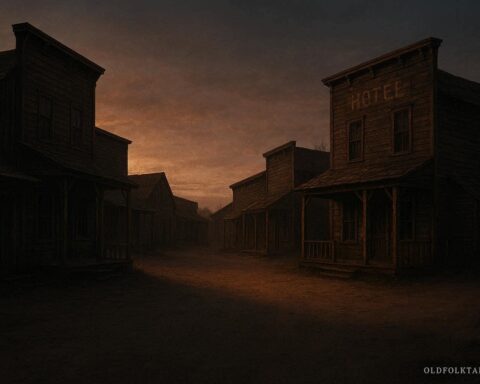
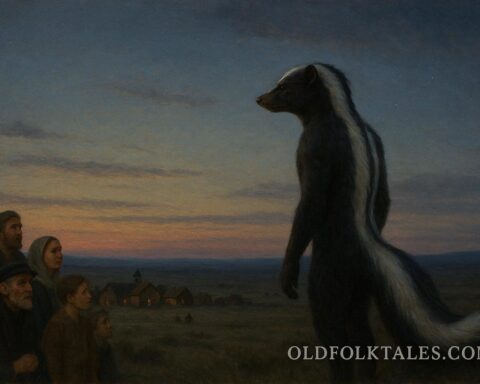
At first, it seemed like any other sunset. The sky glowed with golden hues, birds returned to their nests, and the air grew cooler. Children played along the fields, and the adults paused to admire the familiar colors stretching across the horizon.
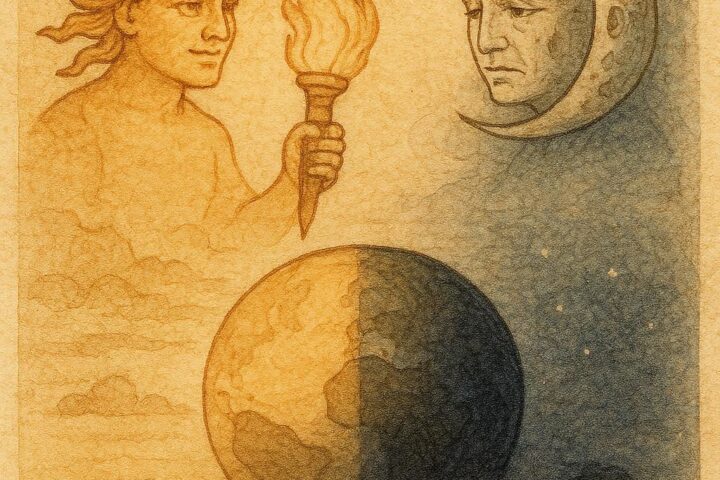
Then, inexplicably, the sun vanished.
For a brief moment, the light dimmed as if a shadow had swept across the world. People blinked, unsure of what had happened. Some shields their eyes, wondering if clouds or smoke from distant fires might have hidden the sun. But the sky was clear. The familiar landscape of fields, rivers, and hills remained visible, bathed in a strange twilight that was neither day nor night.
Just as quickly, the sun returned.
Step into America’s cultural roots — from folk healing and weather lore to seasonal celebrations.
It rose slightly, a faint golden glow reappearing above the horizon, and the town’s folk breathed a collective sigh of relief. They rubbed their eyes, thinking perhaps the first disappearance had been a trick of light or an optical illusion caused by the dust in the air.
But then the impossible occurred.
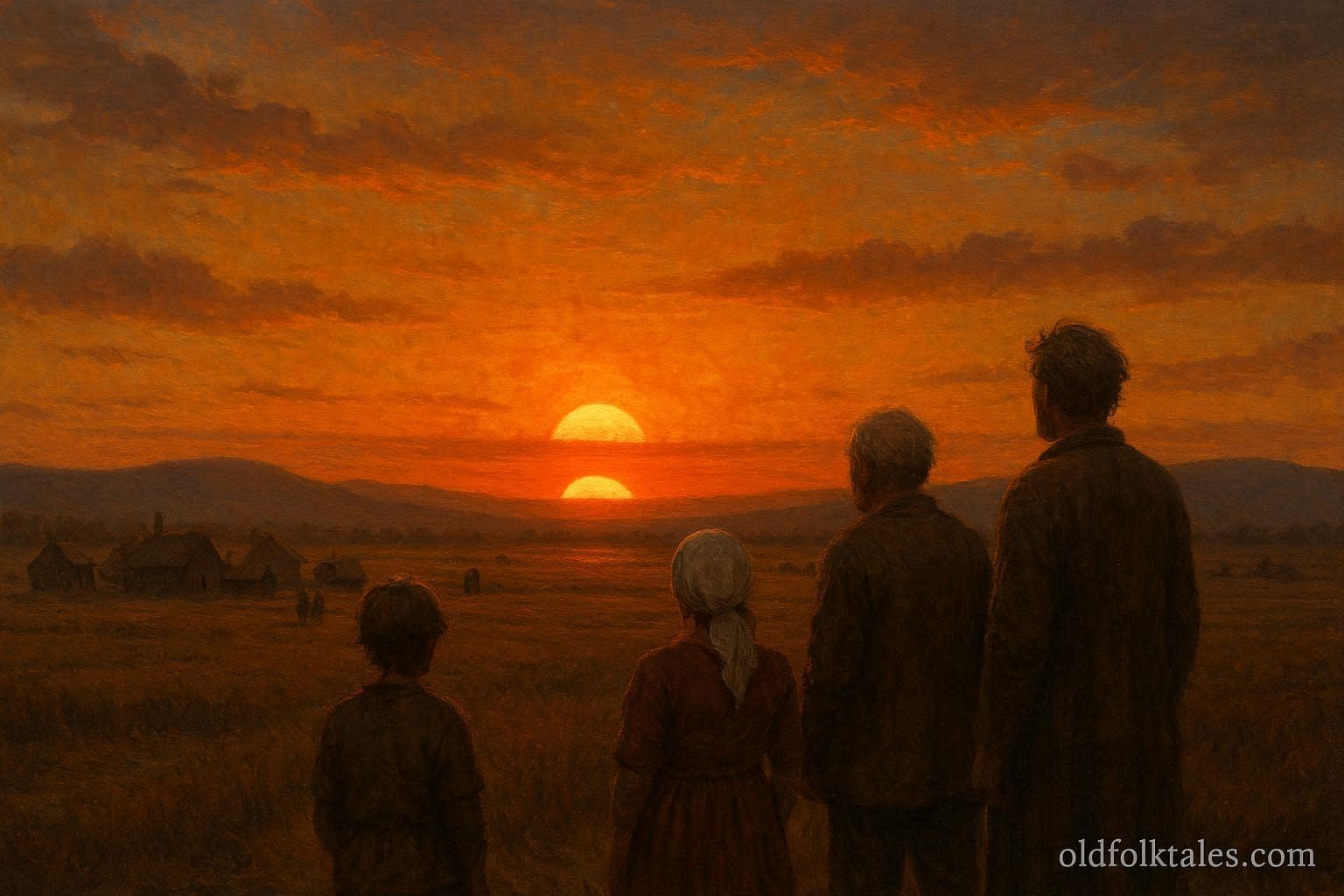
The sun began to set again.
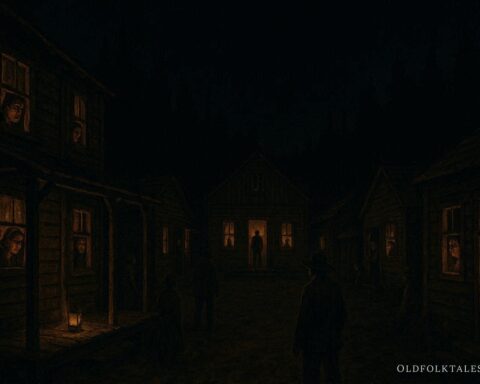
People gasped in disbelief. It sank slowly, painting the sky in deeper shades of orange and crimson. Shadows stretched and danced across the fields in ways no one could understand. Children clutched their parents’ hands, pointing toward the horizon, while elders whispered to one another, recalling tales of strange omens and signs from the heavens.
No one could explain it.
Farmers stopped their evening chores, wagons were left idle on the roads, and everyone turned their gaze to the sky. The air seemed heavier, as if the world itself paused in awe and uncertainty. Birds flew erratically, confused by the sudden change in light. Even the wind shifted, carrying the scent of earth and grass in unusual patterns.
Whispers of wonder and fear spread quickly.
Neighbors speculated about what it might mean. Some believed the sun had been testing the people, a reminder of the fragility of life on the frontier. Others thought it a warning of strange weather or approaching hardship. Children, however, were simply fascinated. They cheered and laughed, imagining the sky playing a trick on them, a game played by powers beyond human understanding.
The event lasted only a short while, but the impression it left was immense.
By the time the sun finally disappeared for the night, the townspeople were exhausted, not from work or hunger, but from the intensity of witnessing something that defied all expectations. Stories spread quickly, carried from one household to another. Even those who had not seen it firsthand believed the accounts, for so many voices spoke in unison about what had occurred.
Over the next days, the event became a point of reflection.
Elders recalled similar tales from their own youth, times when the sky seemed to bend or shift in ways that could not be explained. They reminded listeners that the natural world held mysteries that were beyond human comprehension, and that wonder and humility were appropriate responses to such occurrences. Children continued to ask questions, but answers were scarce. Teachers, preachers, and storytellers all struggled to describe what had been seen.
The townspeople began to notice small changes in daily life.
Evenings felt different. People lingered outdoors longer, savoring the fading light and the delicate colors in the sky. Conversations often returned to that one strange night when the sun set twice, and the memory inspired a mixture of awe, caution, and joy. For a while, no one rushed the work of the day’s end. Time itself felt suspended, as if the sky had reminded them that life was fragile, fleeting, and yet filled with wonder.
Years later, when travelers passed through the town, they would hear the story.
It was recounted with the same mixture of seriousness and disbelief. Some visitors insisted it was impossible, a trick of imagination or memory. Others believed wholeheartedly, claiming that moments like this reminded them that the world held mysteries beyond the reach of explanation, and that human eyes were not always sufficient to measure the heavens.
The memory of that evening endured because it was extraordinary, but also because it united the community in shared astonishment. They had witnessed something rare together, something that would shape stories, songs, and teachings for generations.
And though the sun continued its regular course in the days, months, and years that followed, the tale of the double sunset remained a reminder that nature could still surprise, astonish, and humble those who dared to watch with open hearts.
It was not a story of danger or dread, but a story of wonder. A lesson in paying attention, in reverence for the natural world, and in the understanding that even the familiar rising and setting sun could sometimes behave in ways that defied expectation.
Explore the heart of America’s storytelling — from tall tales and tricksters to fireside family legends.
Moral Lesson
The natural world can hold mysteries that inspire awe and teach us to remain humble and observant, reminding us that not everything can be explained.
Knowledge Check
- Where did the story take place?
On a frontier town surrounded by fields and open land. - What unusual event occurred with the sun?
The sun disappeared, returned briefly, and then set again. - How did the townspeople react?
They were astonished, paused their work, and observed in awe. - What lasting effect did the event have on the town?
It inspired reflection, wonder, and storytelling for generations. - Did anyone explain why the sun behaved this way?
No, the cause remained unknown. - What is the main lesson of the story?
Nature holds mysteries beyond human understanding, encouraging humility and awareness.
Source
Adapted from materials preserved in Smithsonian Institution
Cultural Origin
Frontier skywatching folklore