The chair stood by the hearth in nearly every old farmhouse across rural Ohio. Its creaking wooden frame had been smoothed by generations of hands and warmed by countless fires. To most families, it was simply a place to rest after a long day. But to those who still listened to the whispers of the past, it was something more, a seat for guests both living and dead.
The superstition was old and well known: If the rocking chair ever moved by itself, it was an omen that death would soon visit the household. Some dismissed it as nonsense; others treated the belief with quiet respect. No one liked to tempt fate in those long Midwestern winters, when the winds howled through the cracks and shadows danced across the walls.
Click now to read all American Legends — heroic tales where truth and imagination meet, defining the American spirit.
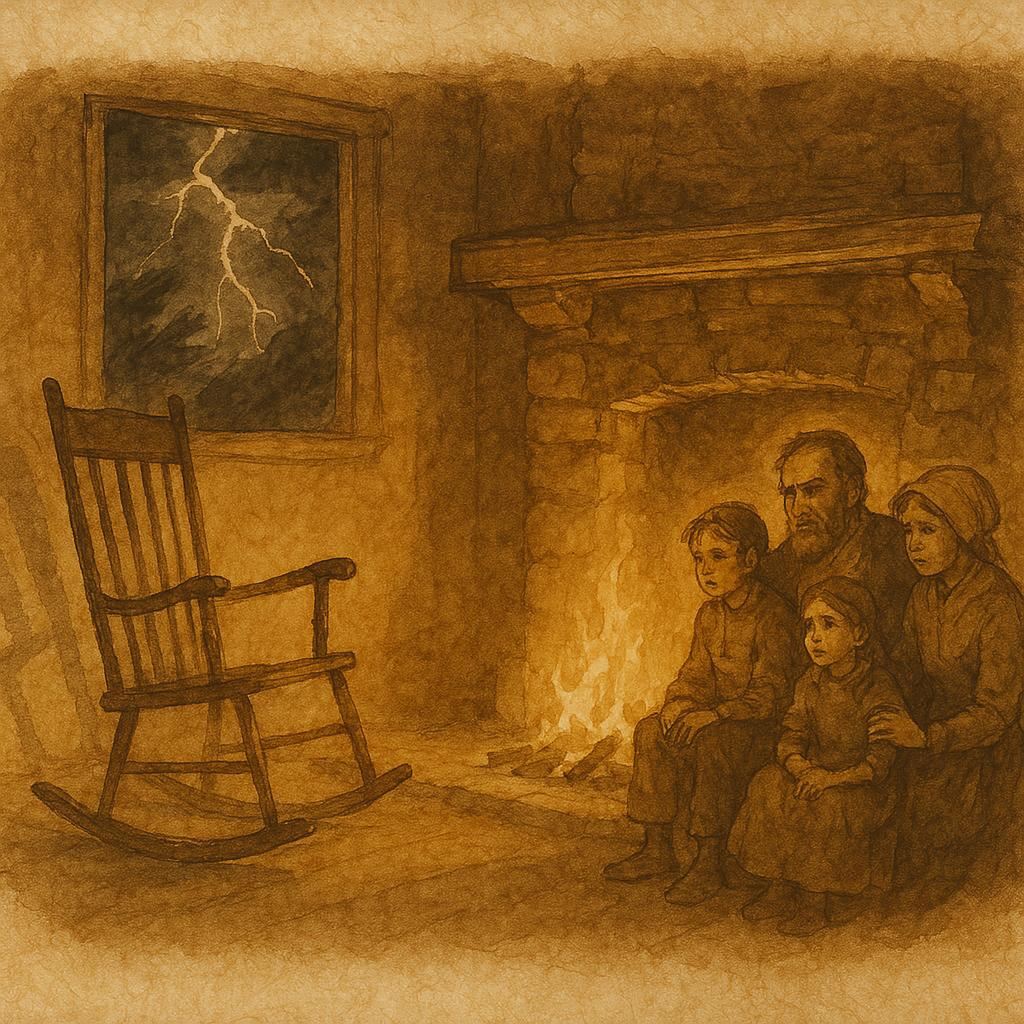
One such winter, the Miller family gathered around their kitchen table as a storm raged outside. The house shuddered with each gust, and the fire popped and hissed, casting long flickering shapes along the walls. Beside the hearth sat the family’s beloved rocking chair, a sturdy oak seat that had belonged to Mrs. Miller’s grandmother. It was said that no guest was ever turned away from that chair, and so it had earned a kind of reverence in the home.
As they finished supper, a sudden stillness fell over the house. Even the wind seemed to pause. Then, with a soft creak, the rocking chair began to move, forward and back, slow and deliberate, though no one was near it. The rhythm was steady, almost thoughtful, as if guided by unseen hands. The Millers froze.
Mr. Miller rose to his feet, his chair scraping the floor. “Must be the wind,” he muttered, though there was no breeze in the room. The children huddled close to their mother, eyes wide. The chair continued to sway, the firelight glinting off its curved arms. Then, just as suddenly, it stopped.
An hour later, there came a knock at the door, three sharp raps that echoed through the silent house. When Mr. Miller opened it, a messenger stood in the cold, hat in hand. He brought word that Mrs. Miller’s uncle had passed away that very evening, many miles away in another county.
A heavy quiet filled the room. The family turned their eyes toward the rocking chair, which now sat perfectly still. No one spoke of what they had seen, but when dawn came, Mr. Miller draped the chair in a quilt and moved it to the barn. From that night onward, no one in the family dared sit in it.
When spring returned, the Millers decided the chair brought bad luck. They carried it outside and burned it beneath the open sky. The smoke rose high into the air, twisting like a spirit freed from wood and memory. But the neighbours whispered that the story didn’t end there. On misty mornings, when the barn doors creaked and the wind blew just right, some swore they could still see the shape of the old chair moving gently in the shadows, rocking itself once more, as if waiting for the next soul to pass.
Click to read all American Traditions & Beliefs — the living folklore of daily life, customs, and superstitions.
Moral Lesson
The tale of the rocking chair reminds us that respect for old beliefs often carries wisdom. Not every mystery can be explained, and sometimes, what we call superstition is simply an older truth waiting to be remembered.
Knowledge Check
1. What is the main superstition in “The Rocking Chair That Rocked Itself”?
The folktale warns that a chair rocking by itself foretells death or a spirit’s visit.
2. Where does this American folktale originate?
It comes from rural Ohio in the Midwestern United States.
3. Who are the main characters in the story?
The story centres on the Miller family, who witness the rocking chair’s eerie movement.
4. What event follows the rocking chair’s movement?
A messenger arrives to announce the death of Mrs. Miller’s uncle in another county.
5. What lesson does the folktale convey?
The tale teaches respect for old traditions and the mysterious forces that surround daily life.
6. How did the Miller family respond to the haunting event?
They burned the rocking chair, though neighbours claimed it continued to move on its own afterward.
Source: Adapted from Great American Folklore, Kemp Battle (1986), “Omens and Death Signs,” pp. 407–408; corroborated by Current Superstitions, No. 117.
Cultural Origin: United States (Midwestern folklore – Ohio tradition)