Among the most widely told urban legends in the United States is a chilling story known as the Killer in the Backseat. The tale first began circulating in the 1960s and quickly spread across cities and small towns through word of mouth, newspapers, and later through books and folklore studies. Though the details sometimes change depending on who tells the story, the central message remains the same. The danger people fear may not always be the one they see. Sometimes the real threat is hidden much closer than expected.
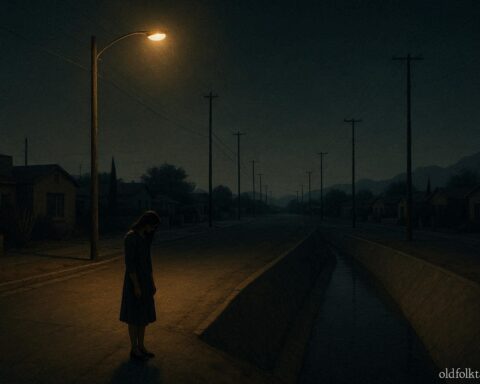
The story usually begins with a woman driving alone late at night. She may have just left a grocery store, a shopping mall, or a gas station. The streets are quiet and mostly empty, lit only by occasional streetlights and the distant glow of passing cars. She begins the drive home believing the evening is ordinary and uneventful.
After a few minutes on the road, she notices headlights in her rearview mirror. A car behind her appears to be following closely. At first she assumes it is simply another driver traveling in the same direction. However, the vehicle continues to stay behind her even when she changes lanes or turns onto a different street.
Explore how American superstitions and rituals still influence modern life and local traditions.
Soon the situation becomes more unsettling. The driver behind her suddenly flashes his headlights repeatedly. Sometimes he pulls close to her car, then backs away, then moves forward again. To the woman in the car ahead, it feels aggressive and threatening. Her heart begins to race as she worries that she is being followed by someone with dangerous intentions.
As she continues driving, the vehicle behind her becomes even more alarming. The driver begins honking the horn and flashing the headlights more rapidly. Each time she slows down, the car behind approaches closer as though attempting to intimidate her. Fear builds as she imagines the driver might try to force her off the road or confront her when she stops.
Panicking, she speeds up and tries to escape the pursuing vehicle. The road becomes darker as she drives farther from busy areas. The flashing lights continue behind her, creating the frightening impression that the other driver refuses to leave her alone.
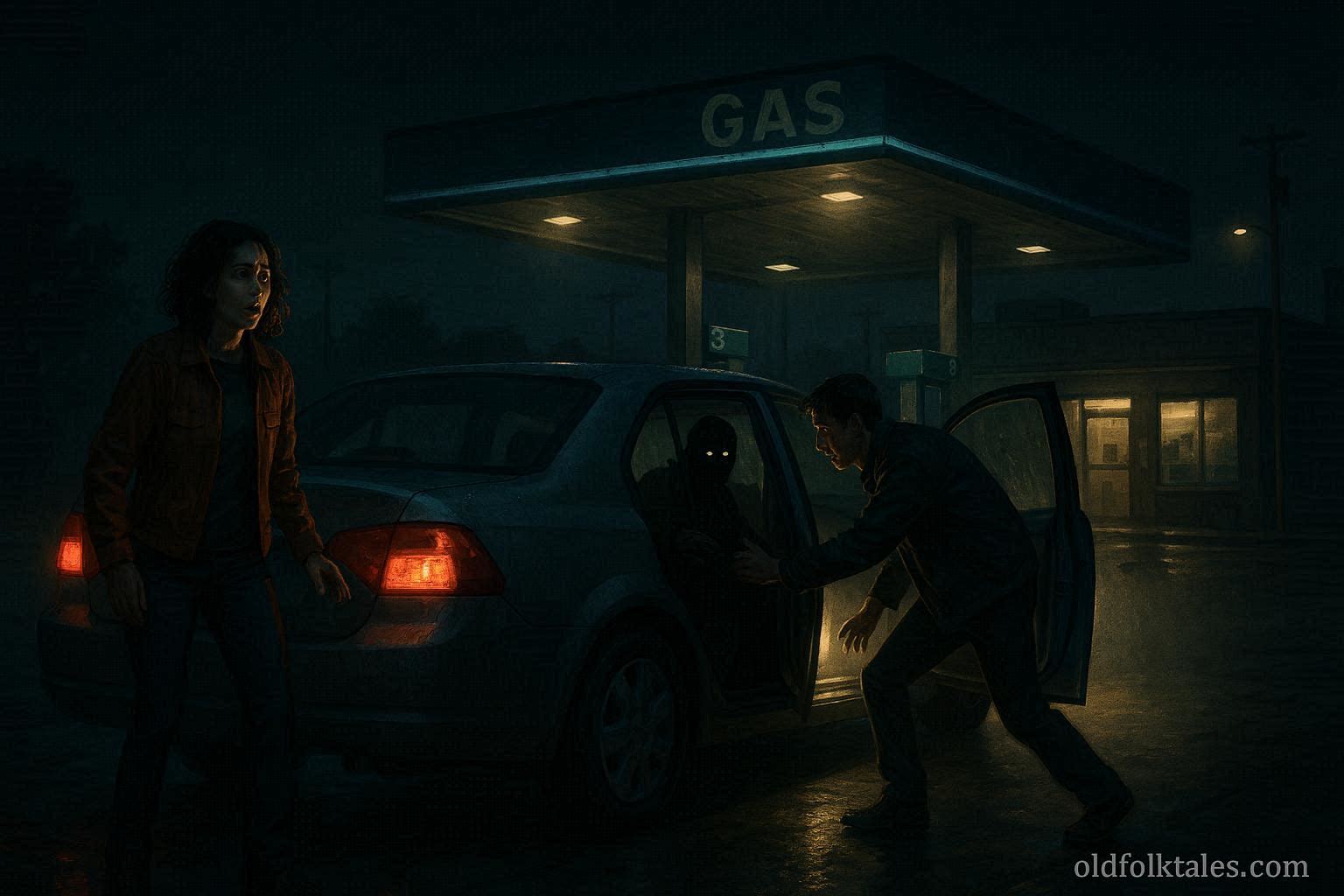
Finally she sees a well lit gas station or convenience store and quickly pulls into the parking lot, hoping to find help. As soon as she stops the car, the driver behind her pulls in as well. Terrified, she jumps out of her vehicle and runs toward the store entrance, shouting for assistance.
The other driver exits his car and begins running toward her. Instead of stopping, he rushes directly past her and toward her vehicle. For a brief moment she believes the worst has happened and that he is about to steal the car or attack her.
Then the truth is revealed.
The man yanks open the back door of her car and pulls out a hidden attacker who had been crouching on the floor behind the driver’s seat. The stranger had apparently entered the vehicle earlier when the woman was distracted, hiding silently while she drove away. Each time the driver behind flashed his headlights, he had seen the attacker rise slightly from the seat as if preparing to strike.
Realizing the danger, the man tried to warn the woman by flashing his lights repeatedly. Every time the attacker attempted to sit up, the following driver flashed his headlights again, causing the attacker to duck back down in fear of being seen. From the woman’s perspective, it looked like aggressive pursuit. In reality, it was an urgent attempt to save her life.
The shocking twist of the story is what makes the legend so memorable. What first appeared to be a threatening stranger on the road turned out to be someone trying desperately to warn her about the real danger hidden inside her own car.
Folklore scholars began documenting versions of this story during the late twentieth century as it spread across the United States. Different regions adapted the details slightly. In some versions the woman leaves a grocery store parking lot late at night. In others she stops at a gas station or restaurant before noticing the following car.
Despite these differences, the message remains consistent. The story highlights how fear can sometimes lead people to misunderstand the intentions of others. It also reflects anxieties that became common in American culture during the mid twentieth century, particularly fears about personal safety while traveling alone at night.
Researchers at the Indiana University Folklore Institute studied the legend as part of a broader collection of American urban folklore. They noted that the story became popular during a time when automobiles were becoming central to daily life and long nighttime drives were increasingly common. As a result, stories about danger on the road captured public imagination.
The legend also contains elements typical of cautionary tales. By telling the story, communities encourage people to remain alert and aware of their surroundings. The hidden attacker represents unseen risks, while the misunderstood driver behind the car represents the possibility that help may come from unexpected sources.
Over time the Killer in the Backseat story appeared in newspapers, television programs, and collections of urban legends. Although there is little evidence that the exact event ever occurred in the way the legend describes, the story continues to be retold because it captures universal fears about vulnerability and safety.
Listeners often remember the moment when the truth is revealed. The sudden reversal of expectations transforms the frightening chase into a dramatic rescue. That twist keeps the story alive in popular culture and folklore discussions.
Today the legend still circulates in conversations about urban myths and cautionary stories. Drivers sometimes mention it when discussing road safety or personal awareness. Even though modern vehicles and surveillance technologies have changed the way people travel, the underlying lesson remains powerful.
The Killer in the Backseat legend reminds people that danger is not always obvious. Sometimes the real threat hides where we least expect it, while the people we fear may actually be trying to help.
Discover chilling ghost tales and haunted places that echo through America’s towns and countryside.
Moral Lesson
The story teaches the importance of awareness and caution. It also reminds us that appearances can be misleading and that sometimes the people we fear may actually be trying to protect us.
Knowledge Check
- What situation begins the Killer in the Backseat legend?
A woman driving alone at night notices a car following her closely. - Why does the driver behind her flash his headlights repeatedly?
He is trying to warn her about a hidden attacker in her backseat. - Where does the woman finally stop for help?
At a gas station or well lit public place. - What shocking discovery is made when the car door is opened?
A hidden attacker is found crouching in the backseat. - When did this urban legend become widely known in the United States?
During the 1960s. - What lesson does the legend teach about danger and perception?
The real threat may not always be the one we expect.
Source
Adapted from materials preserved in the Indiana University Folklore Institute
Cultural Origin
1960s American urban folklore