The whistle was once thought harmless, a tune to pass the time, a habit for lonely travelers crossing the shadowed trails of the Blue Ridge Mountains. But in the quiet villages scattered along the Tennessee, North Carolina border, folks whispered of a warning older than memory itself: “Never whistle after midnight, or the devil will whistle back.”
In those days, the mountains slept under a veil of mist and superstition. The dense forests held more than deer and owls; they carried echoes of stories told by firelight, tales of spirits, lost travelers, and the strange music of the unseen. Among these stories was the account of a young logger named Tom McRae, whose pride led him to learn the truth behind the midnight whistle.
Click now to read all American Legends — heroic tales where truth and imagination meet, defining the American spirit.
Tom was known for his easy laugh and fearless nature. Each evening, after a long day felling timber, he would stroll home down the winding forest path that curved along a stream. He often whistled as he walked, filling the night with cheerful notes. The elders warned him gently: “Tom, the night’s for resting, not for calling. Whistle too late, and something might answer you.” But Tom only grinned. “Ain’t no spirit can whistle better than me,” he’d say.
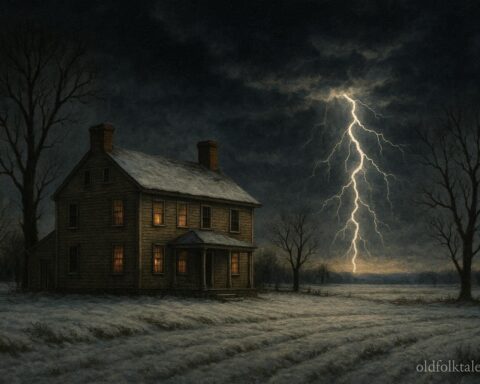
One winter night, when the moon was hidden behind heavy clouds and fog curled low over the ground, Tom lingered at the tavern longer than usual. The stories were good, and the cider warm. By the time he stepped outside, the village lamps had dimmed, and the road ahead was wrapped in stillness. To chase away the unease, he began to whistle a tune, soft at first, then louder, his boots crunching over frost.
He hadn’t gone far when another whistle answered, faint, clear, and matching his melody note for note. He paused, peering into the mist. “That you, Caleb?” he called, thinking perhaps one of his friends had followed. No reply came. The air hung thick, heavy, waiting. Shrugging off the chill rising along his spine, Tom laughed and began again, this time faster, lighter, teasing the unseen echo.
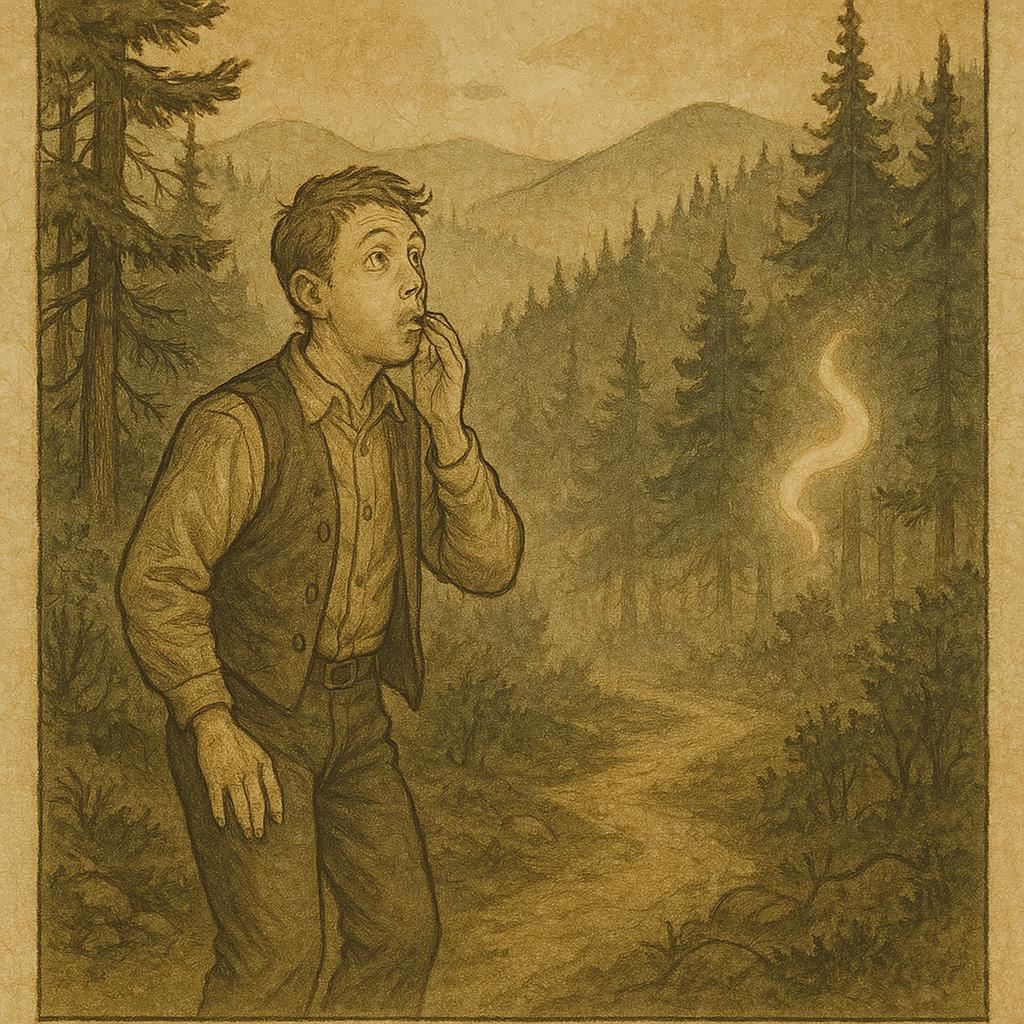
But the echo was not an echo. It came again, slower now, deeper, closer. Each note seemed to breathe, as though the forest itself had drawn in air to answer him. The hairs on Tom’s neck rose. He stopped whistling, his breath clouding in the cold. Then, from the dark beyond the path, a faint glow appeared, a twisting wisp of light, pale as a candle seen through fog.
The light drifted between the trees, pulsing in rhythm with the last tune he had whistled. Then it moved closer, weaving like smoke, circling him. His knees trembled. The forest was utterly silent; even the wind had died. Tom turned and ran, stumbling, gasping, feeling that the light followed close behind. He did not stop until his cabin door slammed shut and the latch dropped into place.
When dawn broke, Tom’s neighbours found him sitting by the fire, trembling. His once-dark hair had turned ashen white. He never spoke of what he’d seen in the hollow that night, except to mutter a warning to anyone who passed his way: “The night’s got ears, and it remembers. Don’t whistle after midnight, not ever.”
Years passed, and the tale of Tom McRae became one of the many eerie Appalachian folktales passed from generation to generation. Even today, some old mountain families keep the rule: when the clock strikes twelve, lips stay silent, and the woods remain untroubled.
Click to read all American Traditions & Beliefs — the living folklore of daily life, customs, and superstitions.
Moral Lesson
The story of Tom McRae teaches that pride often leads to peril. In the Appalachian belief, respect for nature and its mysteries is vital. Those who ignore ancient warnings risk awakening what should remain undisturbed.
Knowledge Check
1. What is the main superstition in “The Whistling at Midnight”?
The story warns that whistling after midnight can summon spirits or bring misfortune.
2. Who is the central character in the Appalachian folktale?
The tale centres on Tom McRae, a young logger from the Blue Ridge Mountains.
3. What strange event occurs after Tom whistles?
He hears another whistle echoing his tune, followed by a ghostly light in the fog.
4. What lesson does the folktale teach?
It teaches humility and respect for the unseen powers of the natural world.
5. Where does the superstition of this folktale originate?
It originates in the Appalachian Mountains, particularly along the Tennessee, North Carolina border.
6. Why is whistling at midnight considered unlucky in Appalachian folklore?
Because it’s believed that the act calls upon spirits or invites evil forces to respond.
Source: Adapted from the Appalachian folktale “The Whistling at Midnight,” American Folklife Center, Nighttime Omens and Superstitions Collection (1890s oral transcription); Coffin & Cohen, Folklore in America (1966).
Cultural Origin: United States (Southern Appalachian folklore)